
They Sound Like Shaheds
Three weeks backpacking Ukraine at war, and its two futures

I am woken by motorcycles racing down the street. They roar right next to the hotel. I check the time: two in the morning. Those are not motorcycles. I should go to the shelter.
The ambulance transport from Poland to frontline Kharkiv is done. I could go home. Instead, I decide to backpack across wartime Ukraine. The train takes me to Kyiv. There, I will stay with Tetiana; it is not difficult to find a host through the volunteer network.
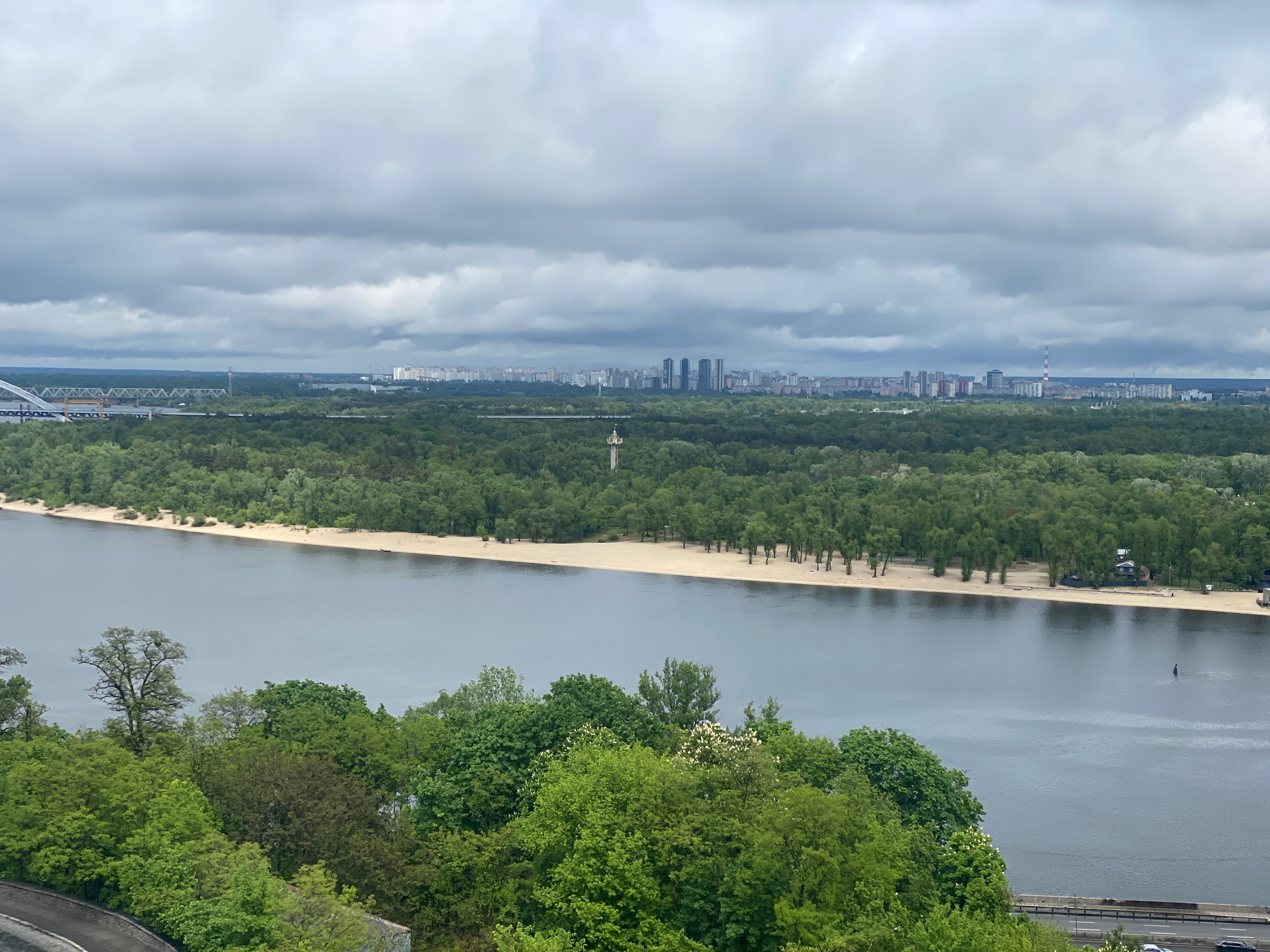
Kyiv is enormous.
Very much like in Kharkiv, people try to live normally. Apartment buildings carry scars, the marks of attacks and explosions. Soon after a strike, the glass is replaced with OSB or cardboard, the rubble is cleared from the street, and life resumes.
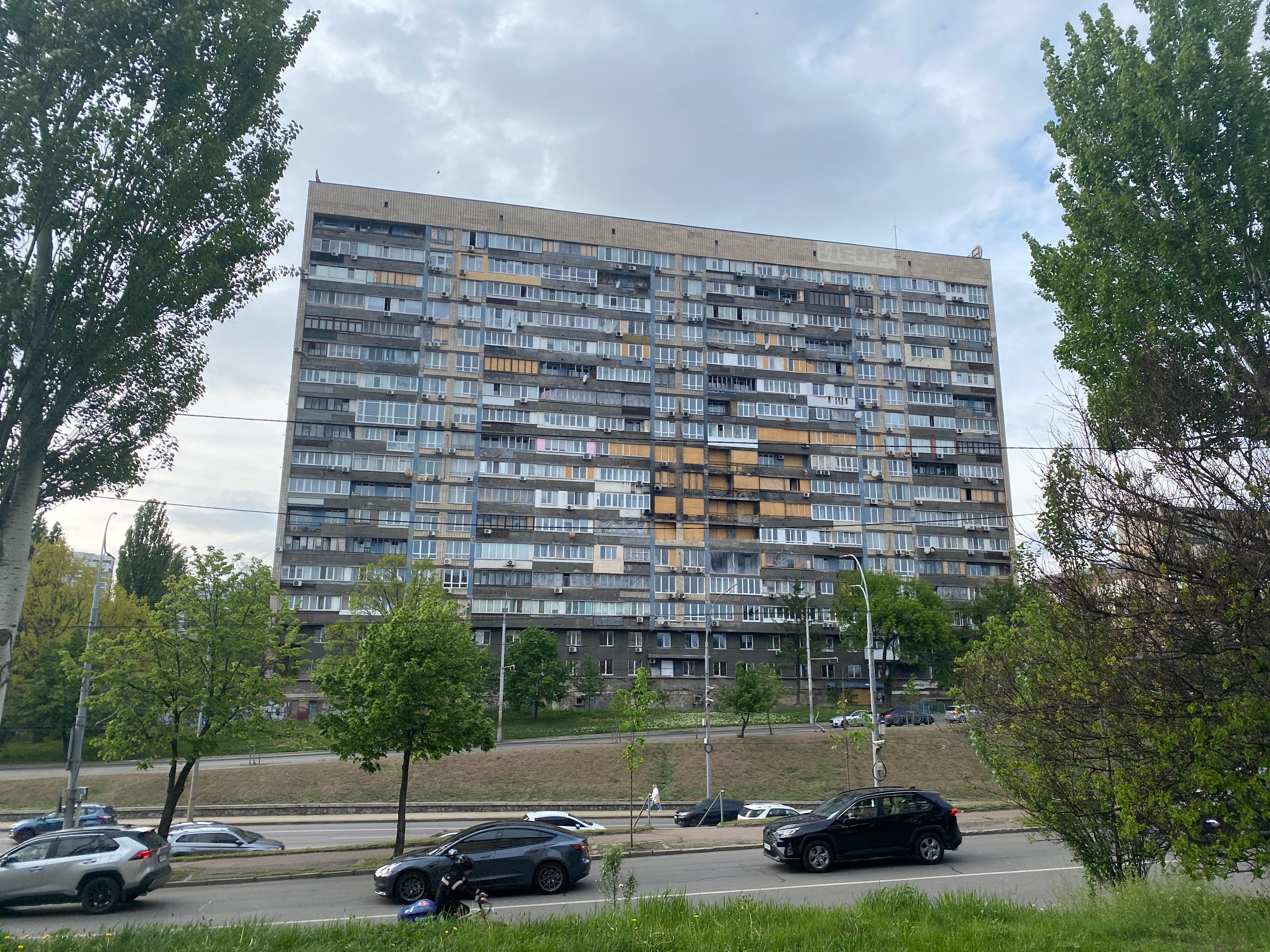
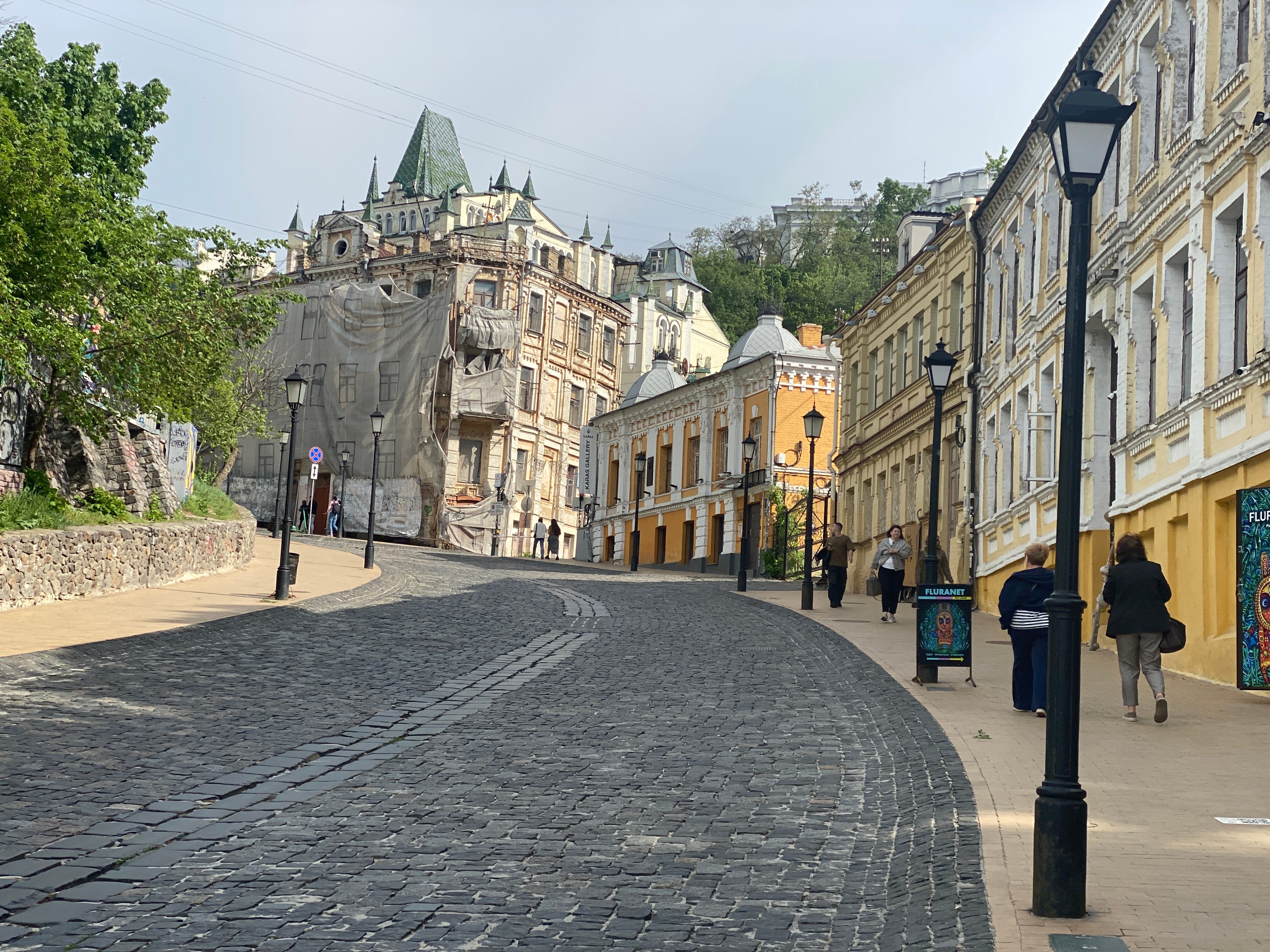
Some districts, like the tourist area around Kontraktova Ploshcha, hidden in the hills and well protected by air defence, show almost no damage.
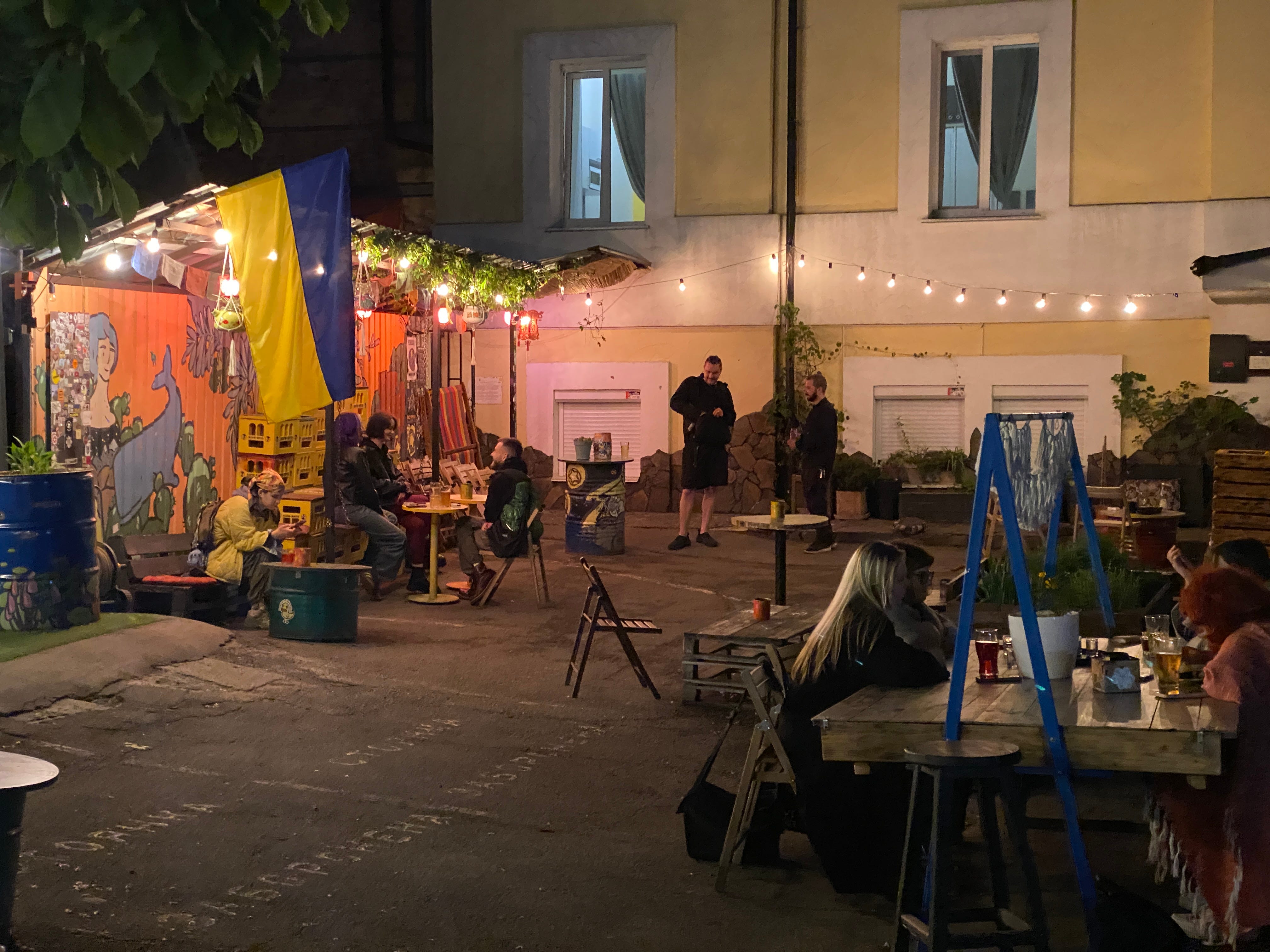
Cafes, bars and restaurants are open. I visit a few alternative places. Life is vibrant in Kyiv, with plenty of laughter in the pubs. At 21:00 everything looks normal. Then, around 22:30, people start to disappear, and by 23:00 the bars close so people can get home before curfew. The metro runs for one more hour.
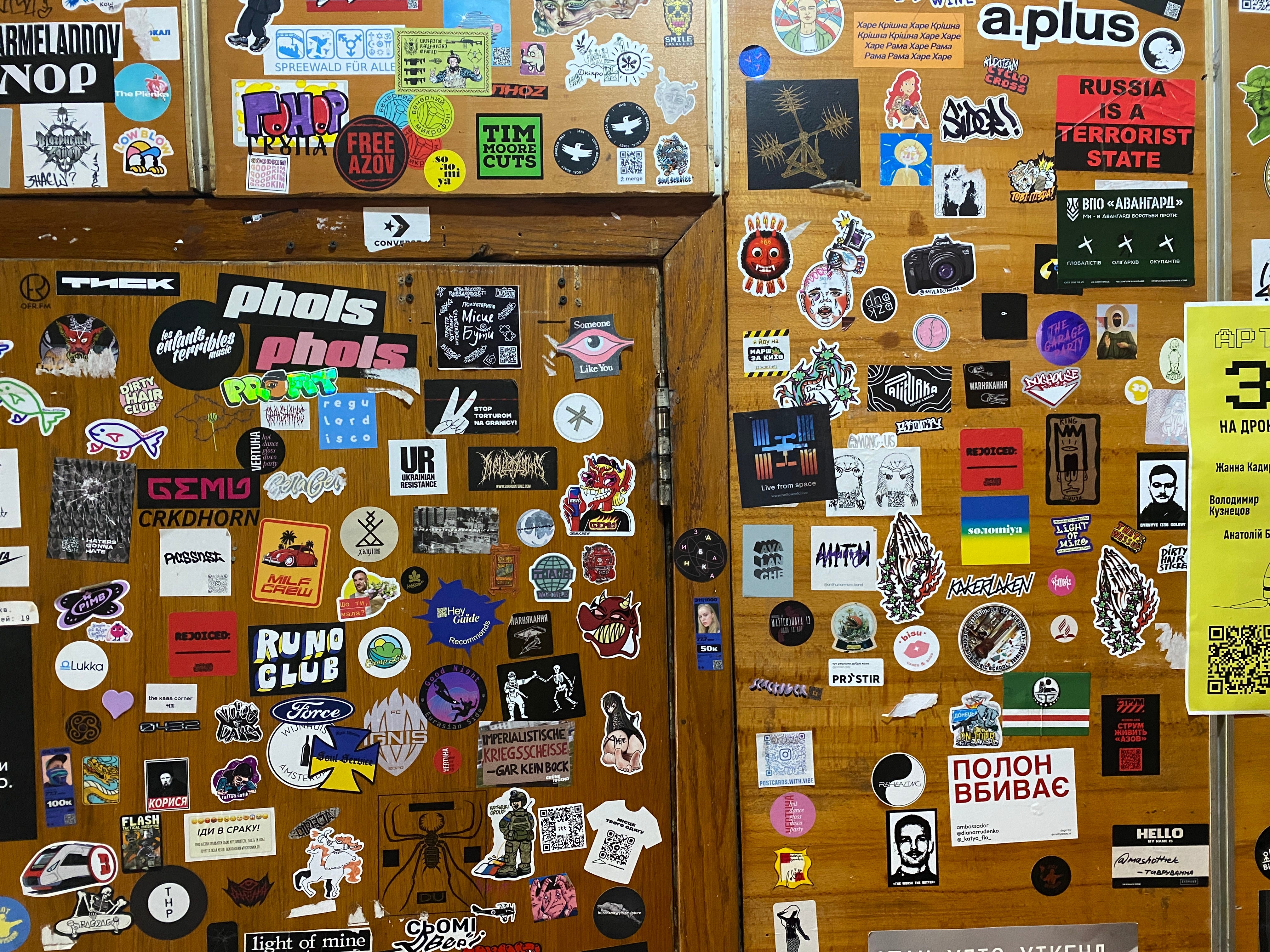
Don’t Leave the Metro
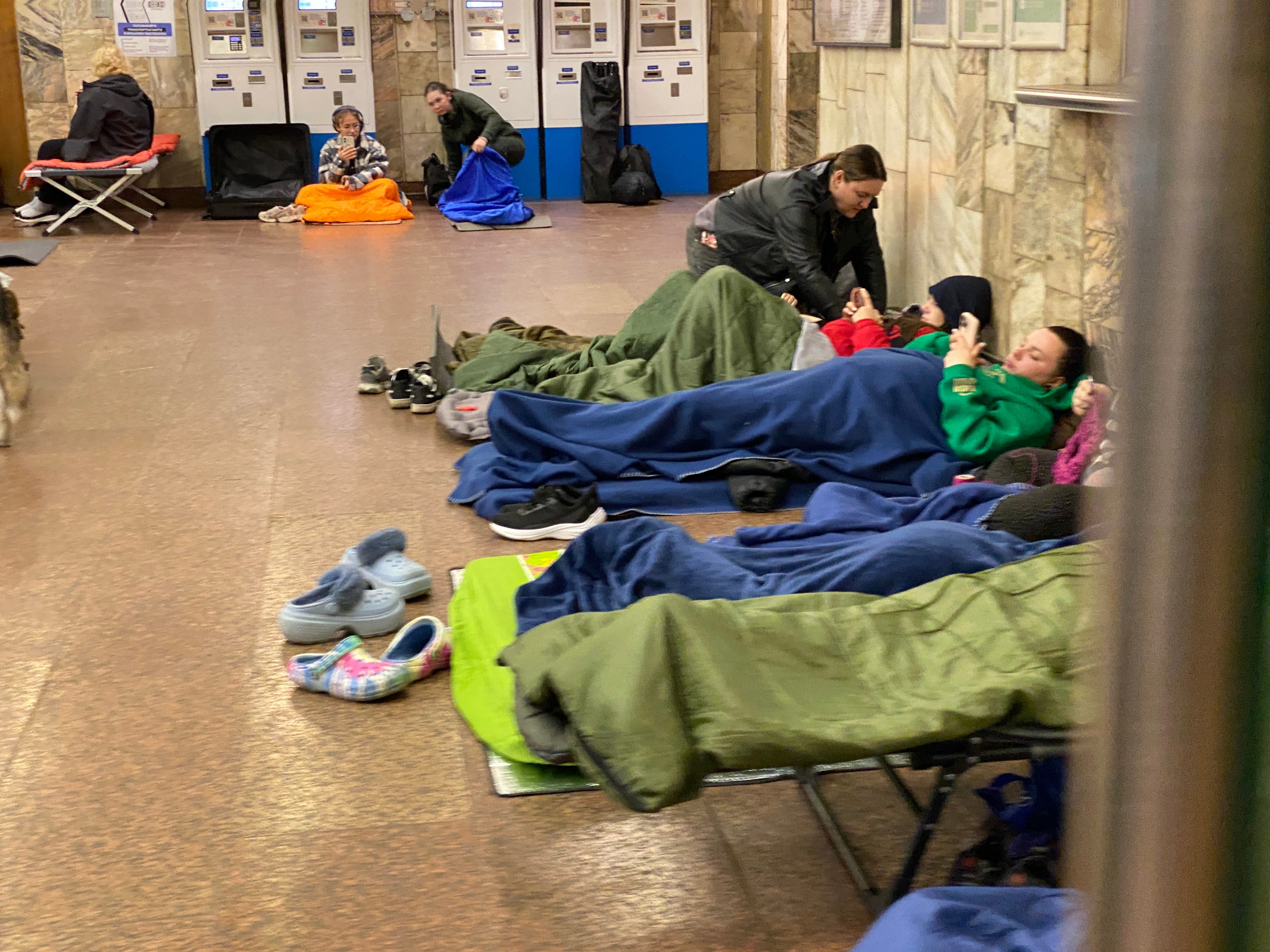
Walking out of the metro station, I notice a babushka setting up a mattress right inside. “Poor homeless woman,” I think, guessing she might be a migrant from a conflict zone.
Soon I notice many more of them. As I walk out, a stream of people walks in, carrying mattresses and sleeping bags. Within minutes the entire underground level is occupied. The staff allow it and behave as if this were their daily routine. I realise my mistake. These people are neither homeless nor migrants.
The inhabitants of Kyiv simply choose to sleep in the metro. Ordinary people like you and me, afraid to spend the night at home. The metro is the best shelter.
I walk home instead, and that is my mistake. I do not yet have the warning apps installed, and I do not know what is coming tonight: the largest attack so far is expected on Kyiv.
Tetiana’s tiny apartment is on the eighth floor of a tenement building. Some noise wakes me. It is 3 a.m.
I look out of the window and I see the fireworks clearly. A Russian missile crosses the sky right above our heads, leaving a streak of light. From the other side comes the air defence missile. Both streaks are visible. They meet centrally above us, and both explode. It looks like fireworks and it sounds like fireworks. Still half asleep, I understand that this is not a show. Someone is trying to kill us. I understand why everyone is in the metro except us.
Some missiles make a roaring noise. Those are the deadly Shaheds. Every so often we hear one in the distance, growing louder: another Shahed coming towards us. In a futile exercise, we look through the window, trying to locate the missile, to work out whether our building is the target. If it is, we can do nothing but pray.
“If something is close to us, we should go to the bathroom,” says Tetiana, explaining the safety procedure, but I sense it makes no sense. How would we know that something is close? Things happen too fast, and the window lets us watch only one direction: east. I regret not going to the metro like the old women I saw.
At one point all the windowpanes shatter with a deep thunder. We have quite obviously felt the shock wave of an explosion.
The grim show goes on for about two hours. Each time I hear a roar I run to the window to check whether the enemy is “close enough to run to the bathroom,” even though I feel I could just as easily do nothing, stay in bed, and pray. Then the explosions grow more distant; perhaps the enemy has moved to other districts now. I finally fall asleep: shallow, nervous.
The morning brings the summary. Last night Ukraine suffered its largest drone attack to date, with 1,300 drones and missiles fired, mostly at Kyiv. One apartment building collapsed entirely, killing its inhabitants. That is the shock wave we felt.
The Centre of the Universe
The next afternoon I am in the restaurant of a youth hostel. I exchange a few words with someone at the next table. This is how I meet Joe, a Canadian volunteer in the Ukrainian Armed Forces. His motivation? He grew increasingly outraged by the repeated Russian atrocities. Joe simply listened to the news, year after year, in growing disbelief that such barbarity is tolerated in twenty-first-century Europe. This Russian mentality is a cancer, he says. It will grow unless you do something about it. I ask about the financial terms for international soldiers. It is not about money, he says. It is about values. Everyone, he tells me, should leave the world a better place than it was when they were born. As simple as that.
“Did you hear that thunder of a collapsing building yesterday? I went there, to the site. I saw it: the bodies under the smoking rubble. No, I did not take any pictures. I do not need pictures. I wanted to see it for myself.
They will pay for it. The Russians. It is time they started paying.”
I admire his stance, and I regret not having gone to the site myself, as he did, to witness, remember and retell.
Two other boys and a girl join us, also staying at the hostel. I realise that almost all the guests here are international soldiers, either on leave or preparing to join the armed forces. The girl, Olga, is the exception: a Ukrainian who lives in London and has come back for a few days to renew her visa, or something like that.
“Kyiv is the centre of the universe,” proclaims Olga, a little drunk after a few shots. She explains that the Russians tried to take Kyiv in three days because they knew, as everyone knows, that Kyiv is the centre of the universe. Then she turns to me.
“You are Polish. We hate each other, don’t we?” As she says it, she offers me a high five, which, in confusion, I accept. I know she is drunk, and that is what makes it truly unsettling. Sometimes drunk people are more likely to tell the truth.
“We don’t hate each other,” I say, still holding her hand, but I sense it does not matter to her.
A few days later, as if echoing Olga, Zelensky named an elite Special Operations Forces unit after the Heroes of UPA, the Ukrainian Insurgent Army. UPA was the nationalist guerrilla force that, while fighting for Ukrainian freedom, massacred an enormous number of up to 100,000 Polish civilians (1943 - 1945). The Volhynia Massacre was exceptionally brutal, including elaborate tortures of parents in front of their children. The killings were also not incidental: already in 1936 the ideologist Stepan Bandera spoke on sacrificing millions of victims; in 1943 the commander Dmytro Klyachkivsky ordered liquidation of the Polish population.
Zelensky’s decision makes waves abroad and stirs outrage in Poland.
Toward Odessa
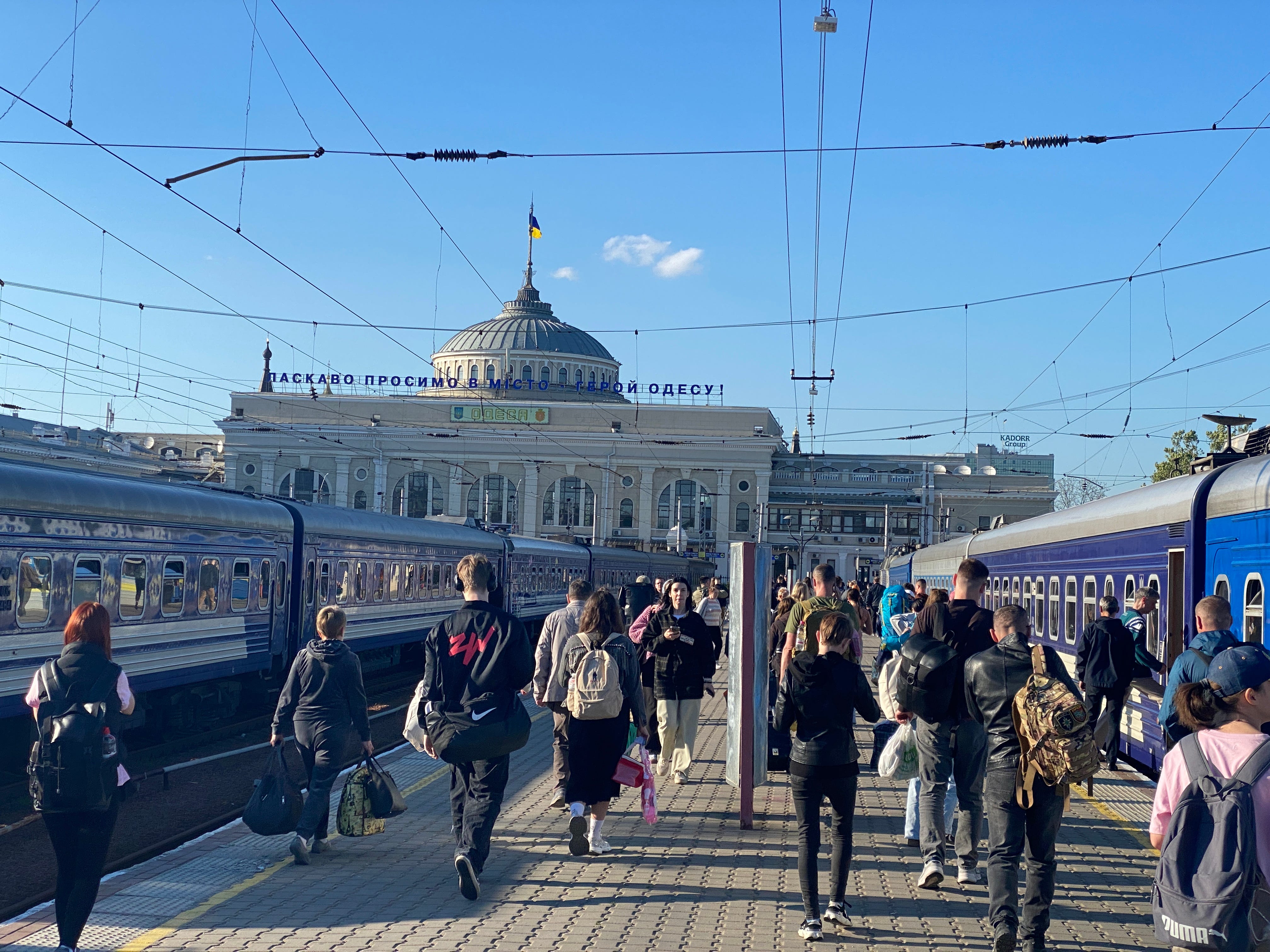
My next stop is Odessa. Even Tetiana tells me not to go: Odessa is bombed daily, more than Kyiv. I decide to go and see for myself. The next day I board a train.
On the train from Kyiv to Odessa, there are four of us in the sleeping compartment.
Dmytro is a bridge builder. Some bridges have been destroyed by the Russians, others simply need maintenance, he explains. His company has plenty of work in the Odessa region.
The young couple, Ruslana and Stan, work in Kyiv in IT and marketing, and are going to Odessa for the weekend.
Soon they come to my rescue. It turns out I have no cash, because I was told Ukraine is cashless. I realise too late: my foreign informants do not ride trains. A few hours in, the train stops for a few minutes, the perfect moment for lunch. Babushkas with pastries circle the platform. Luckily, Stan and Ruslana have cash. They jump off the train to buy some for me too, and soon they are back: “It’s on us.” Then we play cards.
Back on the train, I step out into the corridor. There, a thirteen-year-old Sofia, spotting the foreigner, greets me with a “hello” and a smile. Her father, a businessman also smiles at me, then taps her shoulder with full confidence: now it is your turn to practise English. Then he leaves. Without her dad there, Sofia turns shy but only briefly.
“My dream is to live in America. California,” she says. She wants to study languages and become a translator. I challenge her: this may not be the best job if you want to travel. You need to know something besides the language itself, I tell her. “Maybe I could translate documents for a company? Or become a marketing manager,” she says slowly, frowning as she searches for vocabulary. I am impressed by her focused, thoughtful answers, and by how directly she meets the challenge. I very much hope to meet Sofia in California a few years from now.
The train pulls into Odessa, and we say goodbye. I regret not taking her father’s number. A good father and a remarkable daughter.
“They All Have a Second Passport”
The Russian spelling is Odessa; the Ukrainian is Odesa. I learn to use the latter. Odesa is truly charming. Pretty nineteenth-century design: an industrial port and a bourgeois city, arranged so that one does not interfere with the other. This is Russia’s “gift” to Ukraine, except that the town was placed here on purpose: to colonise “New Russia,” to erase any earlier identity of the area. It did not work.
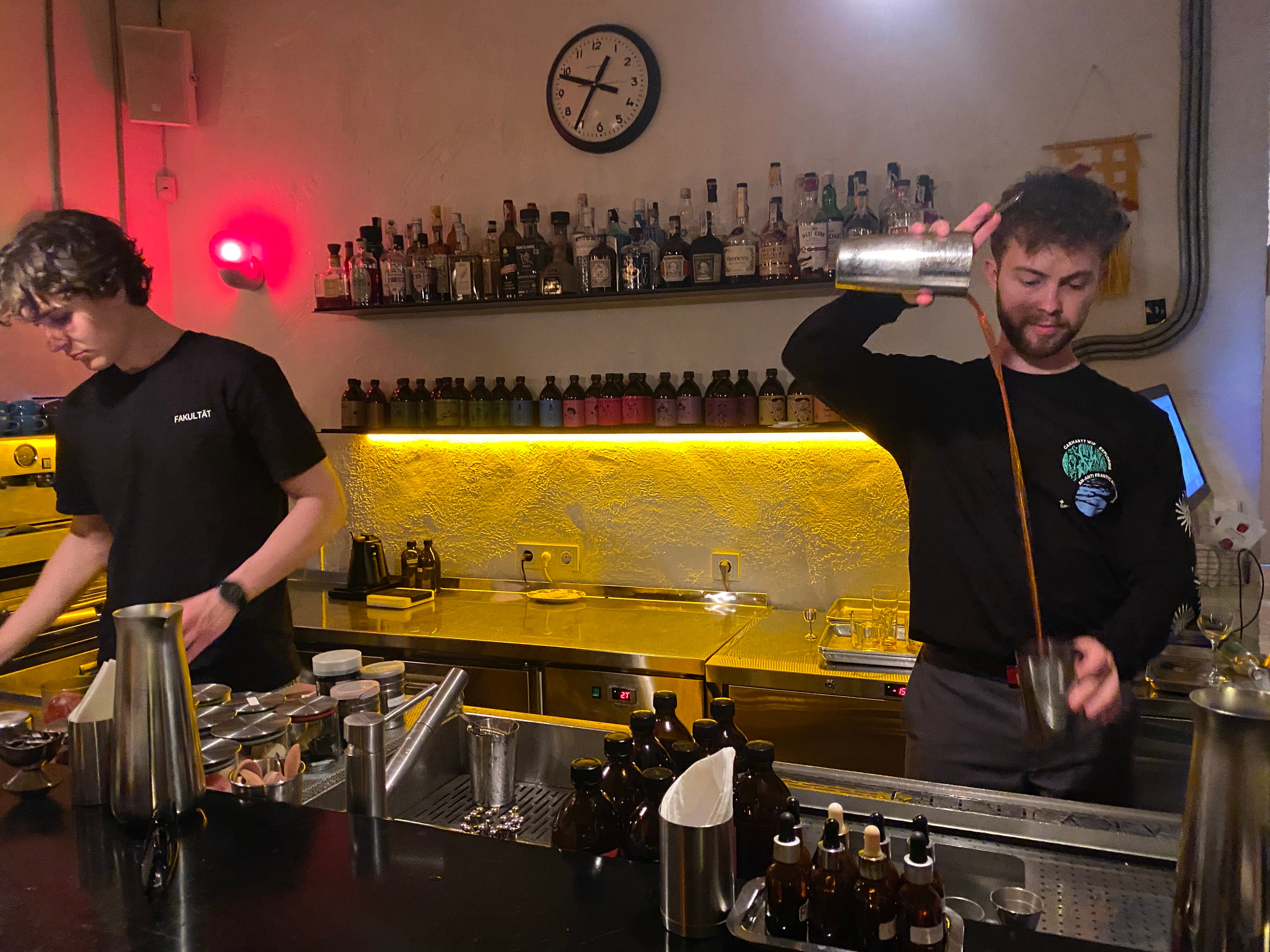
Next day in Odesa I sit down in a bar. Mykola the barman has lived in Poland and speaks Polish to me. Everyone here has friends across the border, he says. He went there and came back, knowing he may be conscripted, and sent to front. I ask about his motivation to return, and bring up the recent Zelensky quote.
Mykola shrugs. It does not matter. Among his friends, support for Zelensky is moderate. Zelensky’s patriotic stance and resilience were remarkable, especially in 2022. But people are tired of his style: tactical, reactive decisions made in a circle of close friends, while strategic reforms never come. He’s an actor really, says Mykola, yes a charismatic actor, while the country needs a manager with a calculator in his head. I ask about alternative political forces, role models Mykola might value. He shrugs again, bored with the topic. “If you talk about the guys in the parliament, there is no one I respect,” he says. “They all have a second passport: German or Israeli, whatever. They do their murky business there and will be the first to leave when the enemy comes.” Then he looks at me, anticipating my next question:
“Ukrainians do not fight for Zelensky. They fight for their homeland.”
“They Are Enemies to Me”
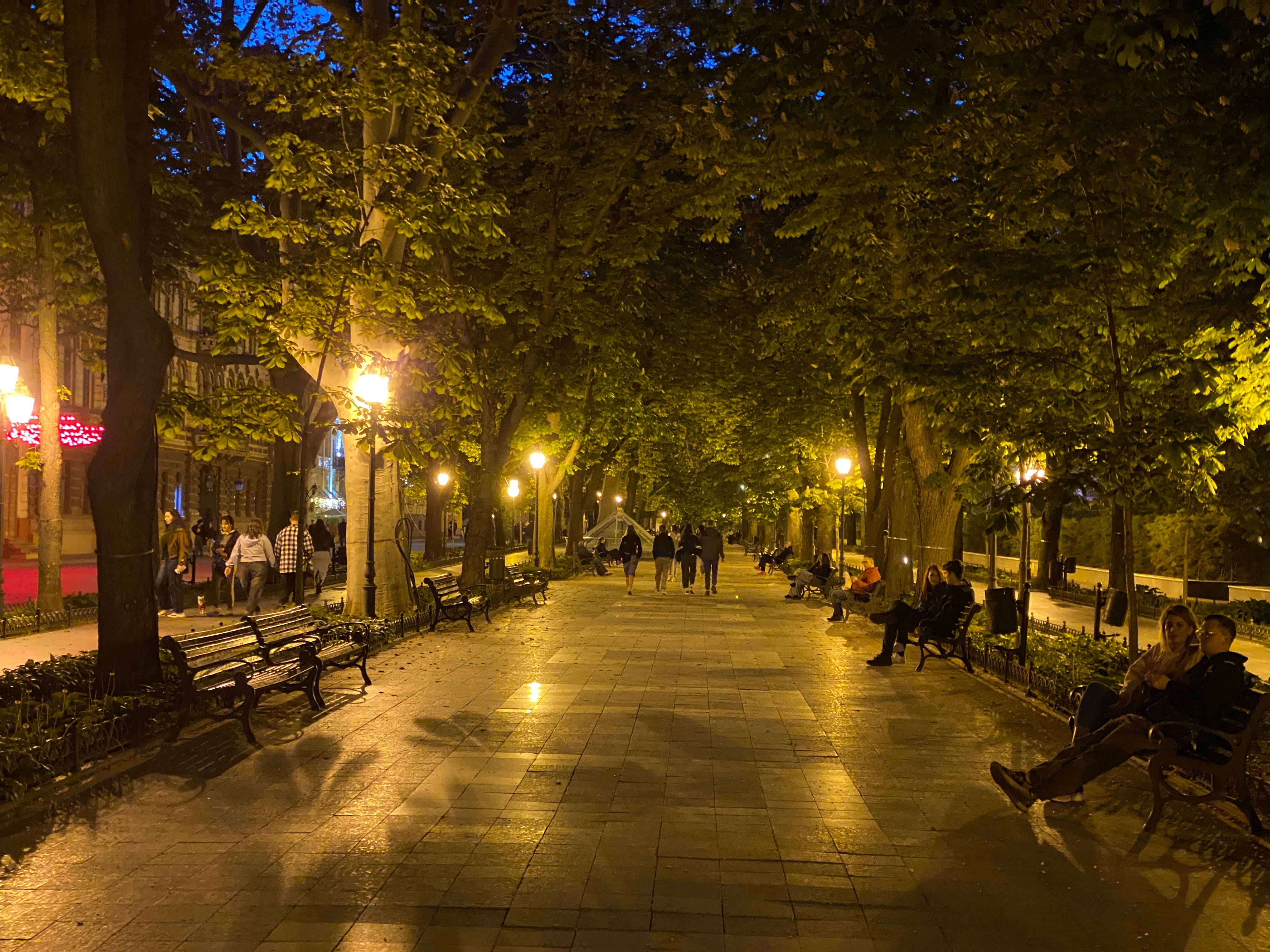
You can easily fall in love in Odesa. I walk the boulevard and the parks. The beach, the opera house, the dilapidated philharmonic building that still hosts regular concerts, the outdoor gyms full of active young people (mostly soldiers), the market. People talk to me eagerly, openly, visibly curious about me. This is not the Soviet mentality I expected. There is not a trace of suspicion or prejudice. Many people thank me for my humanitarian missions, which is embarrassing: they deserve far more respect, for their resilience and courage.
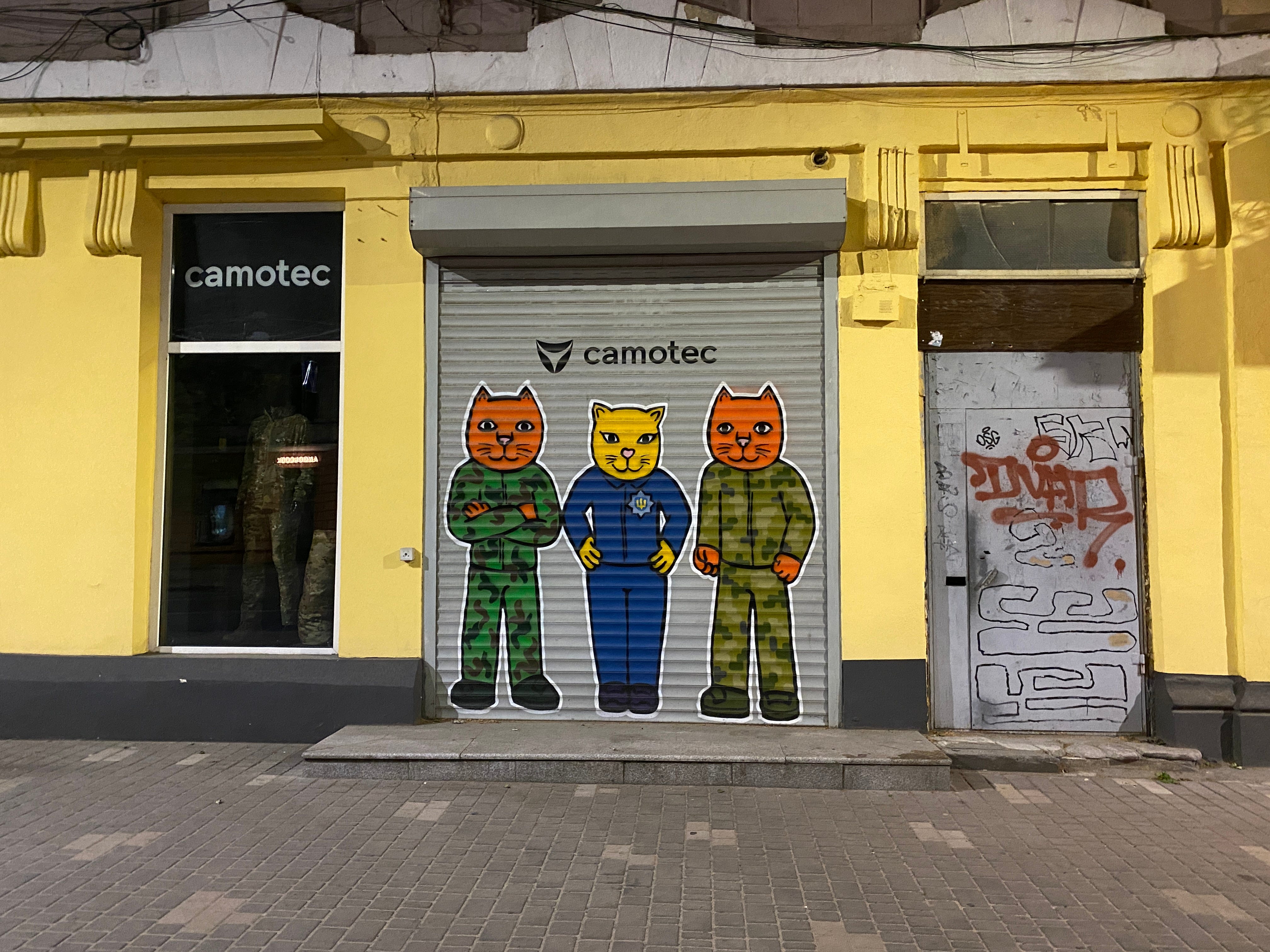
In Odesa you cannot miss the cats. Murals across the city show cat-like figures as soldiers. I ask, and get different answers. One: Odesa is “cat city,” full of strays. Another: the murals try to normalise the situation, to make it more bearable. Soldiers at the front, I am told, often pose for photos with cats, a small substitute for home.
I stop in a cafe and try to speak to people as I always do. Somehow here, in Odesa, I find it easy. Oksana, the woman across the table, is attractive, in her thirties, and comes from Luhansk itself, now occupied by Russia. She tells me her Ukrainian identity was always clear in Luhansk, like the Ukrainian anthem they sang at school. After the invasion she fled, and now lives in Kyiv. Most people fled, as she did. Some classmates stayed behind. They no longer live in Luhansk, she says: those who stayed have, in effect, emigrated to Russia. I ask her to tell me their stories. She does not know them. She cut contact with everyone who stayed, erasing them from her address book. “Vony dlya mene vorohy,” she says simply. They are enemies to me.
Oksana asks what I feel about Ukraine, now that I have seen Lviv, Kyiv, Kharkiv and Odesa. I respond: I am truly impressed by the resilience, the excellent organisation and the positive energy. What worries me is that today’s Ukraine is a deeply militarised society. The military cult, already strong from the Soviet legacy, has grown by an order of magnitude. Under the circumstances it is understandable. It is also frightening.
As we talk, we watch young playboys on absurdly expensive motorbikes racing down the street. If your father is rich and you want a girl who appreciates it, Odesa is the place to look. After one passes us, Oksana says something that stays with me for a long time:
I do not like motorcycles. They sound like Shaheds.
Pour, Brethren
We have talked for hours. When Oksana leaves, it is evening already. Somehow I fall in with a group of five, having a good time over beers. I join them. I soon learn it is the last night of their weekend: tomorrow they go back “to work.” What is work? Alex is a captain in the navy; Sergey is a soldier in Zaporizhzhia. I half expected this, but still, after nearly three weeks in the country, this wartime normality keeps shocking me. The people I meet may be dead tomorrow, “at work.” I push on it. I ask some clumsy questions. Alex nods; he understands. Instead of answering, he reaches for his phone and plays a song, which is the answer.
The moment I hear it, the emotion hits me like thunder. I know this song. A very old, anonymous, haunting Cossack tune. Hearing it as something contemporary is, well, heavy.
Pour, brethren, our crystal goblets, so that bullets will pass over our heads.
Pour, brethren, while we still have strength, while the trumpets have not yet sounded.
Two Pasts
My trip will soon come to an end. Walking home, I think about all the conversations I had in Ukraine. The ominous meeting with Olga was a fly in the ointment. The rest of the trip was almost perfect. I keep turning over the same discrepancy: the fantastic people I meet, and the grim, nationalistic news.
The Western media, limited by the five-second attention span of their readers, tell a simple black-and-white story: Putin bad, Zelensky good. How far will that get us? Not far.
The Ukrainians I met know better: Zelensky is not Ukraine. His later explanation, intended to clarify his UPA incident, made things even scarier: he said the decision was not his, and he will endorse anything his soldiers want. What does “anything” mean? I do not want to know.
Why is Europe standing with Ukraine? Is it because we love Ukrainians as such and hate Russians as such? Because, genetically, “we hate each other, high five”?
I hope not.
Russia, a colonial empire, glorifies its war criminals. Ukraine, so we think, stands for Western values: truth, justice and freedom. This is what powers international support. Joe, the Canadian, did not come here to salute the Ukrainian colours, but to stay at peace with his own values.
Now, what if Ukraine starts glorifying its past criminals, and endorsing “whatever its soldiers decide,” exactly the way Russia does? For the international supporters, this will be a blow. After Zelensky’s words, Lech Walesa, a prominent long-time defender of Ukraine, unpinned the blue and yellow ribbon from his jacket. How long will Joe the Canadian stay on frontline?
Two Futures
A year ago, after a mission to Lviv, I wrote about two futures for Ukraine. What can I add today? In the crystal ball, I still see two.
Fascism is not unique to Putin’s Russia. It accepts any combination of national colours. In fact, it loves them.
Why did the Bucha massacre happen? Simple: the Red Army’s WWII criminals were never condemned, so their grandchildren repeated the history. By the same logic, if Volhynia is not condemned, it will return. Kyiv’s recent words “no other country will dictate our history to us,” are frightening. The idea that a nation can erase its past, then reinvent it and project it backwards is a dangerous fiction.
Two hours later, in bed, I am woken by motorcycles still racing down the street. From the roar, I can tell they are right next to the hotel. I check the time: two in the morning.
Those are not motorcycles.
I should go to the shelter. But after three weeks in Ukraine I have learned the local way: you cannot function if you do this every night. While the Shahed attack goes on, I try to sleep. I hope my hotel is not the target. Then a terrifying thought comes: I hope it is someone else’s hotel.
Post Scriptum
This is the fifth story of a series from wartime Ukraine. As long as the war is ongoing, I cannot say “final”.
Thank you for writing and sharing these stories. I absorb every word of your Ukraine trip. This is a unique opportunity for us, Substack readers, to get a glimpse of the wartime reality in Ukraine. I wish I could do what you are doing and I hope you will keep writing about your experience there. I personally have huge respect for Zelensky. I don't believe anyone else in his place could have achieved what Zelensky did, but he is just a human being, living under unimaginable pressure for such a long time. He can't win the war by himself. He needs his army and I can understand why he is forced to compromise occasionally. But I also worry about the future of Ukraine. Your point is very valid. And there are so many other dark undercurrents that are now just swept under the carpet, because the war is a priority (understandably). I am afraid that Ukrainians (as well as Russians) will be paying the price for this war for a very long time after it ends.
Incredible piece. The opinions on Zelensky are interesting, as many of us in the US support Ukraine and respect Zelensky without knowing the full story. Learning much from your pieces.