
Swimming in the Zero Zone
Kharkiv, Ukraine: One million people who refused to leave

Suddenly a siren howls nearby, announcing an imminent drone strike. We should run to the shelter. Natasha finishes her cigarette, reaches for another, and offers me one. I watch an old lady make her way slowly to a small grocery store. The siren continues. This is Kharkiv, forty kilometers from the front line, the “zero zone.”
Day 0: Arrival
We have just finished our humanitarian transport in Kharkiv. I had hesitated to come this close to the front line. I finally decided to come, hand over the transport, and return immediately. Russia is less than one hour away; Kharkiv is bombed several times a day. The sirens are frightening, and Russian drones are often visible in the sky.
We arrive in the late afternoon. Run away from here as soon as you can, says the scared part of me. I promise myself: only one night here, and then run.
Serhii, my smiling local contact, arrives to meet us in an old but fancy BMW that he repaired himself. He is a soldier and a mechanic. He comes with colleagues who give us warm hugs, chat a bit, and ask for news of mutual friends from the volunteer network. Then they immediately take over the transport and leave: cars are gold, needed at the front. Serhii invites us in his BMW: we drive to a pizzeria in the town center.
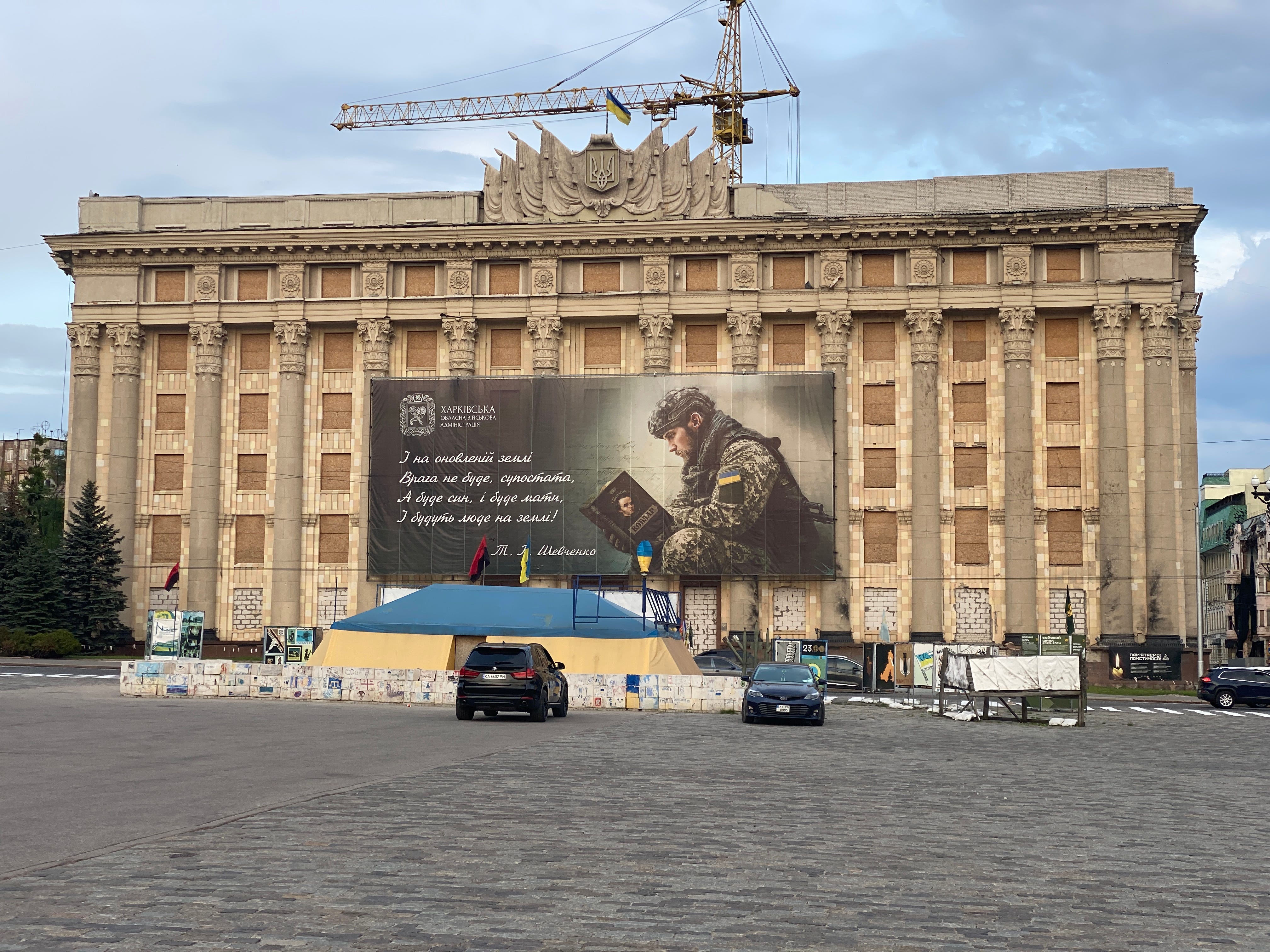
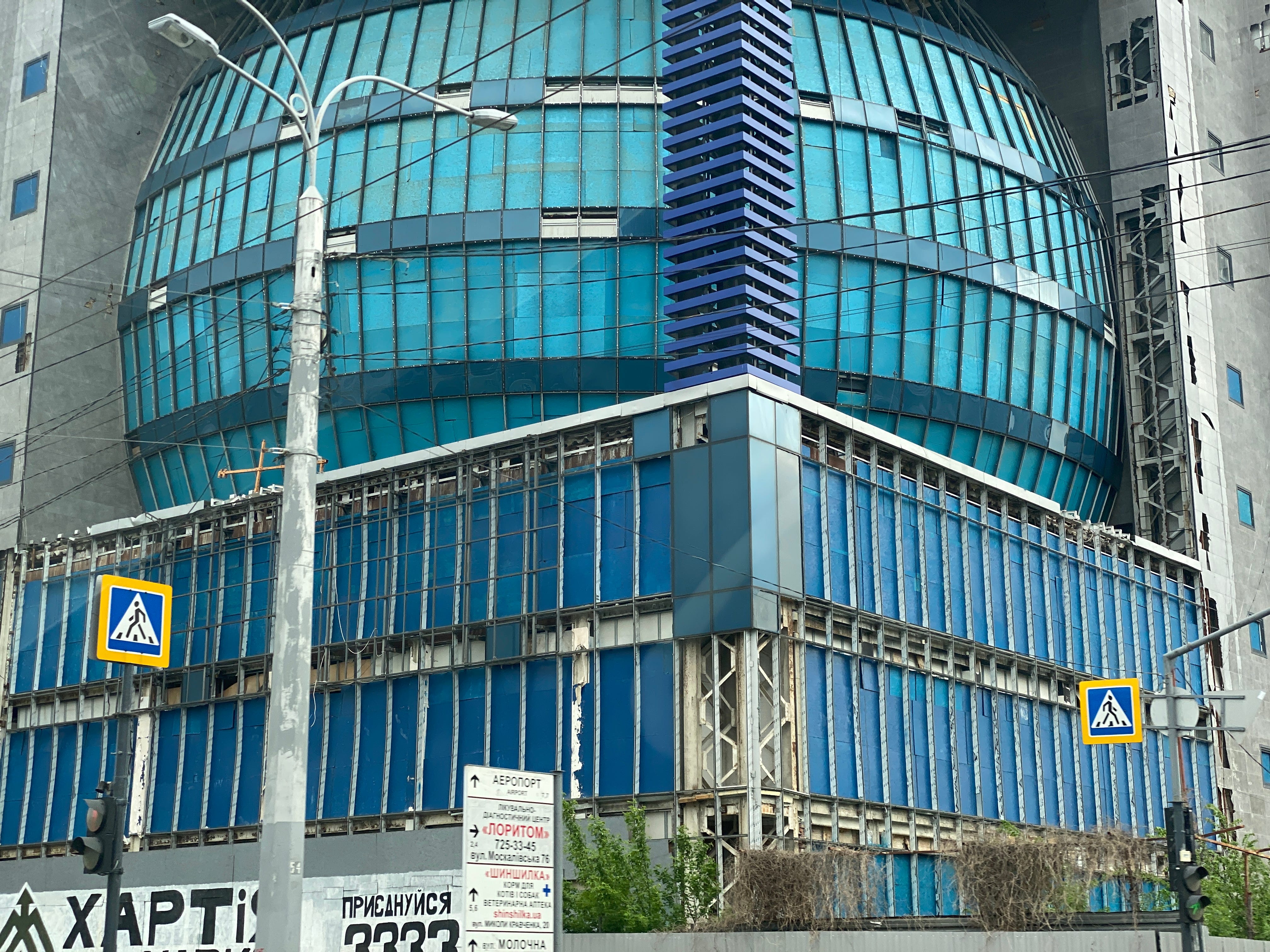
I ask about a building clad in OSB board. It turns out to be the town hall, the prime target for the Russian drones. Serhii shows me a video of its explosion a year earlier.
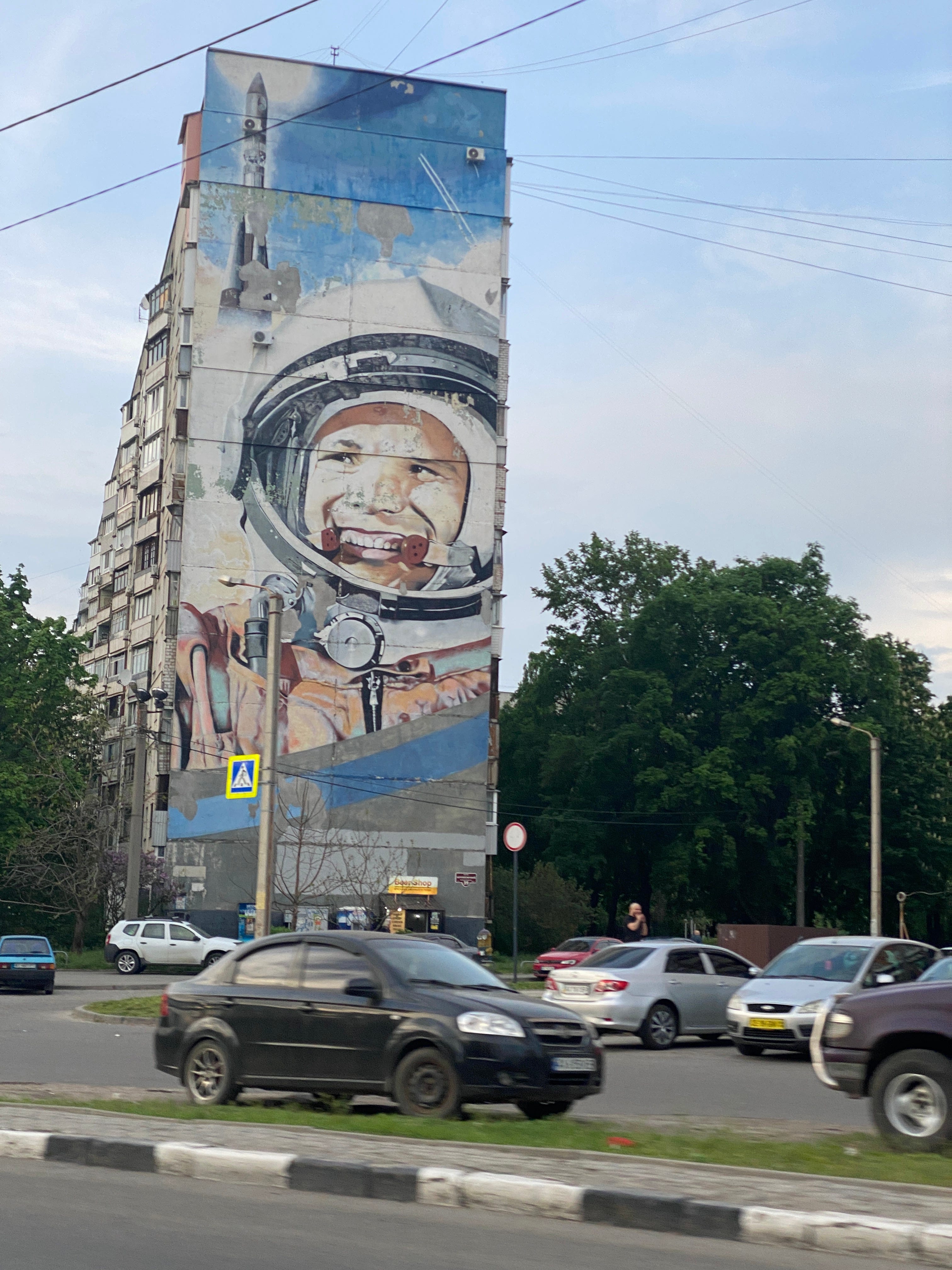
We pass a gigantic portrait of Yuriy Gagarin. The buildings nearby are visibly damaged by Russian drones. I am sure Yuriy, as a military man, is proud of the newest achievements of his homeland’s culture. I can tell he is smiling.
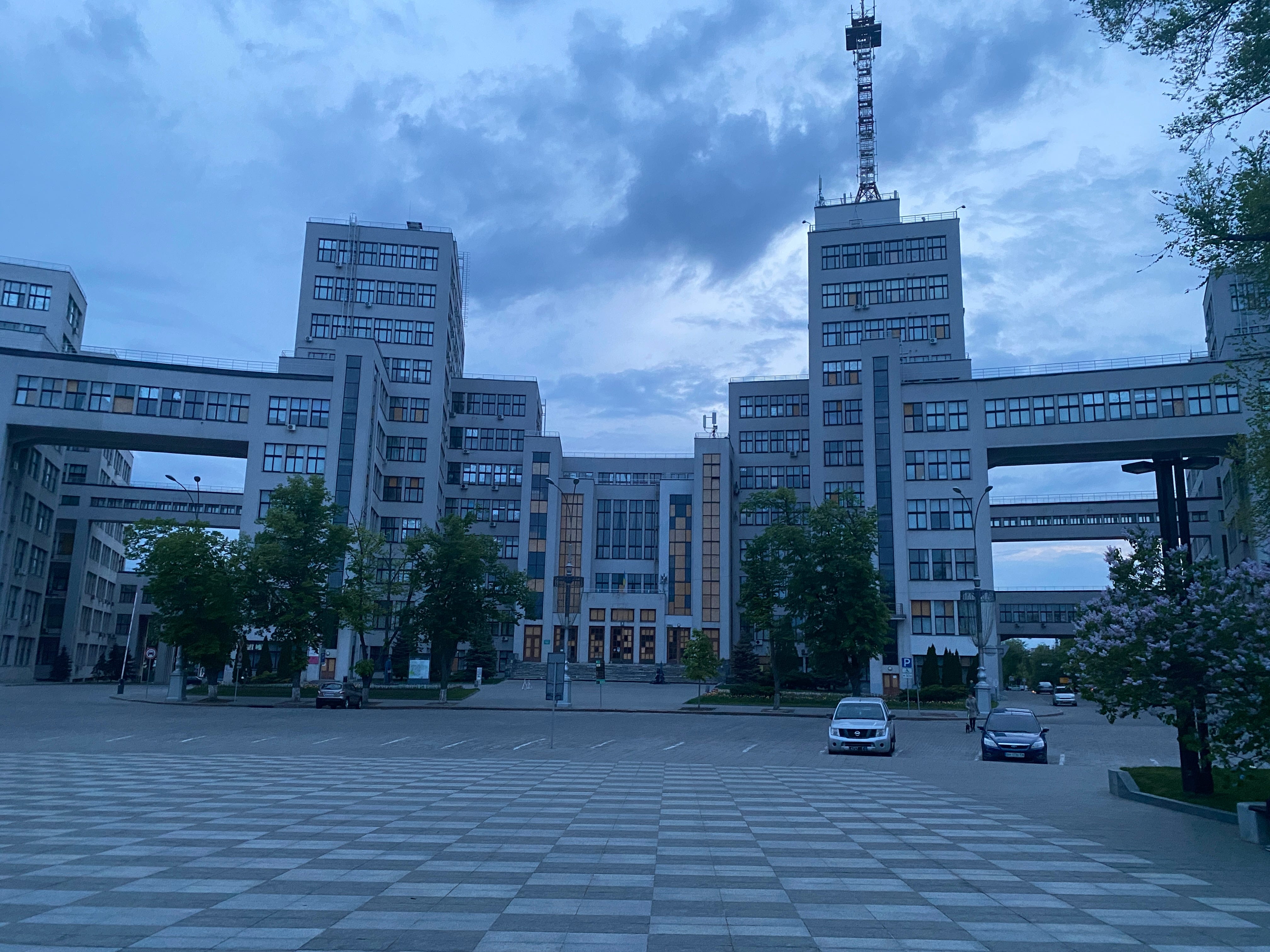
And here is the university, its windows covered with OSB.
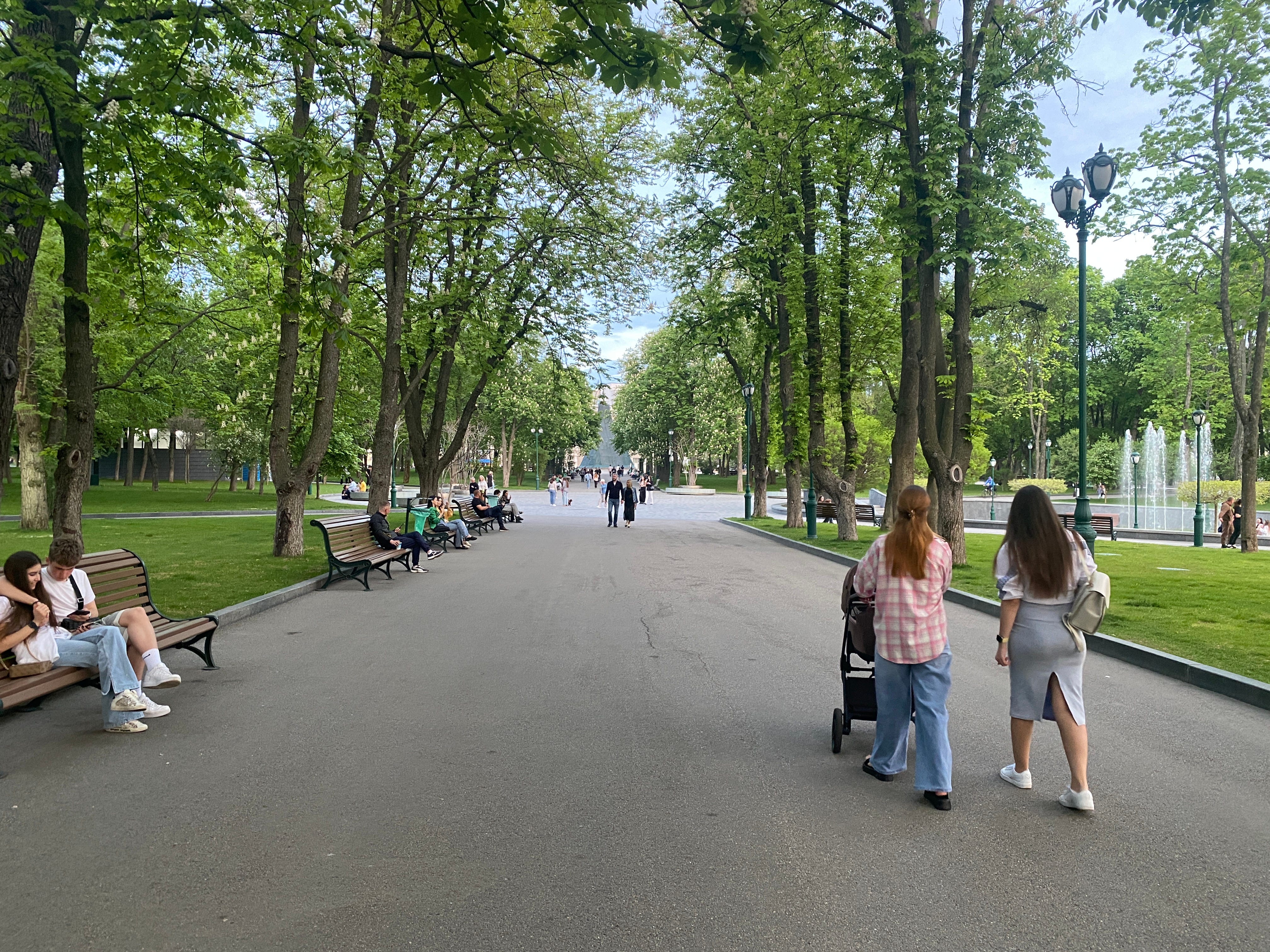
The park, however, is full of people. Just like in Lviv, all the restaurants are open. So are the shops, the grocery stores, the supermarkets, modern and well stocked. Ukraine is highly digitalized; hardly anyone carries cash.
“I am tired of explaining this to Western people. They expect us to spend our days in graveyards, mourning the dead. But this is impossible. We have been near the front for the past four years. We simply try to live.”
After dinner, we drive to Serhii’s home. We drive and drive and drive. I begin to understand the enormous size of Kharkiv.
Towns in Ukraine are just huge. So is Kharkiv, a milionnik, a town of over a million people. Vostochnyi, the distant residential suburb where Serhii lives, is nineteen kilometers from the center. That is not even far, he tells me. Kryvyi Rih, Ukraine’s longest town and a major mining center, stretches a hundred and twenty six kilometers. No kidding; I checked later, and it is true.
All this changes my idea of Kharkiv, which I had imagined as a deserted, post-apocalyptic war zone. I was quite wrong. Now I am fascinated. My delivery mission is over, I have time. I decide to stay a few nights, calm down, explore, and see what happens.
Day 1: The Neighborhood
Next morning I wake up in Vostochnyi, thanks to Serhii’s hospitality. The apartment is small, minimalist. Two tiny rooms and a kitchen. Windows reinforced with tape against explosions.
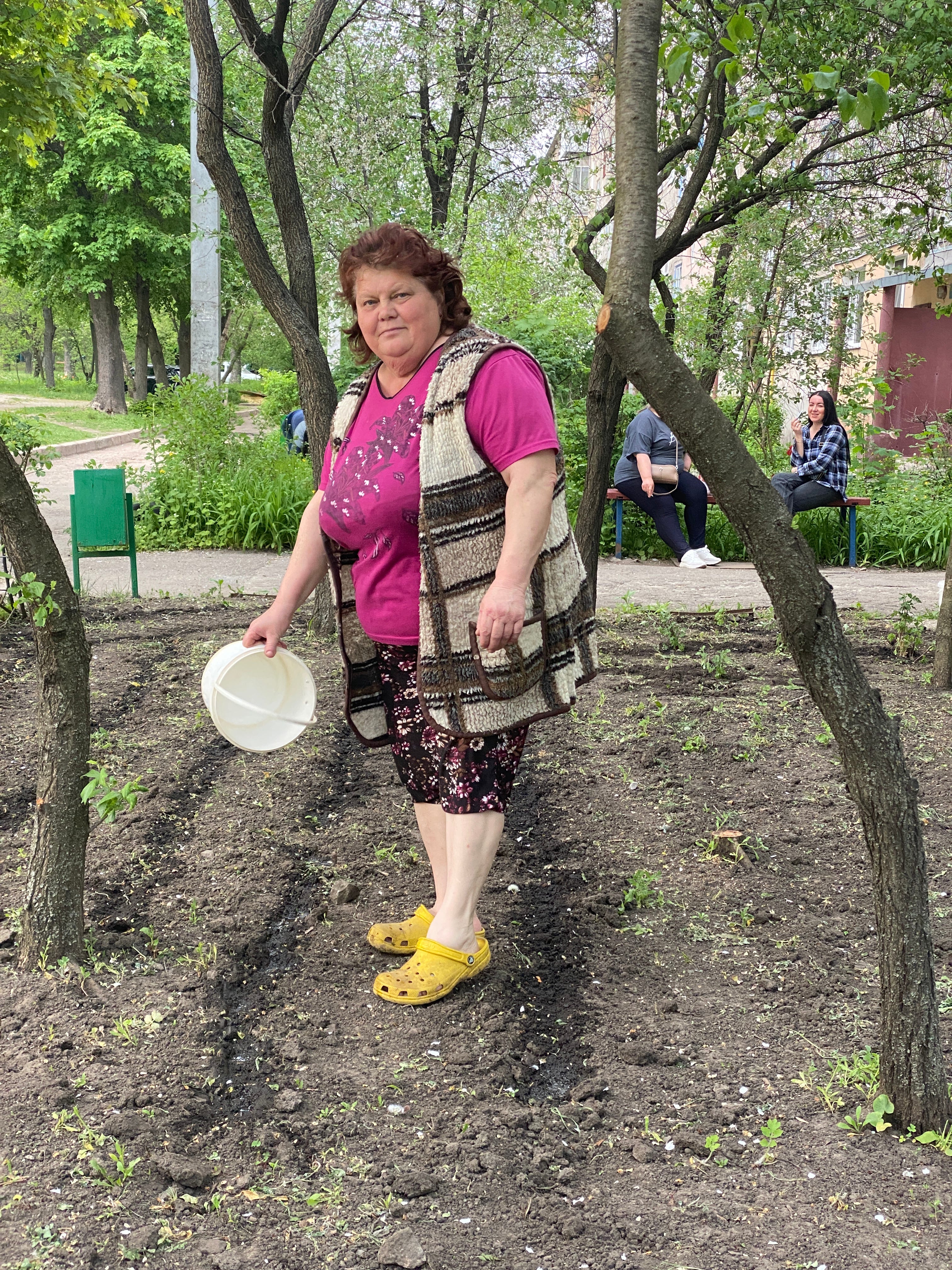
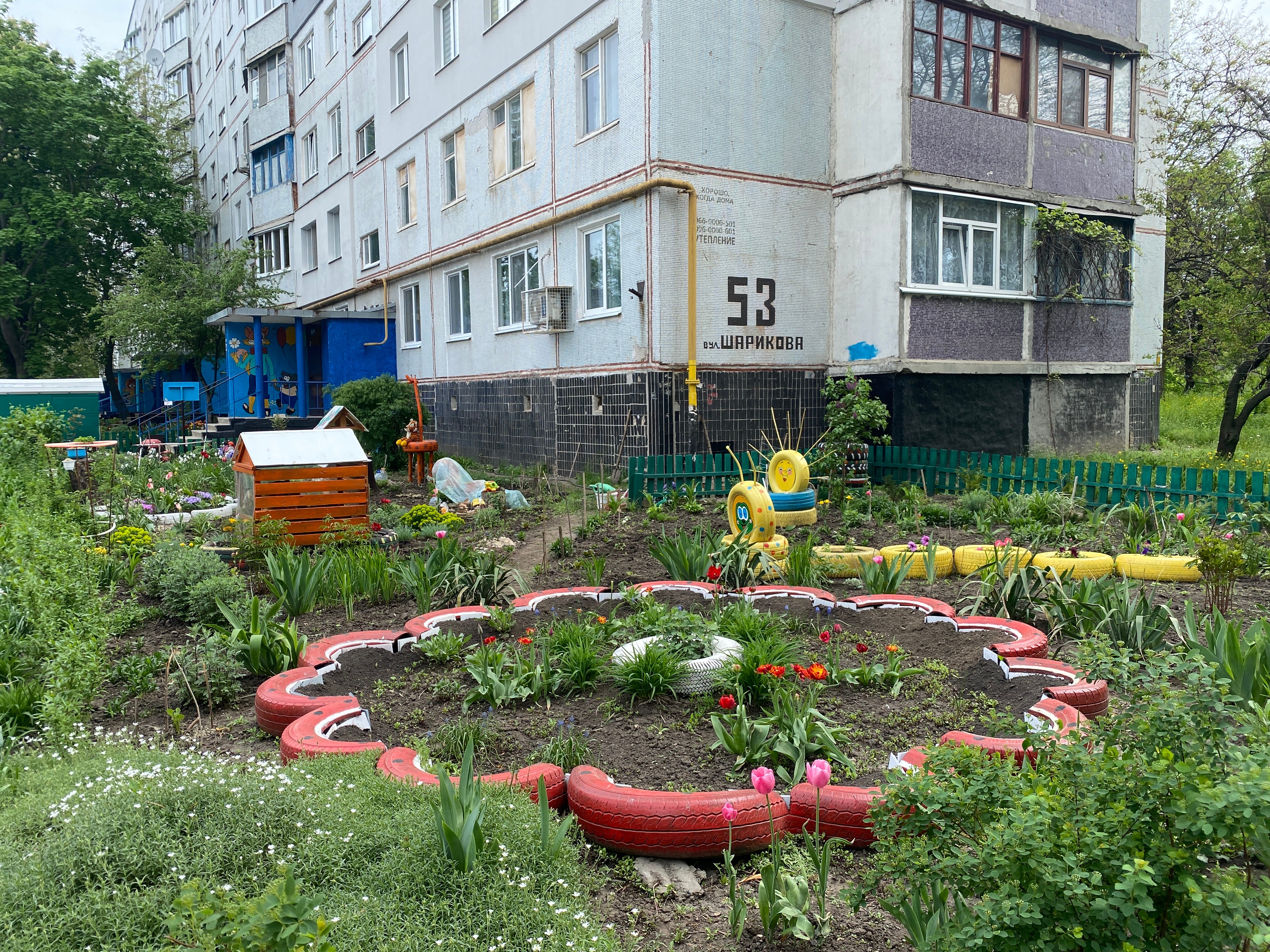
I walk out and talk to the neighbors, Natasha and Mira, whom I met the night before: Mira kept Serhii’s keys while he was away. Neighbors trust each other. The women are busy with some gardening. The area around the building is tidy. Ukraine is a country of contrasts. Some areas are like this: tidied to the extreme, pretty and clean, maintained by volunteering neighbors. Others are the opposite: ruined, devastated.
While we talk, a siren sounds. We must run to shelter. My feet are ready to move, just that I don’t know where the nearest shelter is. I look at the women. They don’t catch my look. Mira does not look up from the flowerbed. Natasha finishes her cigarette, reaches for another, and offers me one.
I decide to stay and watch what happens. Nothing happens. An old woman walks to the grocery store. There, she makes her shopping: eggs. She exchanges a smile and a few words with the owner, and then, slowly, makes her way back.
A pizza delivery boy passes on a scooter.
The siren continues to howl.
People have simply got used to the war. And the attacks are real. You only have to walk around to see it. Many windows in the neighborhood have been replaced with OSB boards, the walls marked by fire and explosions.
There are other signs of war, too. More ominous.
When I walk back from shopping, two men in khaki uniforms get out of a car. They approach, wave their military IDs, and ask for my ID. Which I don’t have on me, having come out for groceries in flip-flops. They realize they have met a westerner and wish me a good day. “Tecekashniki,” explains the shopkeeper.
The TCK is the gendarmerie that patrols the streets to catch army deserters. They are a common sight; I ran into them on my second day. Desertion runs high. Two weeks later, in Moldova, I would meet Ukrainian deserters in a hostel.
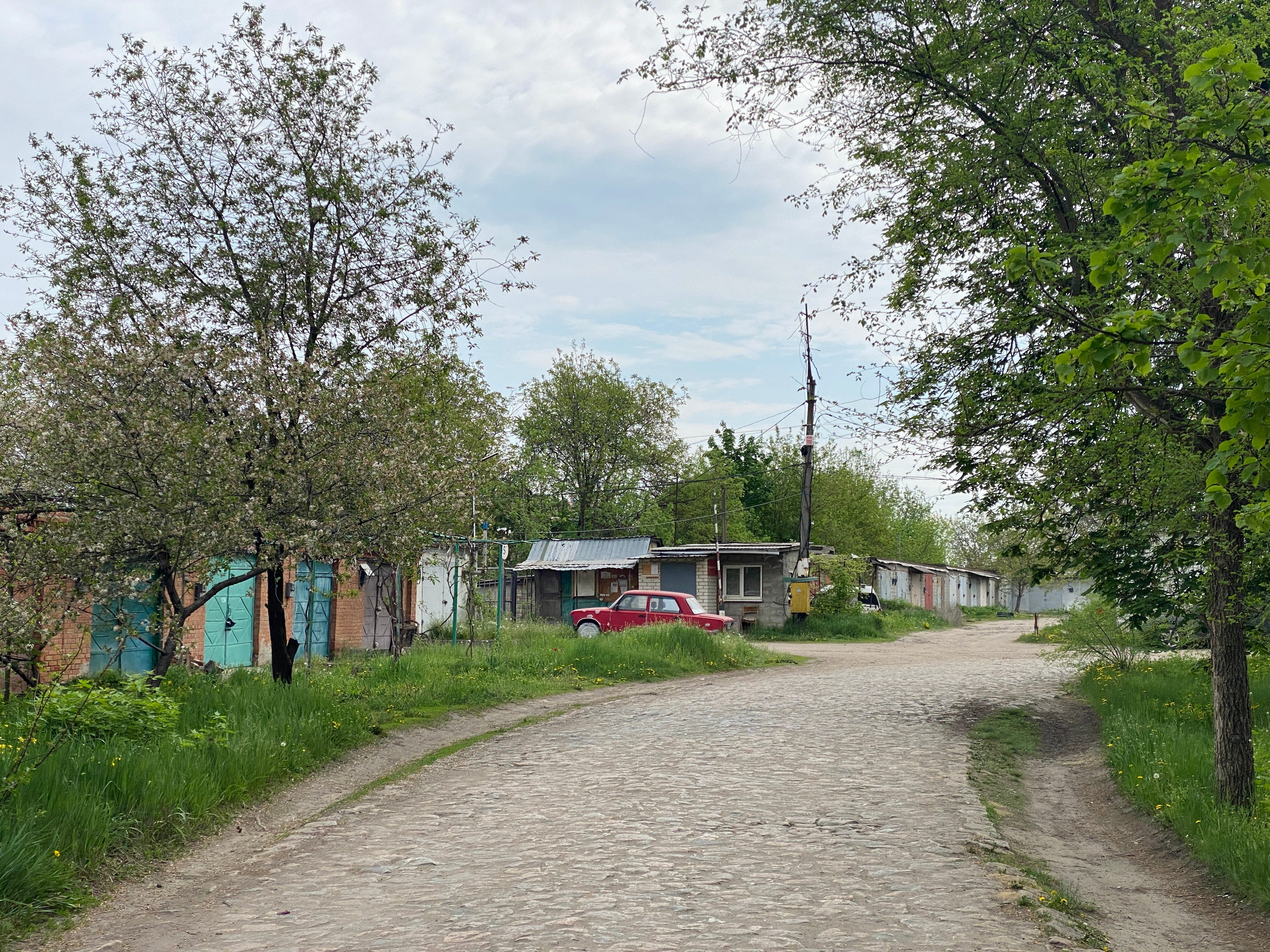
In the afternoon, I jog to see more of the neighborhood. A few glimpses: a defunct train station, a peculiar garden decoration, neighbors diligently planting flowers or rest near the entrances. Spring is in the air. Maybe this place is not rich, but it is not a ghost town. Far from it.
The sirens howled five times today.
Day 2: Swimming
I like to do the simple things local people do. A cobbler’s, a barber’s, or a gym is usually more interesting than a museum. I have decided: I am heading to the swimming pool.
Navigating the swimming pool entrance is like an arcade game: three levels, each harder than the last.
Level one is warm-up. I enter, approach the ticket counter, and I am stuck already. The obstacle is substantial. I am asked to present my national ID. “Are you sure you need my passport to know who exactly is swimming?” I ask the ticket lady, a little surprised. “Of course!” she responds, even more surprised. So I present my passport, which only complicates the matter: she cannot read the Latin alphabet, let alone transcribe it on her Cyrillic keyboard. A colleague runs to help, together we decipher my own name, and in under fifteen minutes my ticket is issued, along with a metal token of some kind. As a gamer, I know the rule: grab all objects, even the strangest-looking ones: you will need them in the next levels. I grab the token and proceed.
I was promoted to level too. I walk up the stairs. The objective now is to sneak in without the obligatory flip-flops, because I don’t have any. I approach a stern-looking girl guarding the door, whose only job is to make sure I leave my shoes behind. Her face expression reads: “there will be trouble”. But the news has already spread: a foreigner will be swimming today. I am announced as innastranec (a foreigner), so she treats me gently. She introduces herself as Natalya, even lends me her own flip-flops, and shows me the way to the men’s room.
Level three: the men’s room. Climbing to the first floor, I sense I am about to be tested for speed, and indeed. I enter a big, empty space. The lockers line the walls. Another lady, wearing an apron and holding a mop, stands right in the middle and keeps watch over the place. I do not ask her name; I am quite sure she is a Svetlana. Svetlana spots me and leads me to the locker, operated centrally by an ingenious system of mechanics and early electronics that must date back to the epoch of Yuriy Gagarin. Here is how it works. At the ticket counter I was given a mysterious piece of metal, now strapped to my wrist. Thanks to my Indiana Jones intuition, I notice a suspicious little slot in the wall, directly behind Svetlana. That is the reader. I put the magic object inside. Then Sputnik processes the information at the speed of light, and a few seconds later box number sixteen in the far corner makes a loud click. Which means the Sputnik has scanned me and released its electromagnetic spring, but only for a few seconds! Bingo, my box is sixteen. “Run!” yells Svetlana, and I rush over the slippery floor, in time to open it.
But now what? There is nowhere to hide. I look at the other men: they take off their pants right in the middle. I look at Svetlana, who keeps watching over her mop: she tactfully looks away to the other corner when they do. So I follow suit, and soon I am through the showers and into the pool.
I cleared all the levels, and the prize is worth it.
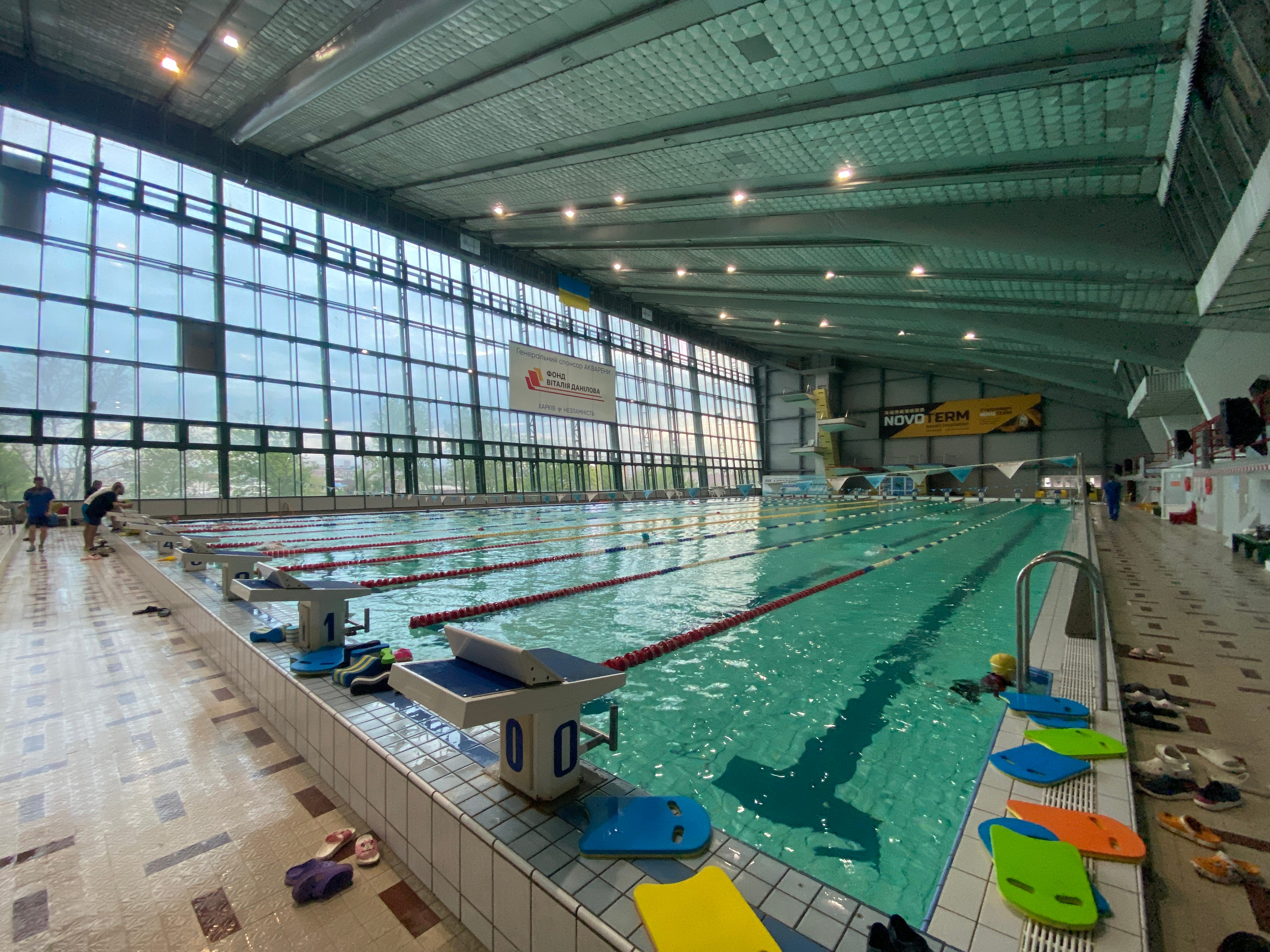
The pool is enormous. Olympic size, fifty meters. The lanes are almost empty. A couple are booked by a school, a couple by professionals, the rest free and almost deserted. Whistles are heard: the coaches blow them constantly, I am not sure why. Maybe swimmers go faster when they hear a whistle. The atmosphere is unmistakably Soviet.
The water is much colder than I am used to, maybe eighteen degrees (for a swimmer, one degree makes a big difference). Fifty-meter Olympic pools are rare: in central Paris I found only one, and counted eighteen swimmers in my lane. This time in Kharkiv, we are three per lane. It is poetic. I slowly cover the lane, looking down, watching the floor step down steadily, over three levels of depth. The deepest must be below four meters. It is the nicest swim I have had in any public pool in years.
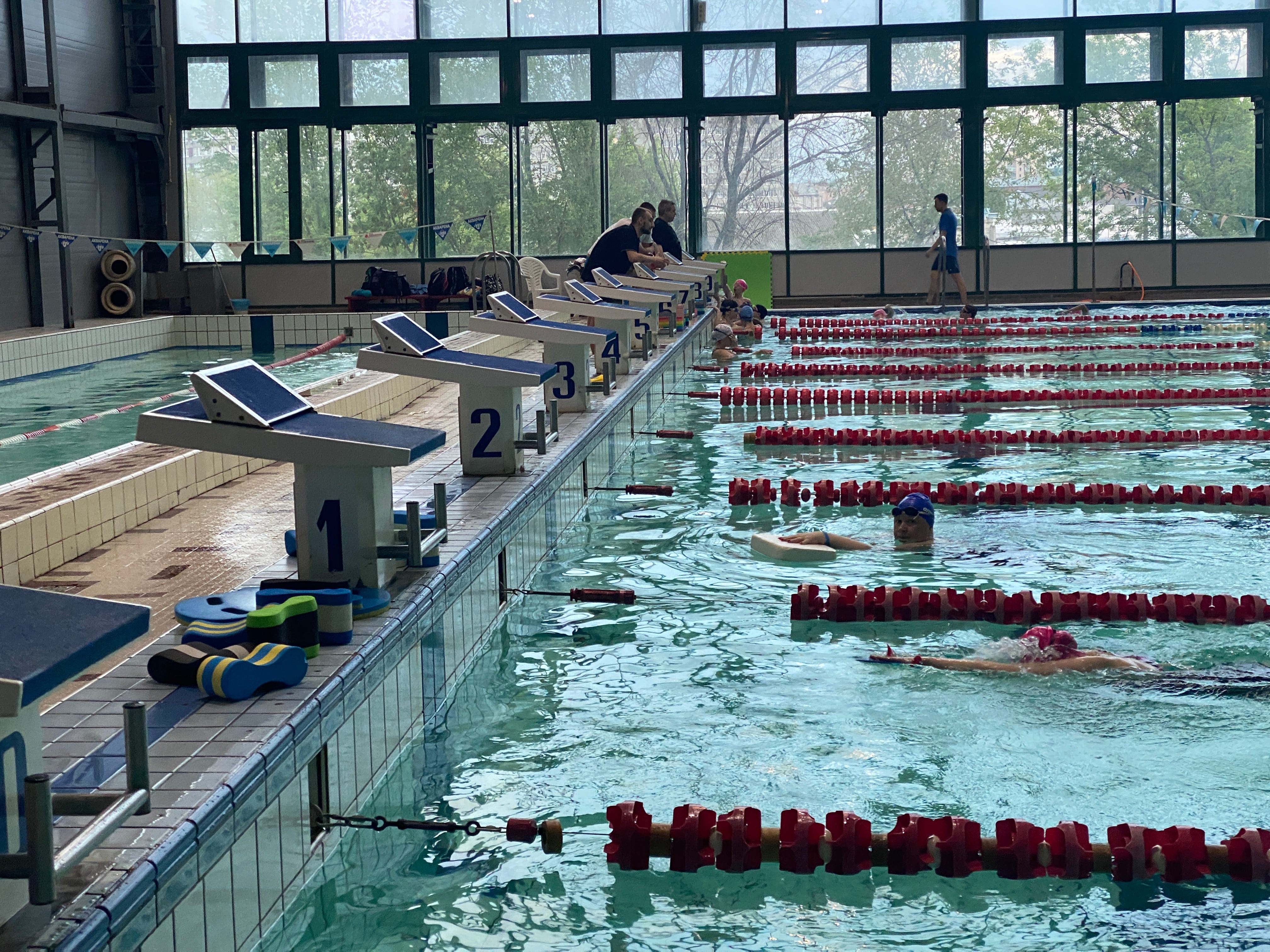
Walking out, I chat with Natalya, as there are no other clients and she has time. She is a kind, handsome woman of about forty. I ask about life in Kharkiv. “This is home,” she says simply. She does not want to go abroad, or anywhere. But she would gladly take my number, because of her son. He is sixteen, and she would love to find a future for him. A better future, she says. We exchange numbers.
Day 3: The Train Station
On the third day, I prepare to leave. I need to get to the train station to buy my ticket, something I look forward to as an adventure.
The public transit is wonderful. The trolleybus runs on time and is free. All public transport in Kharkiv has been free since the town became a war zone.
The bus takes me to the metro. The metro takes me to the train station, merely twenty kilometers away. I am pleasantly surprised by the announcements in the metro. “Shanovni pasazhery...” (Dear Passengers...), made in a solemn, elevated tone. Later, on the train, the ticket collector comes through the car and asks passengers to prepare their tickets, in the same manner.
I have never encountered that manner of speaking, elsewhere in Europe. The nearest would be Dumbledore announcing the start of a new year at Hogwarts. Also, at French festivals I have heard the crieur public, a performer making announcements with a similar, deliberately exaggerated manner. Other than that, never. It is lovely; on that metro I felt like elite passenger of the Orient Express.
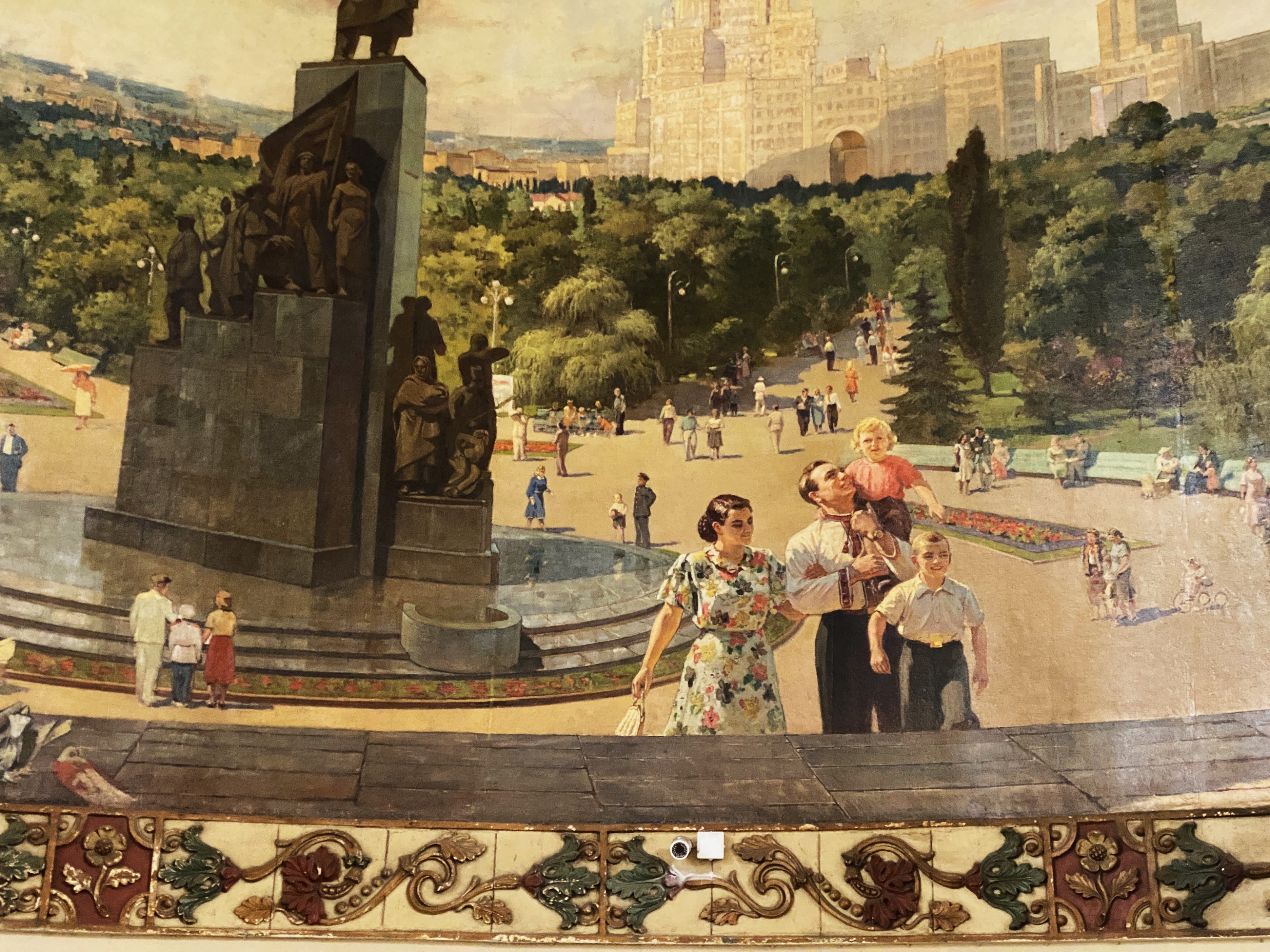
The railway station is worth a chapter of its own. Enormous, elegant, Soviet in style. In the waiting room, a panorama shows a town, possibly Kharkiv, around a Lenin statue at the center, with a smiling family representing the happy Soviet citizens. The style seems lifted straight from Jehovah’s Witness brochures.
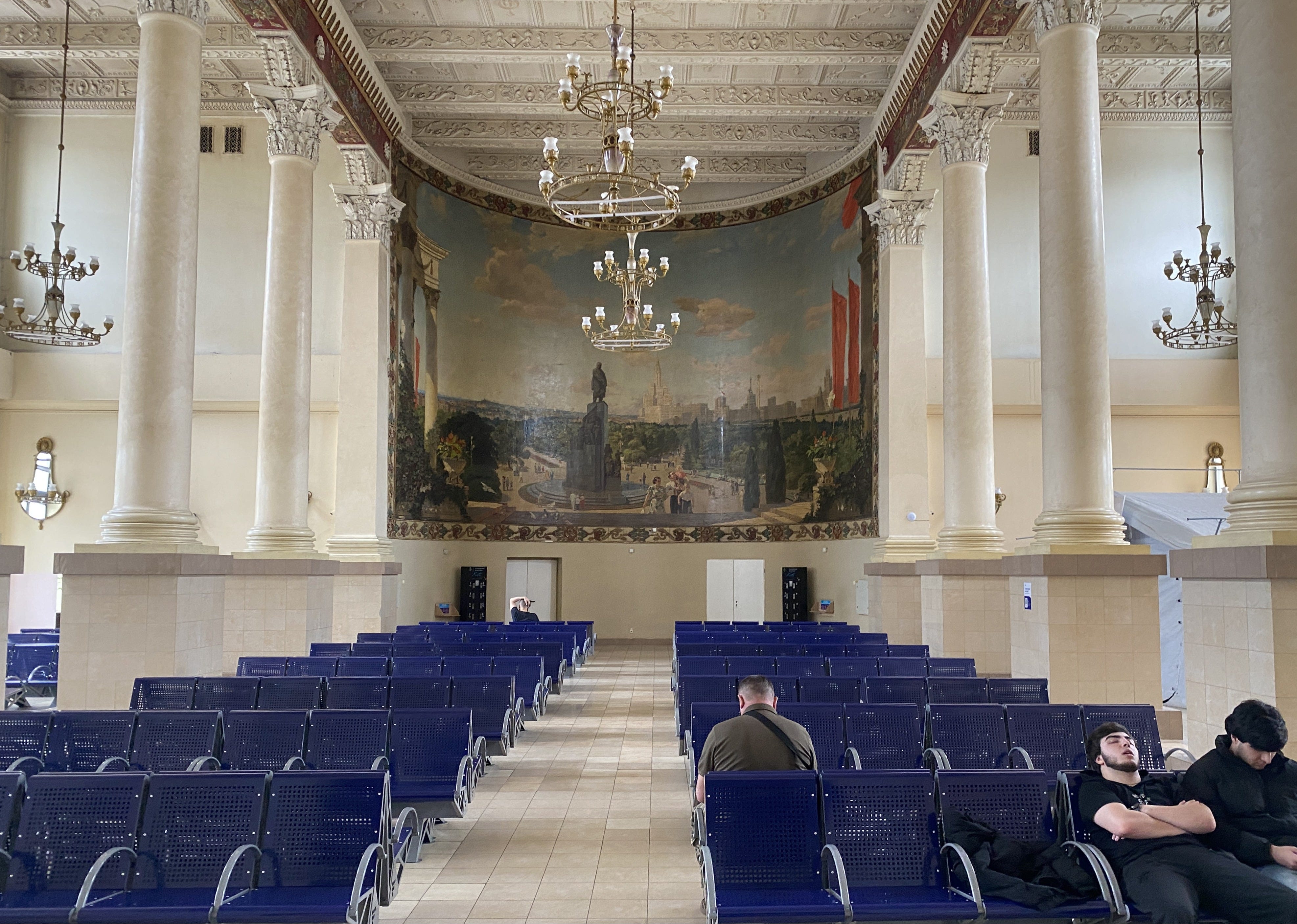
At the other end of the room, another Svetlana sits in her little Svetlana-booth and keeps order. She is positioned so she can see everyone. One look is enough: she is obviously the twin sister of the Svetlana from the swimming pool. She looks at me. You are being watched. Yesterday you went to the swimming pool, and you are staying with Serhii in Vostochnyi, I read in her eyes. I give a sheepish smile and retreat.
My biggest surprises in Kharkiv
France, Italy, and Spain are full of ghost towns: villages, often very pretty, that have become summer retreats for an aging population, most of the houses locked and empty. I remember walking the southern town of Lodève after dark. A few lights, one shady restaurant; it was deeply spooky, most windows dark, the homes abandoned or used only in summer.
In Kharkiv, an hour from the front line, you find none of this. I see no abandoned buildings. The ones with cardboard in the window frames are still inhabited. The town is vibrant.
I begin to understand the routine here. At night the Russian drones hit, often in residential suburbs. Then the ambulances come; the wounded and the dead are taken away; firefighters put out the flames. In the morning the city crews clean up the glass. Meanwhile people go to work and old-timers go shopping. A few days later, the shattered glass is replaced with OSB board, the wall rebuilt with makeshift brick, and the owners, if they are alive, move back in. You can recognize these scars all over the city; almost every other building wears one.
But life goes on. And, a stone’s throw from the border, people refuse to leave. No one is going anywhere. Very much like the stubborn Polish borderland farmers I had met in the sauna on the way here. “This is home.”
The vitality of a million Ukrainians, who go on living forty kilometers from the country that stole their name, is striking. I feel respect, and inspiration. I begin to understand how Ukraine held against the invasion. It held because these people stand their ground. This is home.
Tomorrow I take the train to Kyiv. But I already know: I am not going home, not yet. Kharkiv has changed me. Now I am backpacking through wartime Ukraine.
This is the third part of a series. Earlier: about our volounteering network, the 1000-year history behind the war, and the two-thousand-kilometer drive that brought me here. More from wartime Ukraine to come. Subscribe to follow along.
Fascinating! Thank you for a look at life in a war zone. So much, strength, resilience and courage.