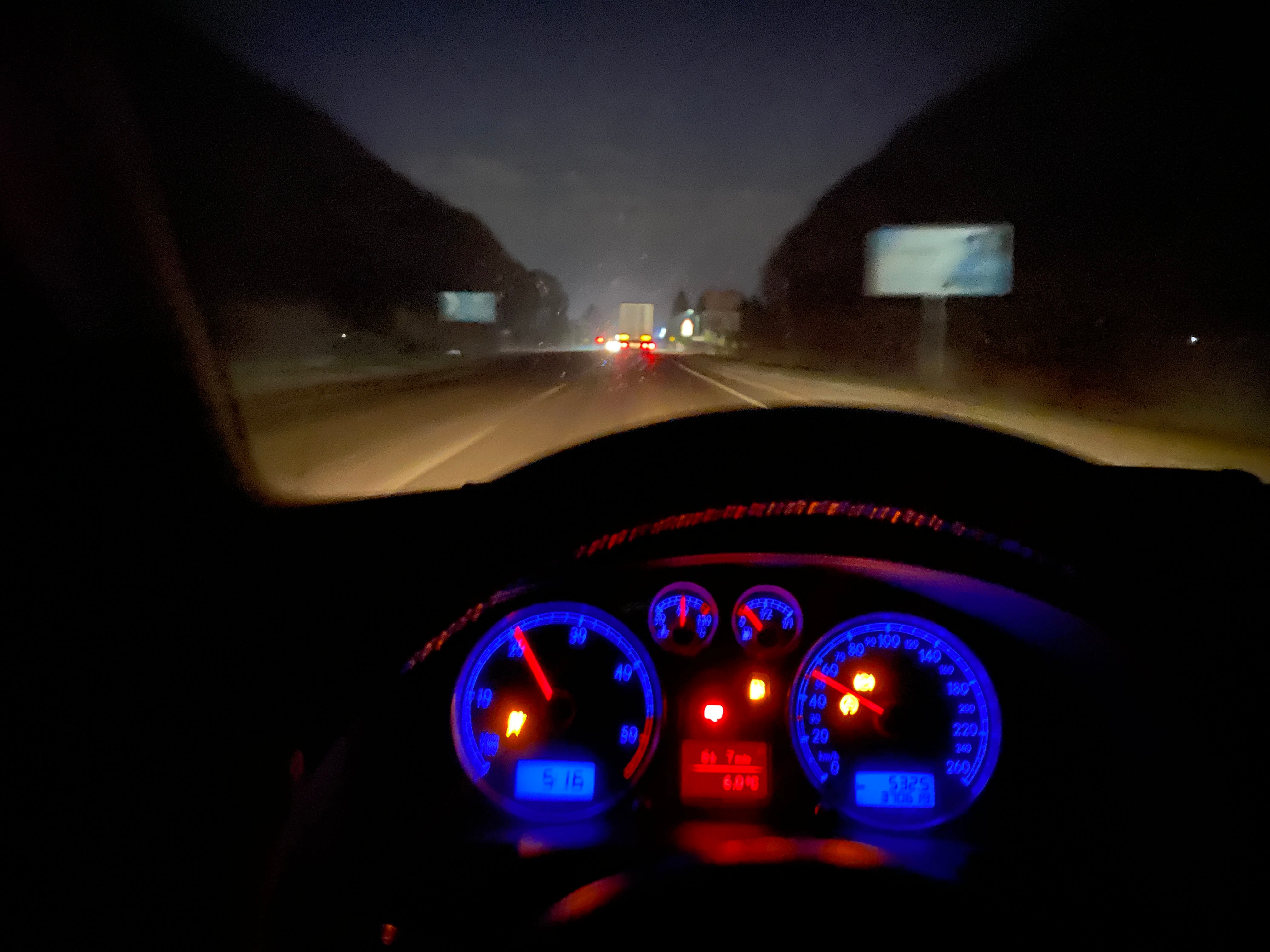
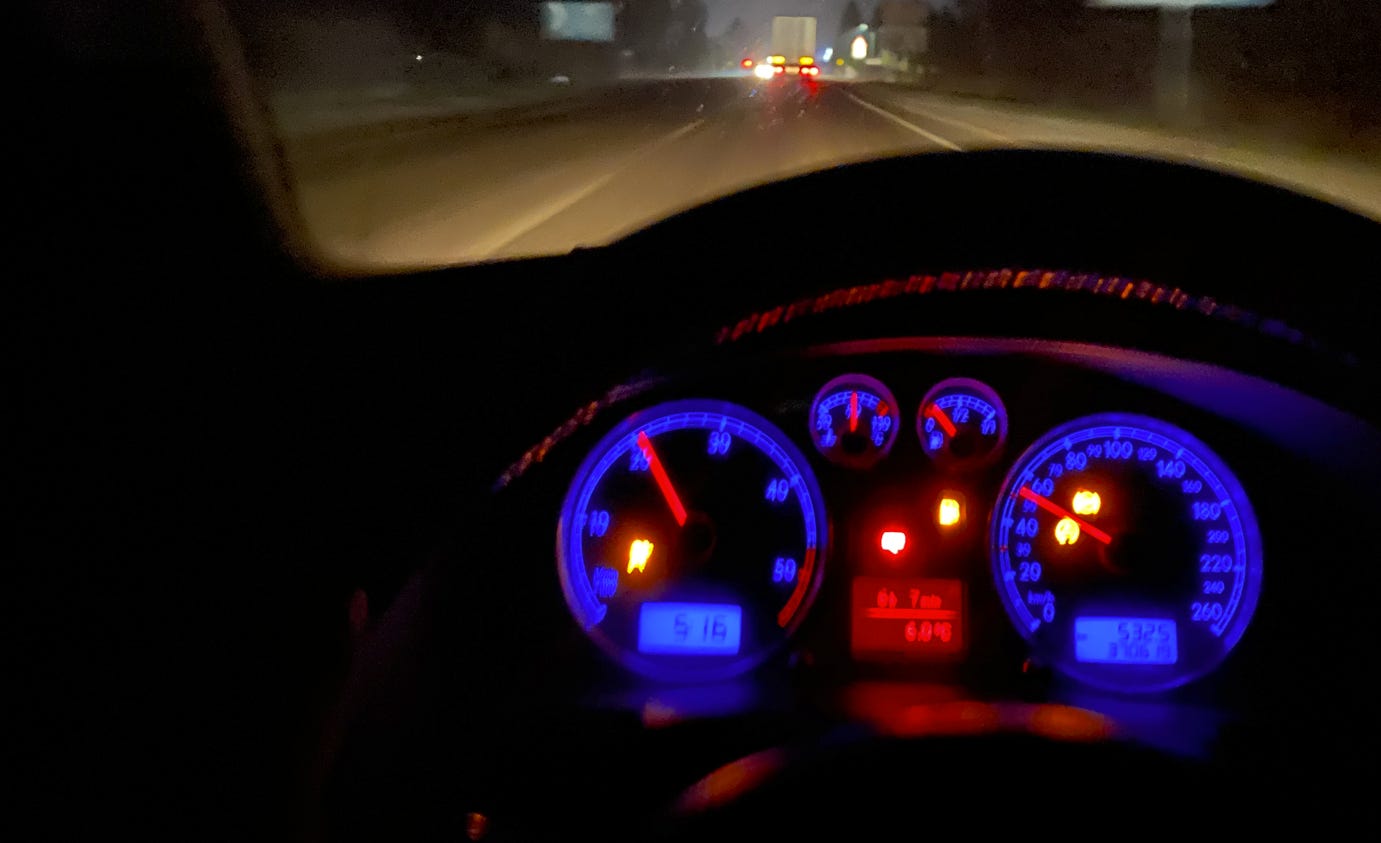
I turn the engine on. The dashboard error lights stay on, all of them. Brakes, battery, ignition, seatbelts, almost everything in my car has issues. And I am supposed to drive two thousand kilometers. “Are you sure?” I ask Damian, the volunteer who just handed me the keys.
“Cars on the front line last only a few days. A new ambulance is a waste of money. For the same budget, we can buy five old ones.”
Nomadic Mind. Subscribe.
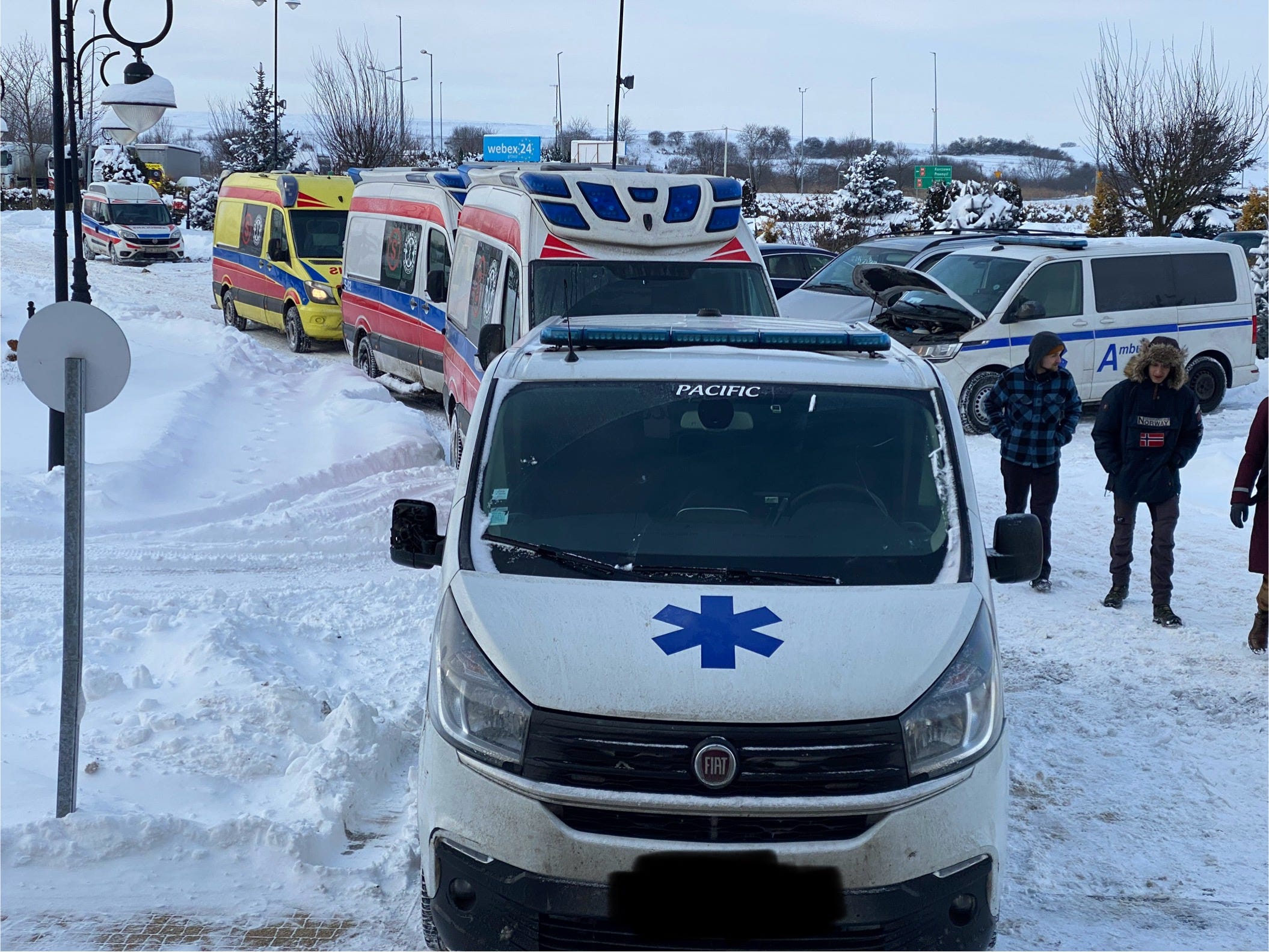
It is late January 2026. We are assigned to a convoy of thirteen ambulances being transported to Ukraine. They come from several European countries, decommissioned by hospitals, bought and repaired by volunteers. This is part of a much larger effort, all grassroots, connecting people of goodwill across the globe, including many in the USA, who donate money, time, skills, courage and connections. My role is the simplest of all: driver.
We start in Wrocław, Poland. The drivers meet for a quick checkup and instructions are distributed. Most vehicles are ready and waiting; they had arrived from France the day before. Two are still not here: my co-driver Harmen and I are to pick up the last two VW Sprinters from a local donor. We get there and, after quick formalities, we check the engines.
Harmen’s truck puffs occasional smoke. Injection, we think. I am lucky: the only problem of my Sprinter is the fuel inlet, which gets stuck each time we refuel and cannot be opened without pliers. Other than that, all good, except the console shows all possible problems. I decide to ignore most errors but insist on checking the brakes as a minimum, which delays the convoy; I remain stubborn. Two hours later, we finally start.
The convoy
We drive in an orderly line, thirteen ambulances. The convoy seems well organized. Or over-organized?
The first car and the last one flash the ambulance lights, so we are given right of way. This way, the convoy does not split but maintains its integrity.
I initially appreciate and even enjoy it. Harmen, more experienced, shakes his head with disgust. “Why so much attention? Why do we even need the convoy? It’s a very simple mission. Just give me the keys, I’ll get the car from A to B in five hours, job done. Instead, with this over-organization, it takes two days because we need to stop each time one man wants to check the brakes, and another wants to pee.” That bit about the brakes, that was me. But I admit he has a point. I delayed the group.
Now I look at it differently. The next time the front car launches the siren, I realize the convoy, for some of us, is a game for big boys who want to drive big trucks and have the right of way. Well: we are just people.
So, who are we? The organization does not even have a name. We use a certain brand for fundraising in the Netherlands, another for social media in Poland, and the legal identity of yet another Ukrainian NGO for customs paperwork. Anton, a renowned musician, is the mastermind fundraiser. Tom, a pastor from Denmark, brings supplies to his Ukrainian friend’s parish. Harmen from Belgium, an experienced volunteer, tells me simply, “I help where I see people who need help.” Then other drivers, plus a few dozen Poles and Ukrainians who support us locally with funding, connections, paperwork, mechanical services, logistics and information.
And finally, the frontline soldiers, with whom we communicate directly, skipping the military/political hierarchy entirely. They are crucial: they explain to us on Telegram, on a daily basis, what they need, and that is often not what we would think. Today it’s ambulances, earlier it was fishing nets to build hundreds of kilometers of corridors protecting roads from drones. “Ants” like us shipped thousands of tons of those before any of the politicians reacted.
Cars never travel empty. An ambulance is a large space and there is no point in carrying air. My additional task for today is to make a detour while we pass Silesia, to pick up two dozen folded wheelchairs for the disabled and other medical supplies donated by another organization. This delays me again by two hours; I drop out of the convoy, to catch up with them later in the night.
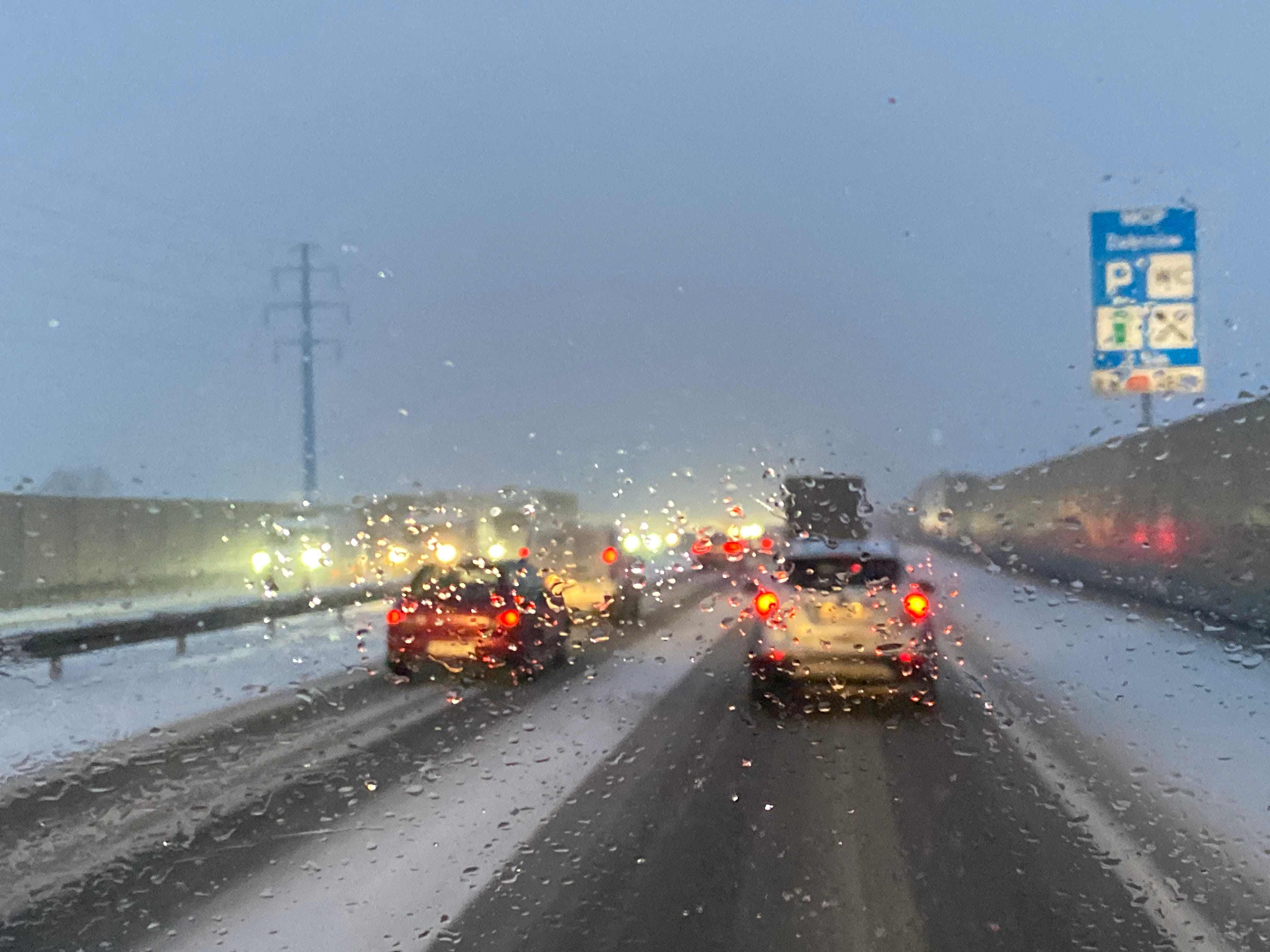
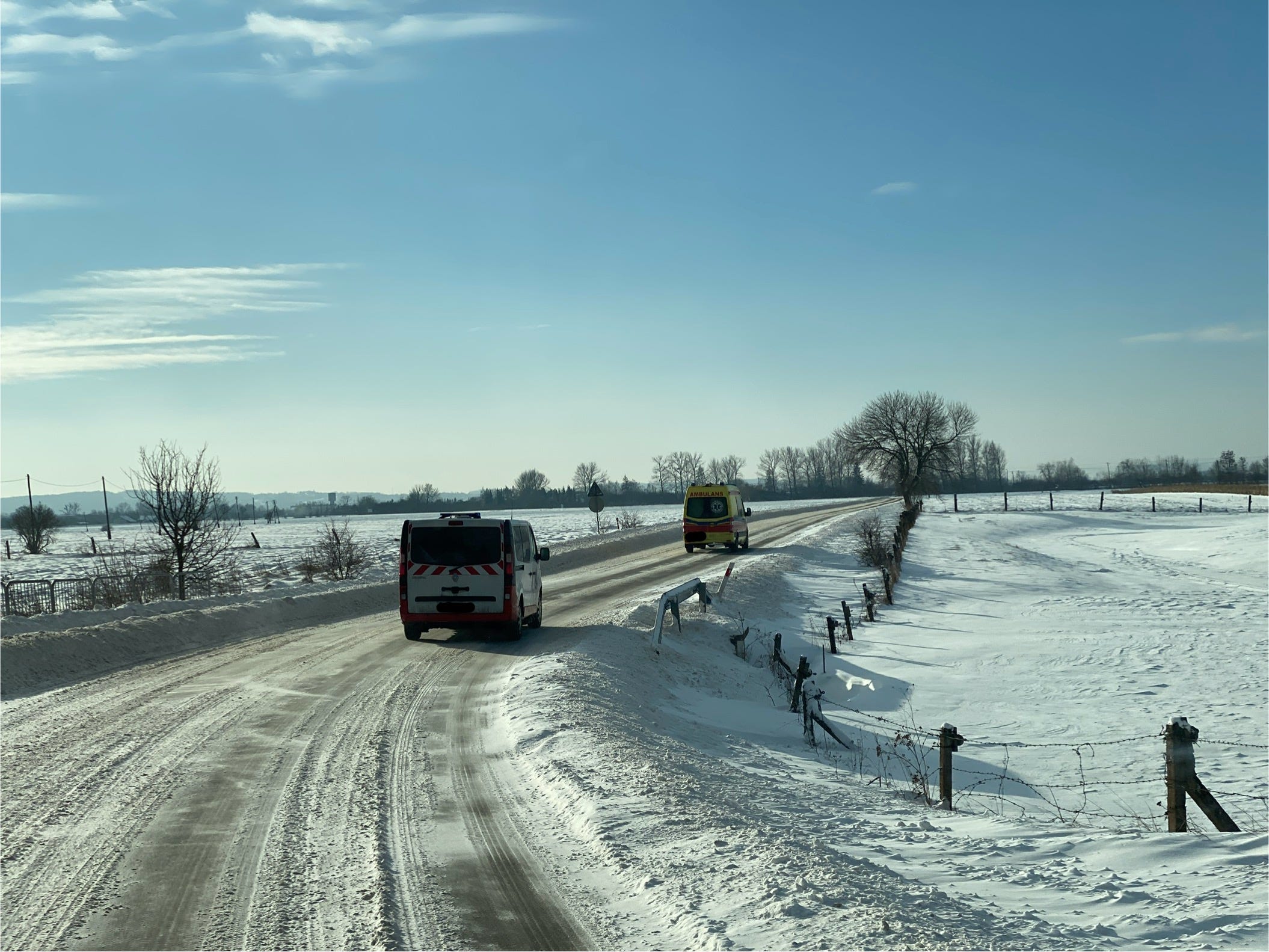
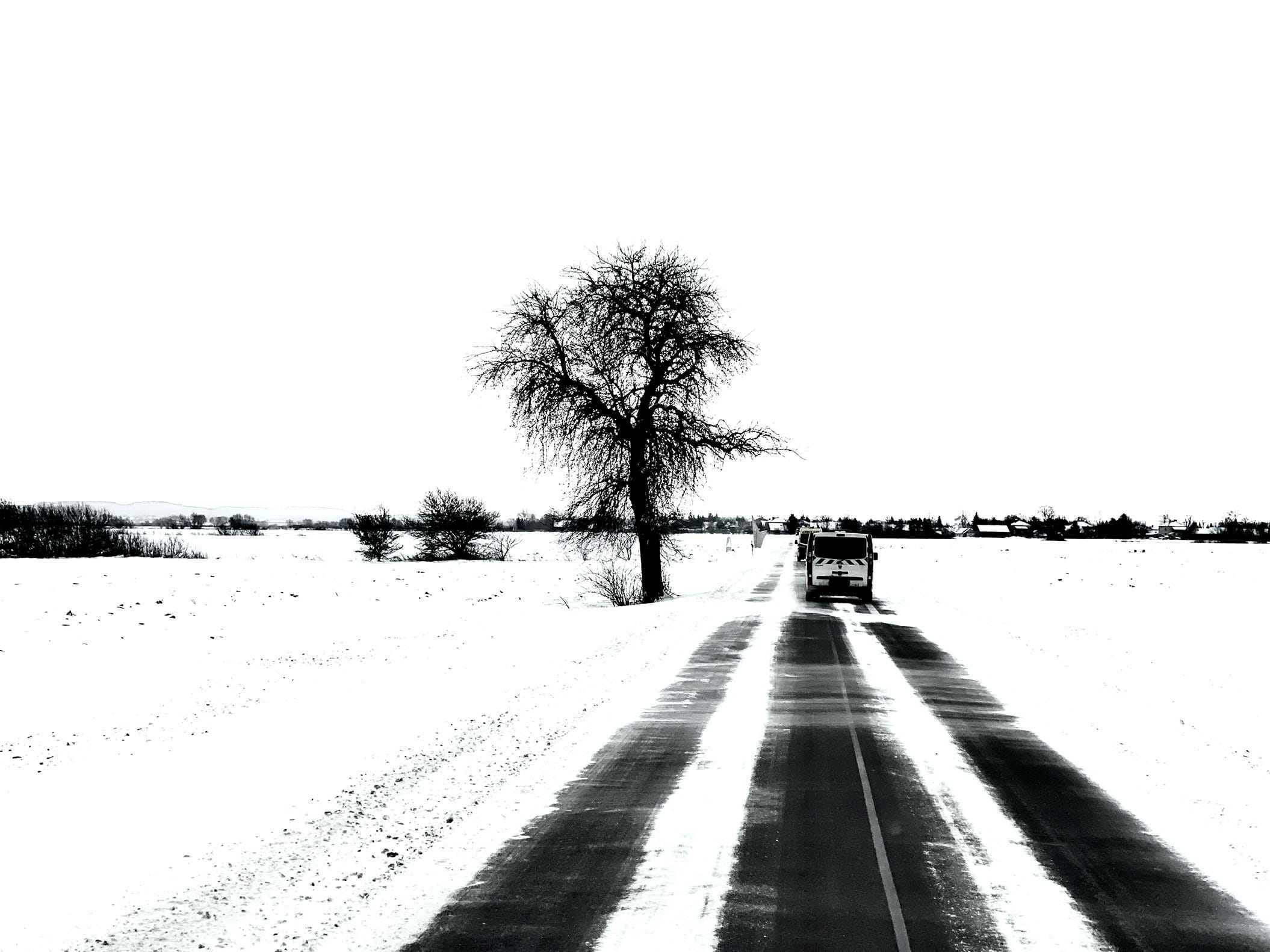
Meanwhile, the weather gets bad, the highway is full of snow, and traffic is slow. It is cloudy, wet, slippery and it gets dark fast.
Three men in the sauna
After dark, I make it to a motel where I catch up with the team, quite exhausted. We are very close to the Ukrainian border now, which we’ll cross tomorrow. The other drivers order dinner, but I notice the motel has a sauna. I always go to the sauna, to catch some local conversation. Inside, I meet the locals, who learn of my mission and shake their heads with disbelief. “To jest dzicz” (Those people are savages), says one man about the Ukrainians. I ask him how many times he has been there. Of course, never, even though the border is barely half an hour away. I realise he does not even mean Ukrainians in particular, but rather “anyone from behind the fence”. He speaks of an almost atavistic fear of the east, embedded in generations of local farmers, who stubbornly stick to their place against the winds of history.
I am not surprised. In these border towns, the fear of strangers is real, fueled by the stories of violence from passing armies and pogroms from militias, told by grandparents, unfortunately real. In this local imagination, generation after generation, nothing good ever came from the east. These people learned to be wary, but also to firmly stand their ground. And this is how they survived: Mongols, Tatars, Russians and Ukrainians; war, disease and hunger. Centuries later, they are still here, and not going anywhere.
But then something shifts. A second man mentions Kyiv and the conversation changes tone. The situation in Kyiv today is dramatic. Half the town is without heating, after a massive Russian bombardment that specifically targeted civilians. The winter is very cold this year and forecasts are not good. All over Poland, there is an ongoing, massive effort to buy and transport electricity generators.
A third man, silent until now, opens his mouth timidly. “I once went there, to Kyiv,” he says. “I am not sure why, but ... they were friendly to me,” he says with some hesitation.
No Exceptions at The Border
On the second day of the journey, we wake up in the hotel and realize the cars are now stuck under a thick layer of snow which came during the night blizzard. It is a cold January morning, about minus twenty. We have to dig and push.
Half an hour later, we stop to refuel. It takes one minute, during which my hands freeze.
The sun unexpectedly comes out at 11:00. Still in Poland, we pass an Orthodox church, which reminds me that we have entered the historical Rus’.
We reach the border. Each time I am here, I feel sick of this place.
We are five years into the war, and these border crossings remain the main terminals of aid that goes to Ukraine. You would think that they would be modernized and made free-flowing. Instead, everything here is a disaster, and that is on both Polish and Ukrainian sides. Officers are slow or simply missing, their booths have not been renovated for decades, the asphalt has enormous holes.
You’d think that medical aid would get priority treatment, but that is not the case. Many Ukrainian grifters have abused the humanitarian label as cover for contraband, so today all convoys are checked meticulously. No exceptions.
My car export documents miss some details, so I need to print a new version. Excuse me, who has a printer here? Then the number of passengers declared in my car appears wrong. To satisfy the form, I am temporarily reassigned to another car as a passenger while someone else drives mine. Waste of energy, waste of precious time. Hours later, we are finally done and can continue.
Lviv: Nightlife Under Sandbags
We soon reach Lviv, a stone’s throw from the border. A vibrant town, and quite charming. It boasts nineteenth-century architecture, cobblestone streets, Polish nostalgia too, after the forced expulsions of 1945, and plenty of nightlife, which, to the Western audience, needs countless explanations over and over again. “How can they drink in restaurants, in the middle of war?” The explanation is simple: your mind cannot be alert all the time, 24/7, for five years. People have just resumed life, amid signs of war which are everywhere: flags and photos of deceased soldiers on church walls, infantrymen collecting donations, sandbags on monuments and public buildings to protect against drone attacks.
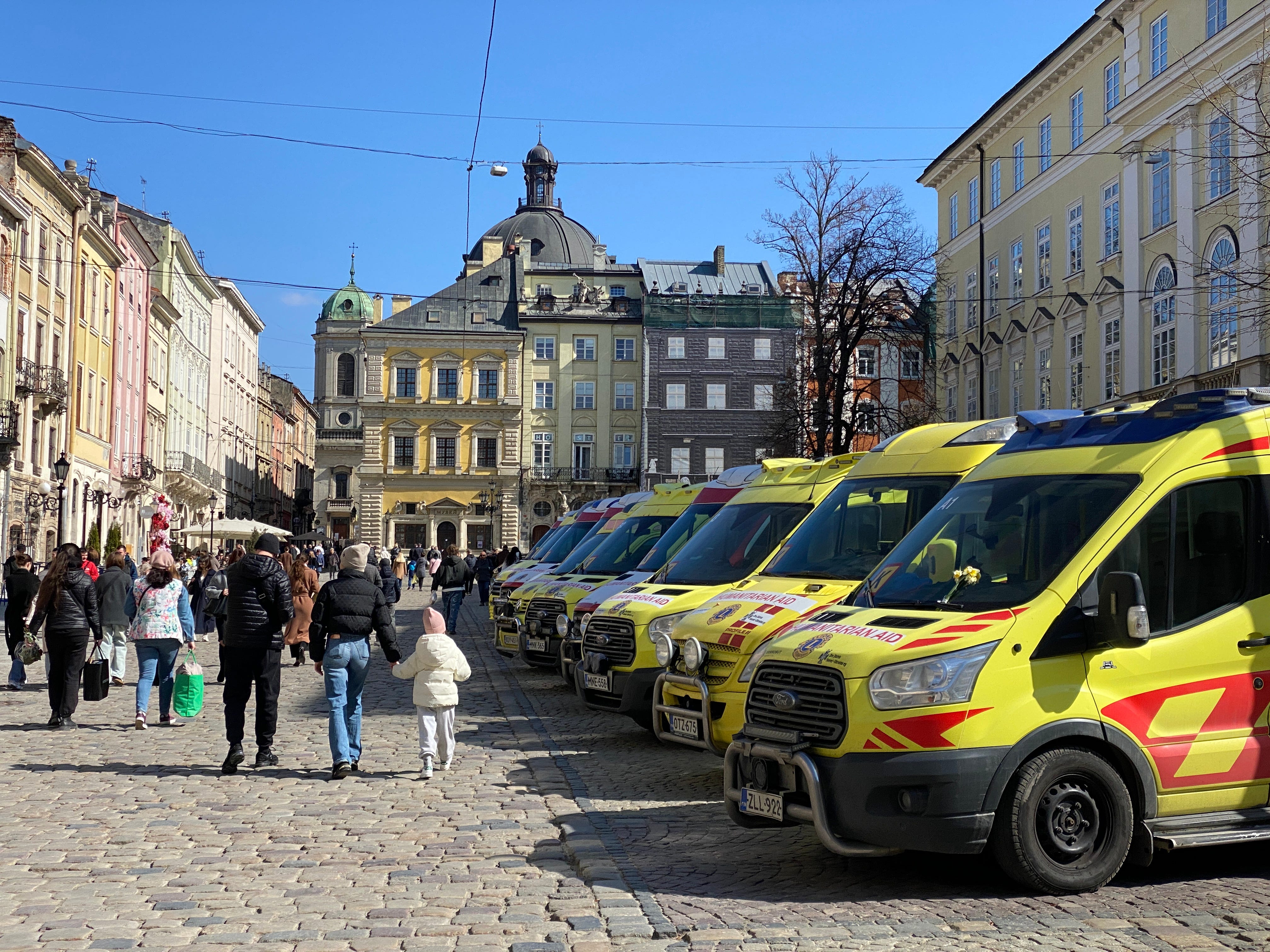
in Lviv main square we meet another convoy, which just arrived from Denmark
We park in the very center for a lunch break. We take a stroll towards the main square of Lviv, beautiful, charming, regretting we can’t stay here longer, but it’s only a short break to regroup. We need to be in Kyiv tonight.
Harmen is not pleased, visibly irritated by how the whole thing has progressed.
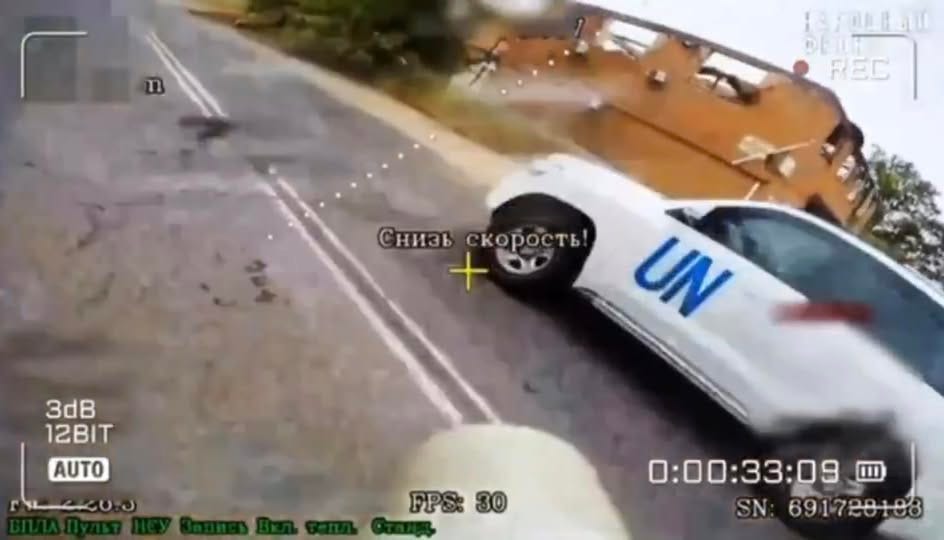
“Why is there still a convoy? Now, it is even dangerous. We should drive separately. Russian drone operators target humanitarian convoys.” As I find it hard to believe him, Vasil, the Ukrainian driver, confirms: “The logic is simple: kill a Ukrainian, you’ve killed one. But if you hit an ambulance, you’ve killed fifty whose lives the ambulance could have saved, but now won’t. That’s why humanitarian convoys are always the first target.”
Inexperienced and naive, I wasn’t sure what to think of it. I would understand only much later.
Three months after this trip, on May 14, a UN convoy in Ukraine was hit by drones. Soon after, an official video was posted by the Russian 18th Air Assault Brigade, Dnepr, UAV Battalion “ESKADRON”, bragging about the attack. The video was taken down two hours later after it attracted attention from foreign media.
Video from ESKADRON’s Russian drone, the moment before it hit the convoy
Lviv to Kyiv, with an open window
From Lviv to Kyiv, you need seven hours. The road is now excellent. If I didn’t know about the war, I wouldn’t think there was one. Asphalt is great, there is very little traffic, and fancy gas stations with coffee shops are plenty. The personnel smile at us, sometimes offering free treats for what we do. It is a pleasant ride.
I keep watching the dashboard lights with some nervousness. They stay on, but the engine works fine, as do the brakes and headlights. I can’t get the defroster to work properly: the windshield keeps fogging up. I end up driving with the heating on and a window open, the only solution. It’s a minor issue anyways. Minus twenty. Whatever.
I am getting nervous. Lviv felt safe. But we get closer to the front line. In my panicked mind, we are heading straight to the death zone.
Engaging in conversation helps - initially. I have a new co-driver, Robert. I enquire about his motivation to participate and volunteer. His responses, initially, shows he’s an intriguing, fascinating character. Robert is extremely well connected, including several European public figures I’ve only known from the media. With time, my fascination with him fades. The man is full of himself. When I ask his opinion on things, I receive bloated statements that shout “me, me, me”. He never asks back my opinion, aparently not interested. I feel less a partner and a co-driver, more like Robert’s cargo. I begin to suspect some of his celebrity stories are imaginary. When we stop at random gas station, this immediately lands on his facebook. The thirst post language craves for attention: a heroic frontline expedition. C’mon man… we just drive, the only nuisance being the half-open window.
Later in the evening I chat to Magda, our coordinator. I relate the situation. She smirks: “yes, he is like that. But there is something I must tell you. When I need drivers, he is always there, very reliable, timely, and organized. Please remember: he did deliver this car with you to Kharkiv, while many others found excuses not to go.”
Indeed. I now feel ashamed for judging the man too quick, and wrongly. I now remember a few more situations: how he was pushing us to shorten unecessary detours, enforcing to sharply focus on the mission. Thanks to Robert, we reach Kyiv before the midnight police curfew, which I didn’t even know existed - he did.
Kyiv, almost midnight
We reach Kyiv late in the night, tired. We park not far from the famous Maidan Nezalezhnosti, Independence Square, home to the revolution of 2013 and 2014. We are welcomed by the local volunteers, many of them soldiers. We hug and they take over the keys. Some of them take the relay instantly: the cars need to be in Pokrovsk tomorrow. The remaining team will stay overnight. Tomorrow some of us will travel to Kharkiv, others will go back. There is much laughter, some people smoke cigarettes, we take a few pictures. The tension is gone somewhat, now that we’ve made it to Kyiv.
Some people decide to open up.
The driver from Ireland turns out to be a businessman. At the very end of the trip, he admits he came mainly for another reason: to renew his contacts with big business here, the oligarchs. Importing medical supplies is excellent wartime business, he says openly. His statement is met with awkward silence. We don’t have the contacts he is after.
And that is the reality. In Poland, there is a will to help, and there is also tribal defensiveness and fear. In Ukraine, there is patriotism, and also corruption and contraband. Among the international volunteers, there is selflessness but also opportunism, voluntourism, and a desire to shine on social media.
We are just people.
Yet this imperfect, chaotic team ends up more effective than many state-run organizations.
As we speak, Ukraine is still waiting for the first money from its 90-billion-euro European package, while politicians play their games.
Meanwhile, thousands of tons of drone nets and thousands of cars have been smuggled to Ukraine with the help of ants like us, over that border crossing with asphalt holes.
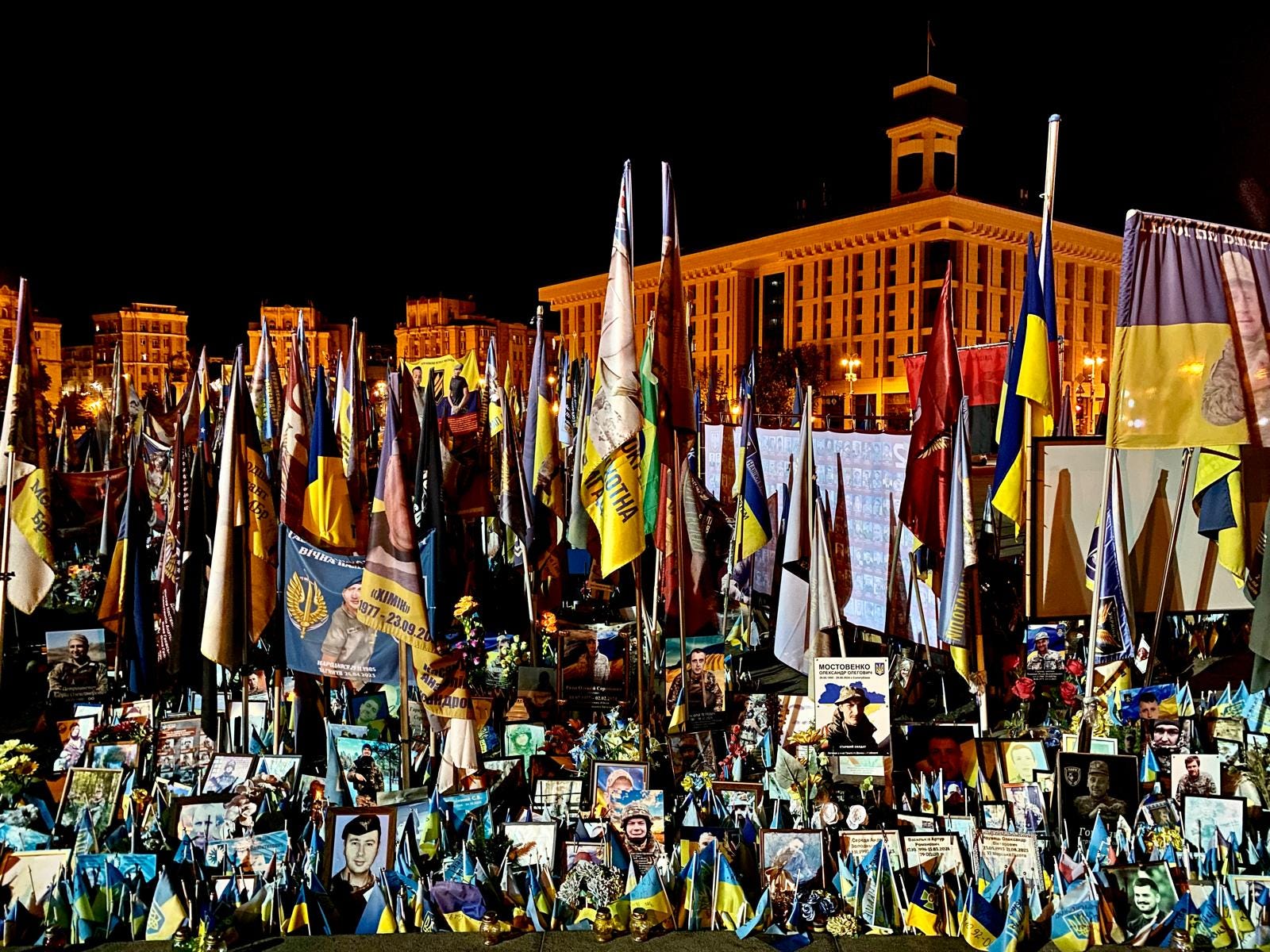
We felt like taking a stroll downtown but we cannot. I did not know: due to frequent drone strikes, midnight is curfew in Kyiv. We walk back to the monumental Hotel Ukraine. The lobby is almost empty, but on its stairs I find a group of international guests enjoying their time over a few cans of beer. They are freaks who decided to ignore the danger and came for a performative festival. I join in. They don’t know who we are. An Austrian girl, her right arm tattooed, black boots, a cigarette, apparently finishing a longer thought, declares: None of this would have happened if it had not been for Europe.
From the context, I understand she blames Europe for the war. I know the story. Bad NATO provoked Russia.
I lose the will to argue.
And the old question comes back: does it all make sense?
What can one man do, one tiny ambulance, set against politics, warmongers, oligarchs, flawed media, smugglers under humanitarian emblems? And against the army of liberal Europeans who, sure they are fighting Western imperialism, end up strengthening the Eastern kind.
These conspiracy bubbles are depressing. Just lately, I met a man from Düsseldorf who tried to convince me the war wasn’t real. I thought, man, I wish you came with me. I was quite sure he’d change his mind. And now, here in Kyiv, I have my answer. This girl came. She heard the sirens, she walked to the shelter every night, and she understood nothing. So no: he would not have changed his mind either.
Yes, the crawling sense of helplessness and resignation is often here.
walking the Maidan, that night
The story from Franek
I don’t find the words and say nothing to her. I leave the group, walk into the deserted lobby and find our drivers at a table. Harmen is there. Soon other drivers join in. On that last evening together, we tell stories. Somehow, this one story, told by another driver Franek, stayed with me.
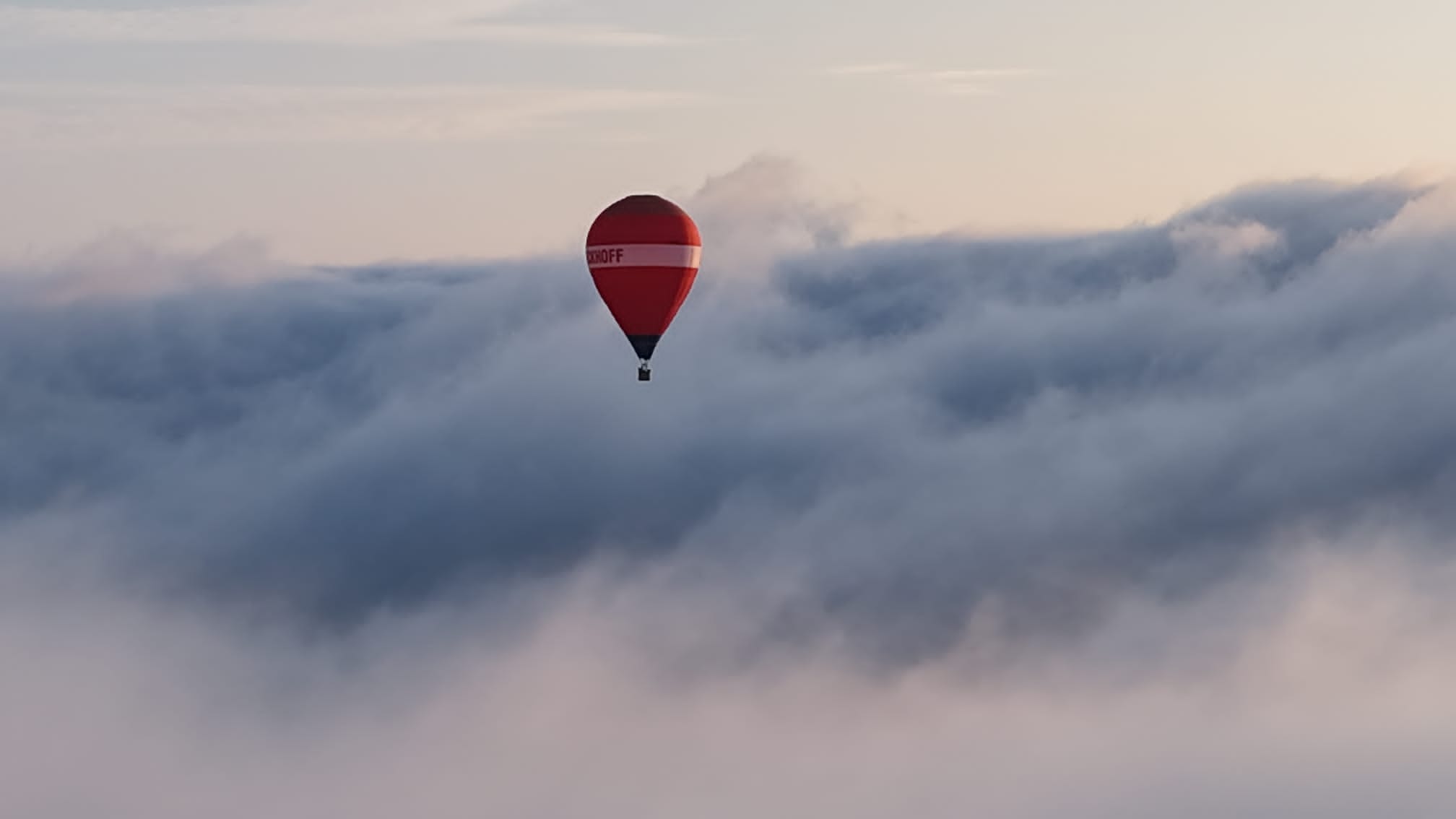
In my day job I am a hot-air balloon operator in the mountain area near my home. I take tourists for flights. Normally, nothing happens. But once, the earth below us got covered with clouds. I was watching for an opening in the clouds to land safely but could not see any. I kept smiling at the passengers so they did not realize how dangerous the situation was. In the end, fuel got to zero. We started gently falling down. At the last moment, I saw an opening between clouds, which was like a miracle. We landed safely on some meadow. Then, someone walked to us: an amateur drone pilot, training by chance in this area. He handed me a picture of us, taken from his drone above the clouds. Beautiful: in the setting sun, this is the most serene and idyllic picture.
When I felt helplessness and resignation, someone else, from another perspective, saw the sublime beauty and the happy ending.
the very picture from Franek
It struck me how precisely the story, told at the right moment, reflected what was happening in my head.
Sobering up
At the other end of the deserted lobby, I find our soldiers enjoying midnight with a bottle of something. I walk toward them and retell the conversation with the girl on the stairs. One of them smirks and comments briefly:
“How to announce you’re stupid without saying out loud, ‘I am stupid’.”
He waves his hand: this is not even worth talking about. People who aren’t ready to change their mind never will.
I sit by and listen, which they visibly appreciate. This conversation is different: practical, down-to-earth. Such and such got killed, such and such became a father and is now back in service. We lost seven cars but five more just arrived, and Pavel the mechanic will be fixing one more tomorrow. All will be good. Those men, confronting life and death almost daily, are rarely occupied by conspiracies.
This direct contact with reality, the smile and gratitude of those soldiers, is sobering. Speaking with them, I feel they don't want just the cars, but above all our appreciation: the handshake, the shared moment, someone to tell them their sacrifice is needed. We both need reassurance of one another, I realise with some surprise.
The crawling demons disappeared.
I get up. A final hug to Harmen, who has handed over his car and is heading back tomorrow. I shake hands with the soldiers and prepare to sleep.
Reading this, I kept thinking of The Canterbury Tales—a collection of imperfect travelers moving together toward a destination none of them fully understood. The ambulances replace the horses, Telegram replaces the shrine road gossip, and drones replace highwaymen, but the structure feels strangely familiar. Each traveler arrives carrying a different explanation of the world. The businessman sees opportunity. The volunteer sees duty. The soldier sees necessity. The activist sees ideology. The villagers see history. And somewhere between Poland and Kharkiv, all of them are forced onto the same road. The essay's quiet achievement is that it never decides who is right. Like Chaucer, it simply lets them travel. Sometimes that is enough.


Reading this, I kept thinking of The Canterbury Tales—a collection of imperfect travelers moving together toward a destination none of them fully understood. The ambulances replace the horses, Telegram replaces the shrine road gossip, and drones replace highwaymen, but the structure feels strangely familiar. Each traveler arrives carrying a different explanation of the world. The businessman sees opportunity. The volunteer sees duty. The soldier sees necessity. The activist sees ideology. The villagers see history. And somewhere between Poland and Kharkiv, all of them are forced onto the same road. The essay's quiet achievement is that it never decides who is right. Like Chaucer, it simply lets them travel. Sometimes that is enough.
Thanks for writing such a detailed account of this kind of volunteering. I know lots of people who do it but they rarely write about it so well.