
Silesia. The Other Poland
An hour west of Kraków, a forgotten country begins. Bring a bike.

I grew up in Kraków. Some years ago I moved to Katowice, and I am not going back.
That’s an unusual sentence for a Pole to write. Kraków is the country’s pride: medieval castle, oldest university, the postcard old town. As a school boy, learning the history, I appreciated that much of it had happened in my town.
Then I travelled, came back, and looked again. Kraków is a pleasant medieval town - much like Nuremberg, Bruges, or Toledo. For a Pole, Kraków matters because it resembles the West: it proves we’ve been an advanced, westernized society for the past few hundred years. For a Western visitor, for the same reason, it is just another Prague. After two days, you run out of things to do.
If you ended up in Poland, look for what is unique. Its secrets. Places that will touch you deeply, and will stay with you.
One of Poland’s secrets is a one-hour train ride west of Kraków. It is where the biggest European fortunes of the 19th century were made.
How Silesia stole my heart
Ask any Cracovian about Katowice. You’ll get a grimace, then some mumbling about “too much industry”, “pollution”, and “nothing to do”. What he won’t admit: he has never been there. One funny thing about Kraków is how little it knows about the rest of Poland, and how serenely convinced it is of its own superiority on the planet.
The truth is closer to the opposite. In the 1920s, Silesia had near-universal literacy. In Kraków’s region, by contrast, illiteracy ran around 20% overall and 50% in the highland villages. Silesia built industry, schools, hospitals, tramways. Kraków produced poets, clergy and provincial corruption.
The region of Śląsk (known as Silesia in English, Schlesien in German and Slezsko in Czech) is highly distinctive culturally, mentally and architecturally. Upper Silesia is a group of twenty or-so towns clustered around the capital Katowice. It is here that the biggest European fortunes were made in the 19th century.
By the 19th and early 20th century, Upper Silesia (Górny Śląsk) was booming. “The coal measures are among the most extensive in continental Europe. The deposits of zinc in the vicinity of Beuthen are perhaps the richest in the world, and produce two-thirds of the zinc ore of Germany” said the 1911 Encyclopædia Britannica. Guido Henckel von Donnersmarck (made Prince in 1901) owner of numerous mines, was the second richest man in Prussia. Entrepreneurs here built entire towns, populated by miners and their families. Then this place was forgotten.
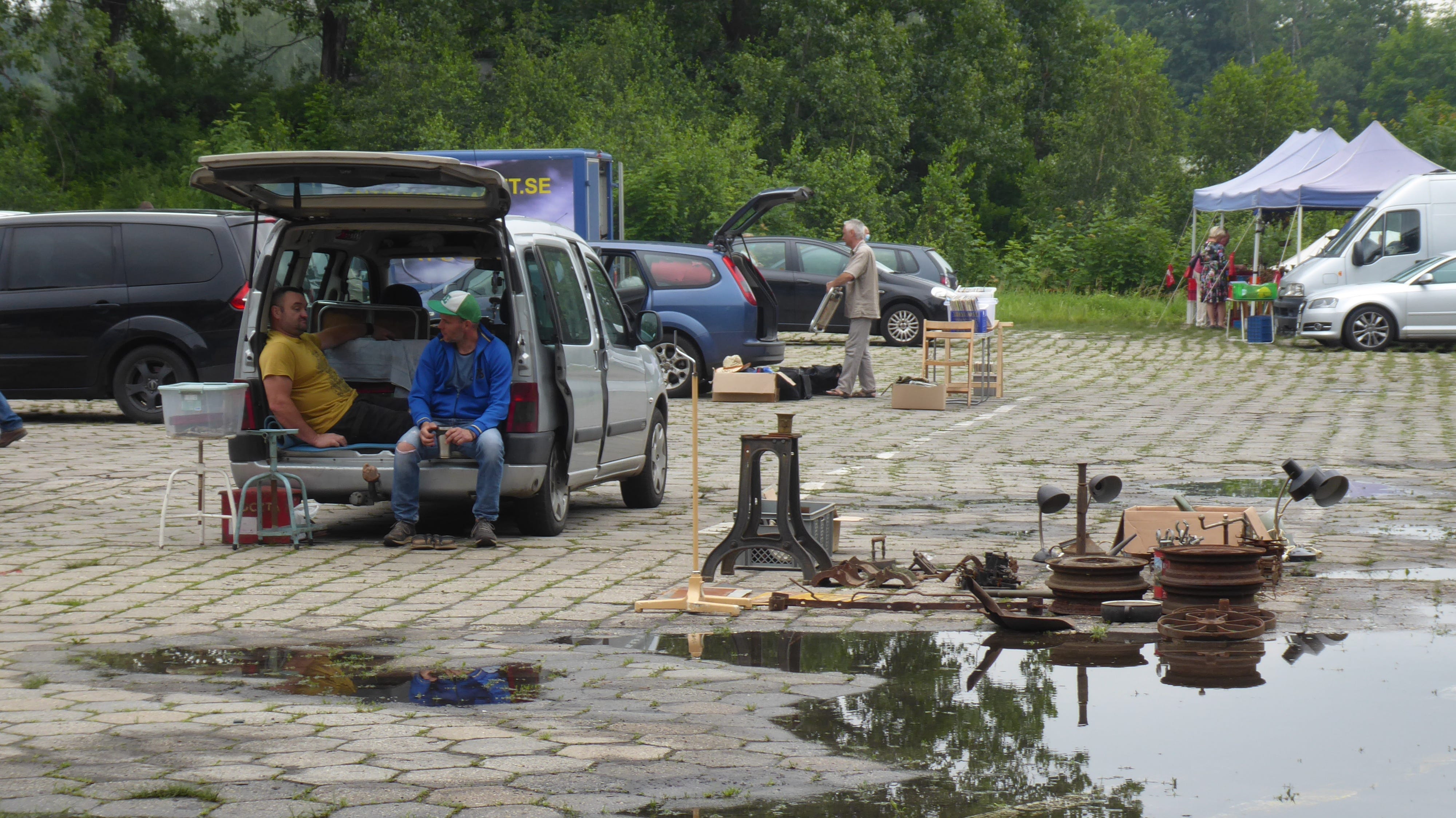
After I moved here, I started exploring on my bicycle, on spring evenings after work. Each ride broadened my horizons. I saw places I’d never heard of, talked with old-timers at flea markets, learned histories that had no Wikipedia entry. For weeks I was on a quiet adrenaline rush. I’d discovered a new universe.
What I’ll share now is one of those rides, which you can repeat.
Escape from the tourist trap
I’d tell you to skip Kraków altogether. But everyone told you to go, so you’ll go.
Then, how about one-day escape to Silesia?
Rent a bike, put it on a morning train, and an hour later jump off at Katowice Szopienice Południowe. Your morning is for Szopienice, a marginal and less-known neighborhood of Katowice. Your afternoon is for Katowice itself. By evening you’re back in Kraków, in time for overpriced pierogi.
To manage your expectations: no one ever goes to Szopienice. You’ll be the first tourist they’ve seen.
Let’s go.
Industrial ghosts
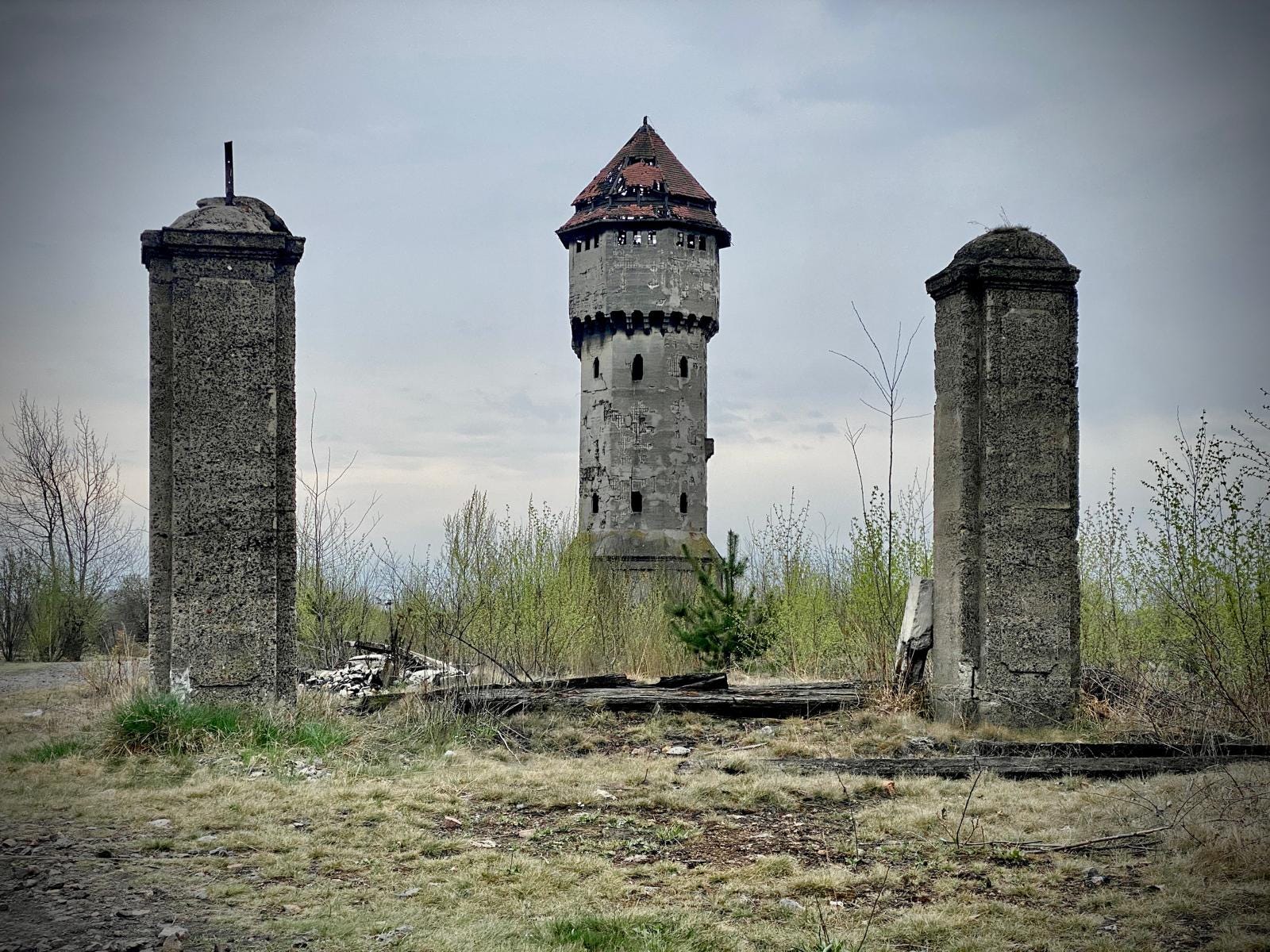
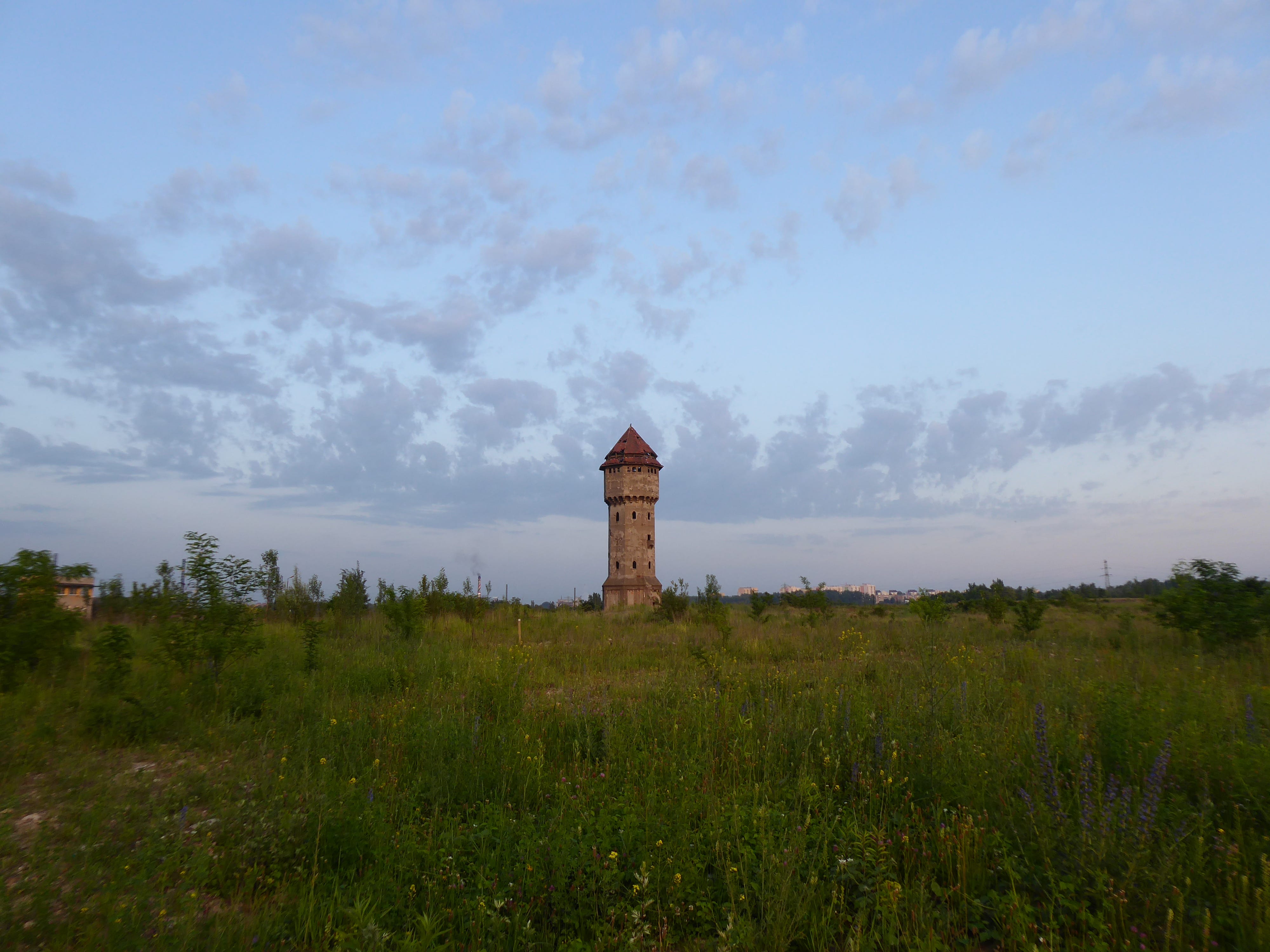
You can’t miss the dilapidated water tower; you can see it from the train. Getting inside is possible, and the concrete floor is full of holes you can fall through and die in. Don’t enter after a few beers. The inside is spooky, with pigeons flapping their wings, the sound echoing off concrete.
The building next to it is covered in rebel artwork. This is one of the things I love about Silesia: post-industrial misery turned into arts centres, alternative NGOs, high-quality graffiti.
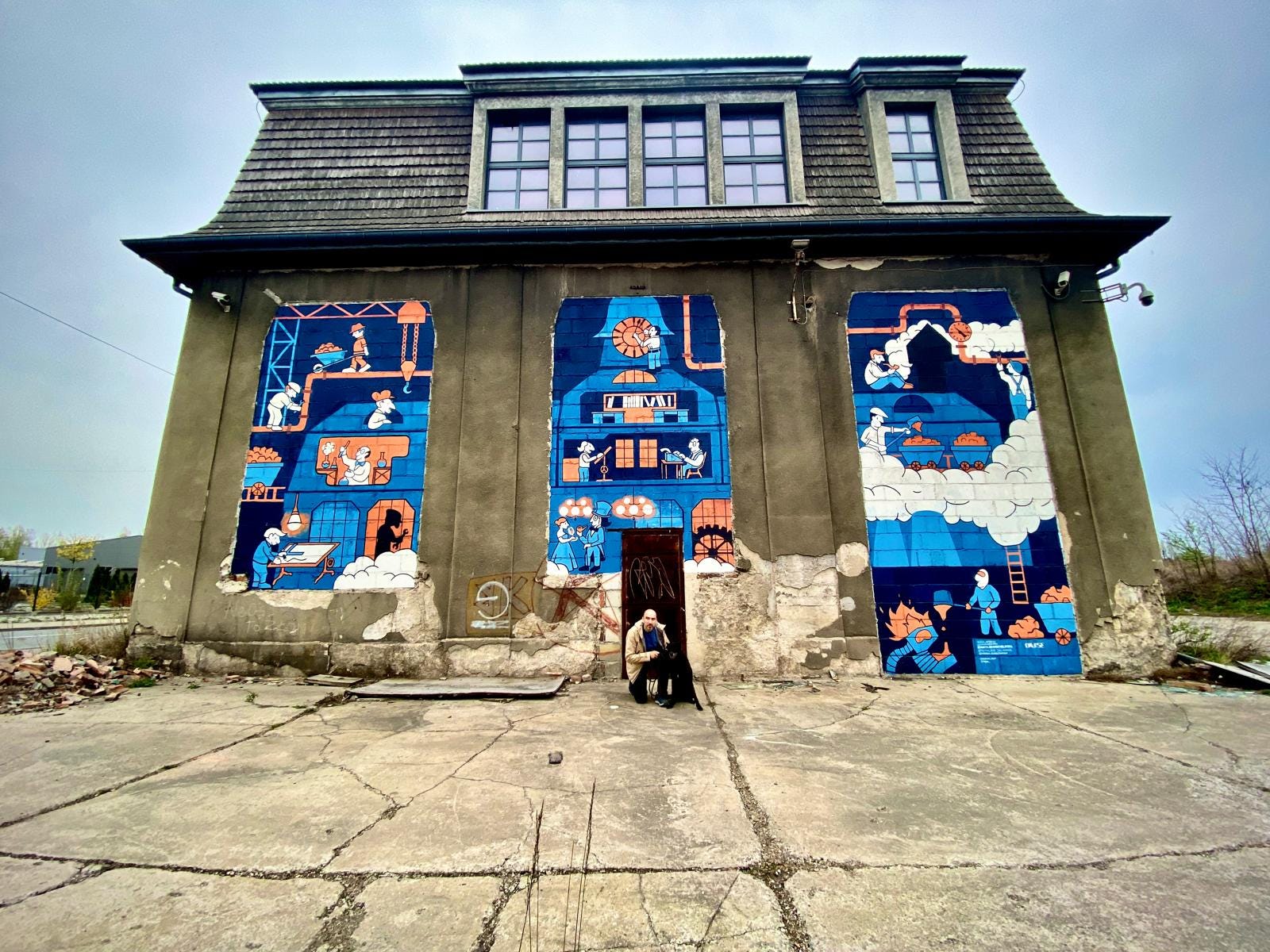
These two buildings, the water tower of the Uthemann smelter and the workers’ assembly hall (Cechownia), are the last surviving relics of what was once a colossal industrial complex. Between them stretches grass, but for nearly two centuries this ground was furnaces, rolling mills, smokestacks and warehouses. We are walking on the graveyard of a giant.
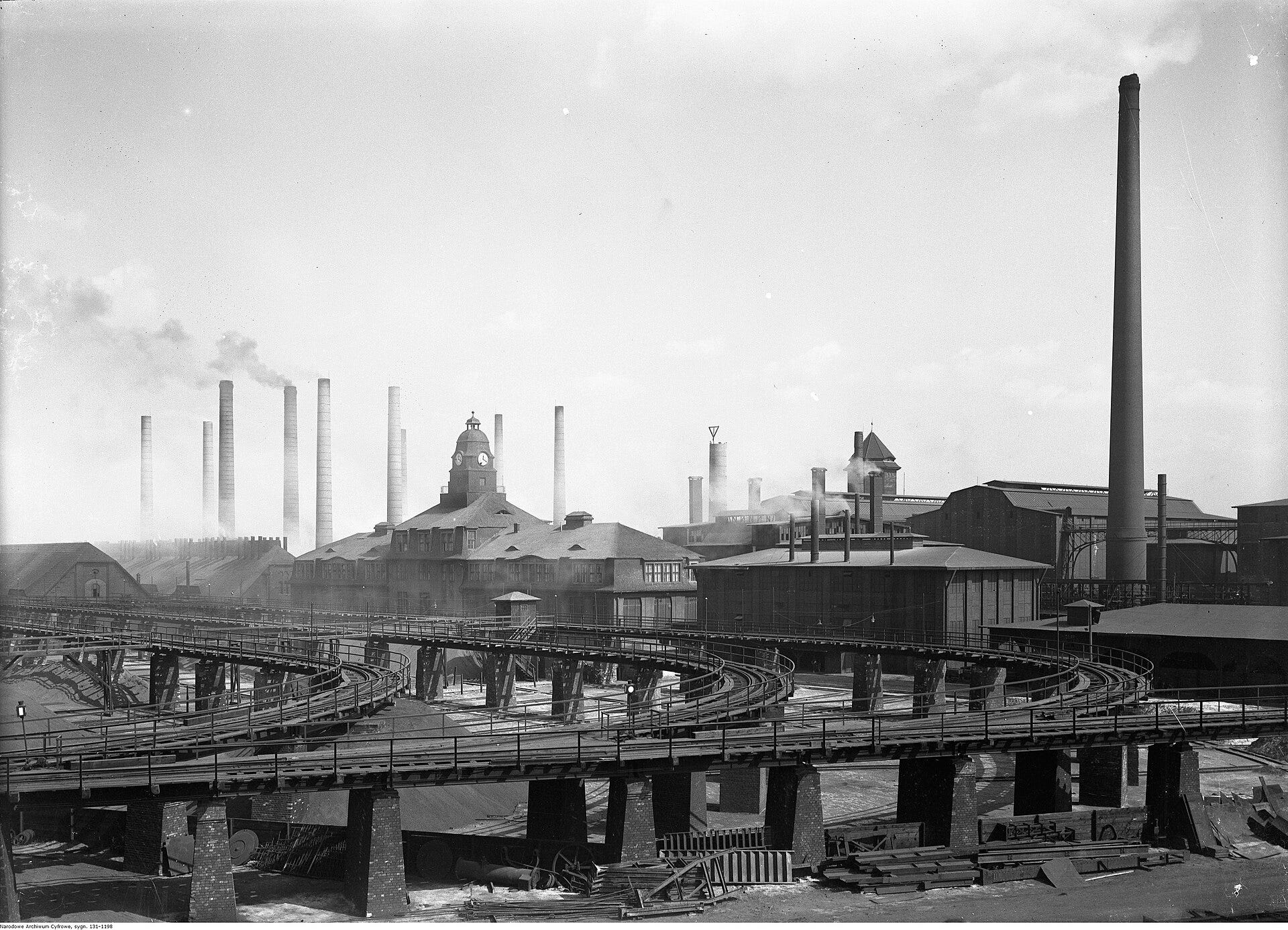
In 1834 the German company Bergwerksgesellschaft Georg von Giesches Erben opened the Wilhelmina zinc smelter here. In 1912, a much larger plant was added next door: Uthemann, designed by the Berlin architects Georg and Emil Zillmann. It covered 70 hectares, employed over 5,000 people, and was world’s largest cadmium producer. In 1945 it was nationalised and continued operation until the shutdown in 2008. The water tower and the assembly hall are nearly all that remains.
And this is how it looked in 1927 (both buildings we’ve seen are visible). That image was taken by Henryk Poddębski, internationally acknowledged for his body of work of 22,000 photographs of immense ethnographical and historical value. Arrested by the Germans in 1944, he died in a Nazi prison camp a year later.
Regarding the work conditions in the smelter, there is a story that circulates locally about a steelworker who, in the 1970s, has to undergo periodic medical tests. His urine test shows alarming levels of lead poisoning. The man knows what this means: he’d be moved away from his well-paid furnace job and would earn less. So he asks the medical staff to run the test again, bringing in another urine sample the very next day. But the second test comes back the same: alarming levels of lead poisoning.
“Your tests are off!” the man shouts at the doctor. “That second sample was from my one-year-old daughter!”
But the test result was correct.
Which brings us to the next story.
Lead Children
Turn towards Borki, and you head into one of the poorest neighbourhoods in the city. Only every other building is still liveable; the rest is half-dilapidated. Visit Borki soon. I don’t think it survives the next few years. Likely it will be demolished and turned into something modern and heartless.
Outsiders will tell you not to go, because it’s scary. Locals will shrug. On Sundays you’ll find families with children in strollers, casually walking towards the ponds with a public beach. I haven’t seen many zombies, but who knows. Make up your own mind.
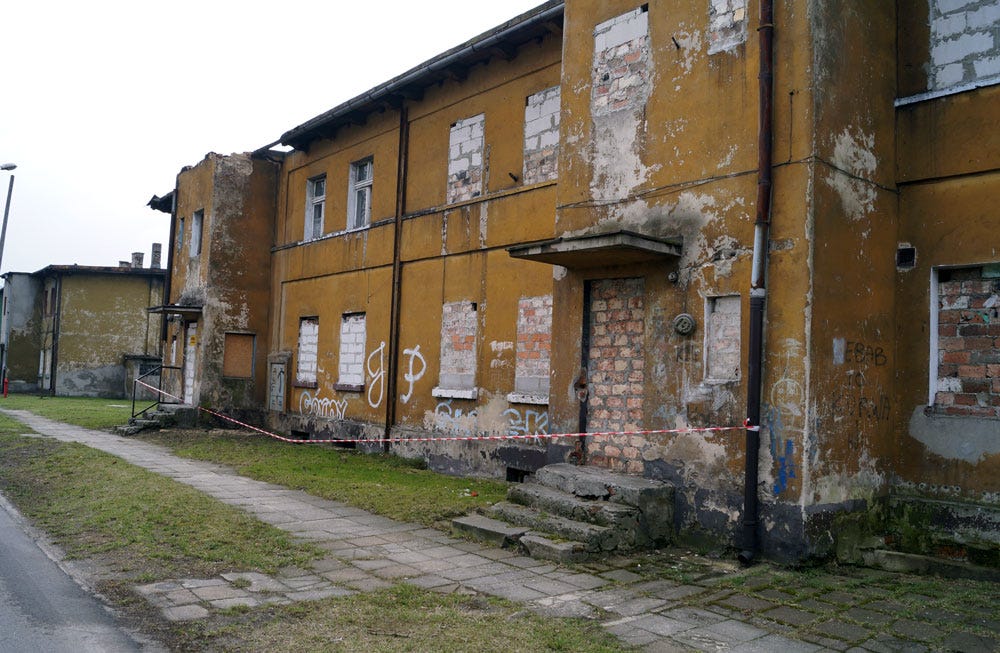
On the way to Borki you’ll pass a piece of history that recently became world-famous because of Netflix.
In 1974 a young local pediatrician, Jolanta Wadowska-Król, realised the children of these poor neighbourhoods were plagued by an unknown disease. Not yet understanding what she was looking at, she insisted on testing all of them. The result was that around 1,000 children had severe plumbism, lead poisoning, from the proximity of the smelter (a non-ferrous metals smelter producing zinc, lead, copper and cadmium)
This was difficult news for the elite. The plant was a cornerstone of communist Poland’s pride, where heavy industry and central planning were equated with the success of the state. Following the discovery, a determined group of people, at varied levels of the hierarchy, wanted to act rapidly and save the children. They were widely opposed by communist apparatchiks who wanted the story buried.
What followed was a bitter success. Many decision-makers understood the gravity of the situation. At unbelievable speed, 600 families were relocated within eight months. The most contaminated housing was demolished, and even the outer layer of poisoned earth removed. The action was rapid and effective, but covered by a secret protocol. The term “lead poisoning” was banned from the public press.
Wadowska-Król’s doctoral dissertation was suppressed on political grounds, and publication was forbidden.
In 1979, thed American researcher Herbert Needleman published a landmark paper in the New England Journal of Medicine showing that lead exposure caused severe disabilities in children who live near factories. Until then, it was widely believed only smelter workers were affected. The Polish provincial doctor could have published the same results five years earlier.
But Śląsk is not a place where people like that are forgotten. The doctor was a hero to thousands of families. Communism fell, and then, in 2021, shortly before her death, she received an honorary doctorate, supported by the people she had saved.
It was later proven that workers regularly removed the lead filters overnight to increase production and meet central planning targets. The pollution-filtering technology existed, but it slowed production. Worse, the documentation declassified after 1989 showed that on some chimneys the filters had never been more than dummies, props installed for inspection.
The story, which happened in the neigborhoods that we’ve just passed, is the basis of the recent Netflix production “Ołowiane dzieci” (Lead Children).
The river and the absurd
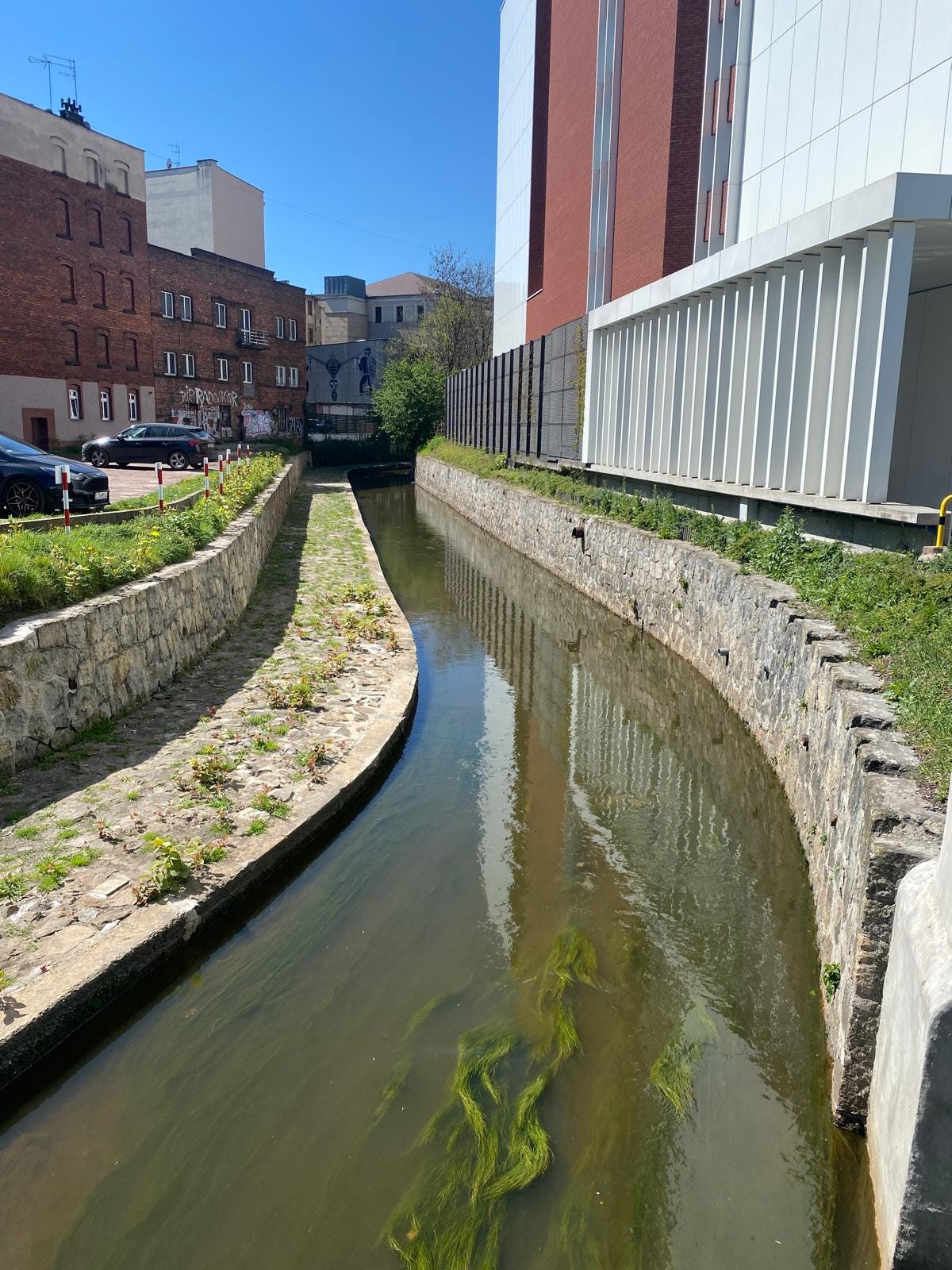
Let’s continue towards the ponds. We follow the Rawa, the same river that flows through Katowice. Regulated long ago, it awaits its moment. But not yet. It is neglected, and one can only imagine what it would become if the town had more money.
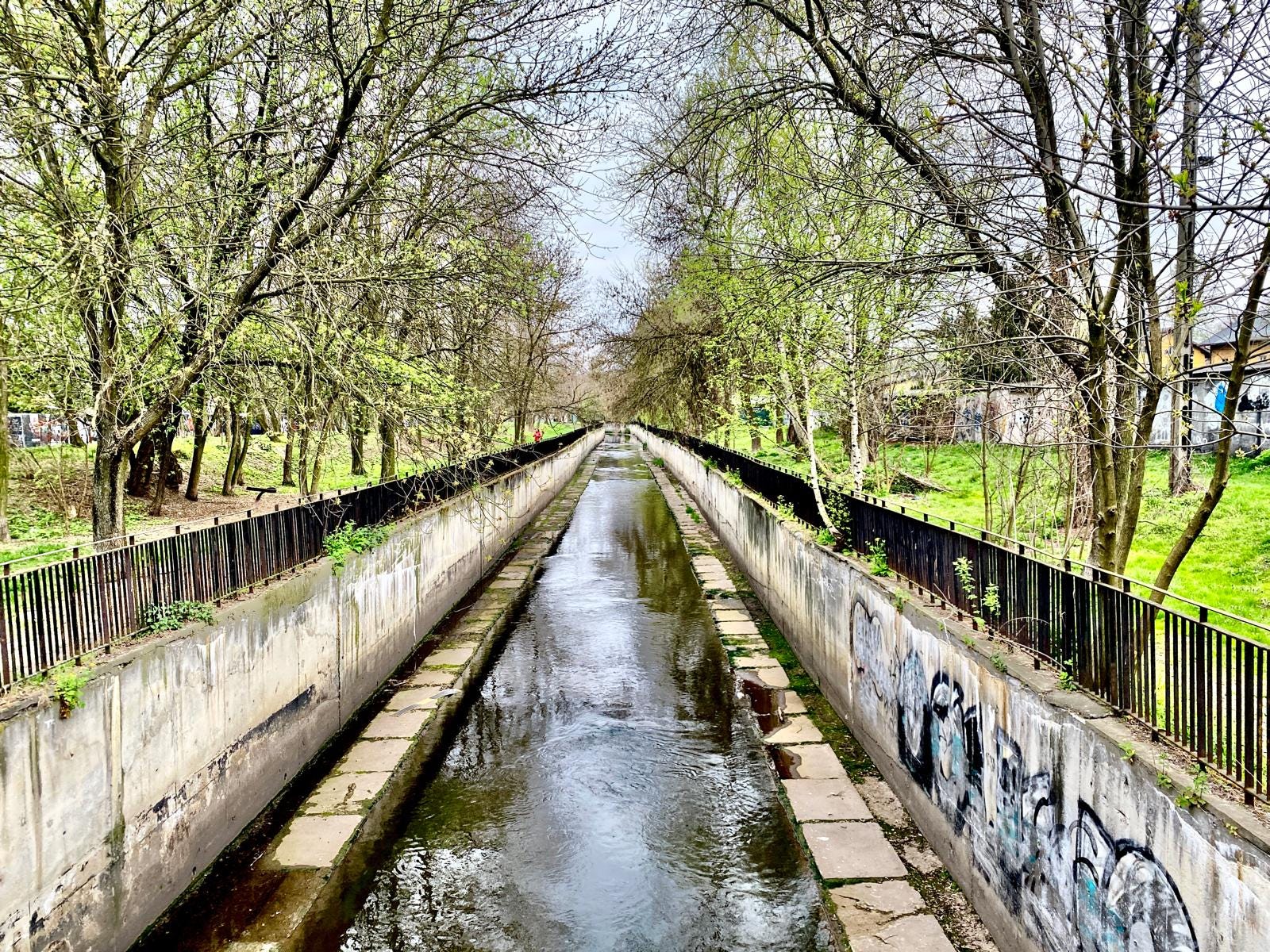
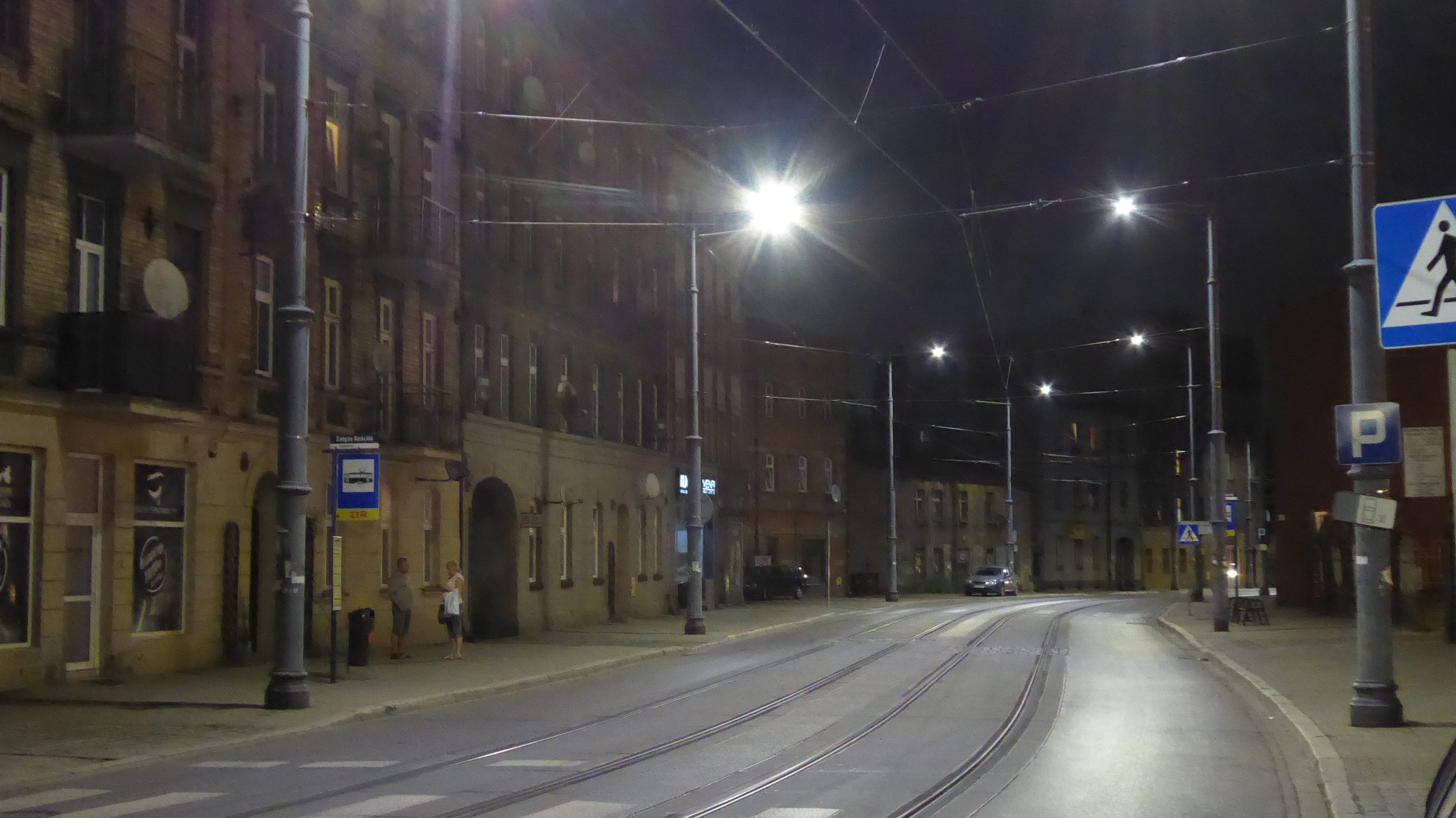
Speaking of money, it is not incidental that Szopienice is poor. Heavy industry, considered outdated, was killed off in the late 1990s. Unemployment in some Silesian towns reached 80 percent. The replacement jobs, in branches then considered modern, banking, telecoms, were created - but mainly in Warsaw. The result was a brain drain and financial drain of the regions. Poland’s national numbers look great. A walk through Szopienice tells the truer story: it’s not the country that progresses, but a few hubs, of which Warsaw alone takes some 70 percent. The rest pays the price. A textbook fallacy of trusting averages.
The trend could be reversed by giving more autonomy to the regions, but somehow no government, in the past 35 years, has been interested (more on that later).
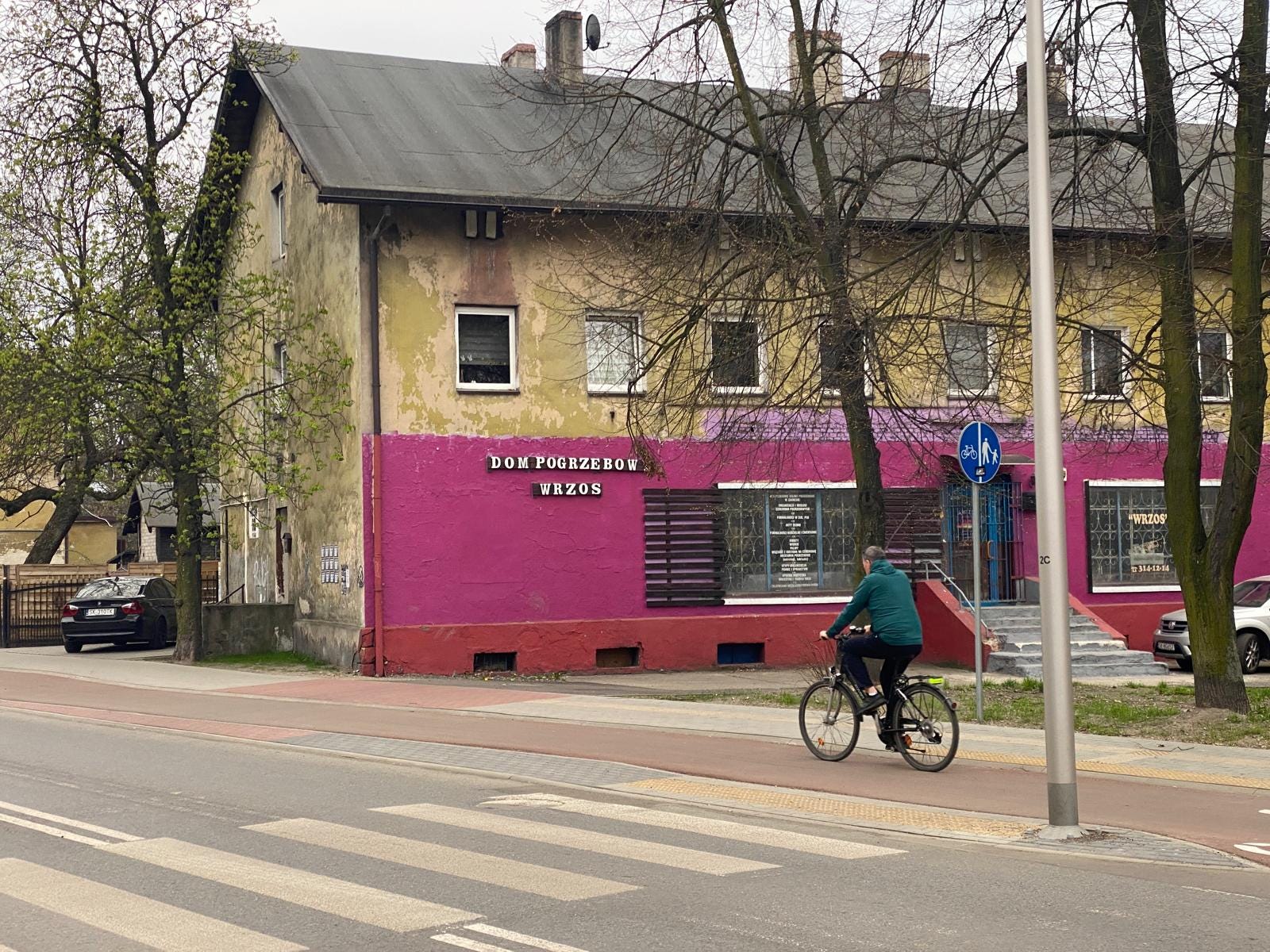
We pass three curiosities on the main street. The first is the pink panther-coloured funeral house, which is its own kind of post-industrial poetry.
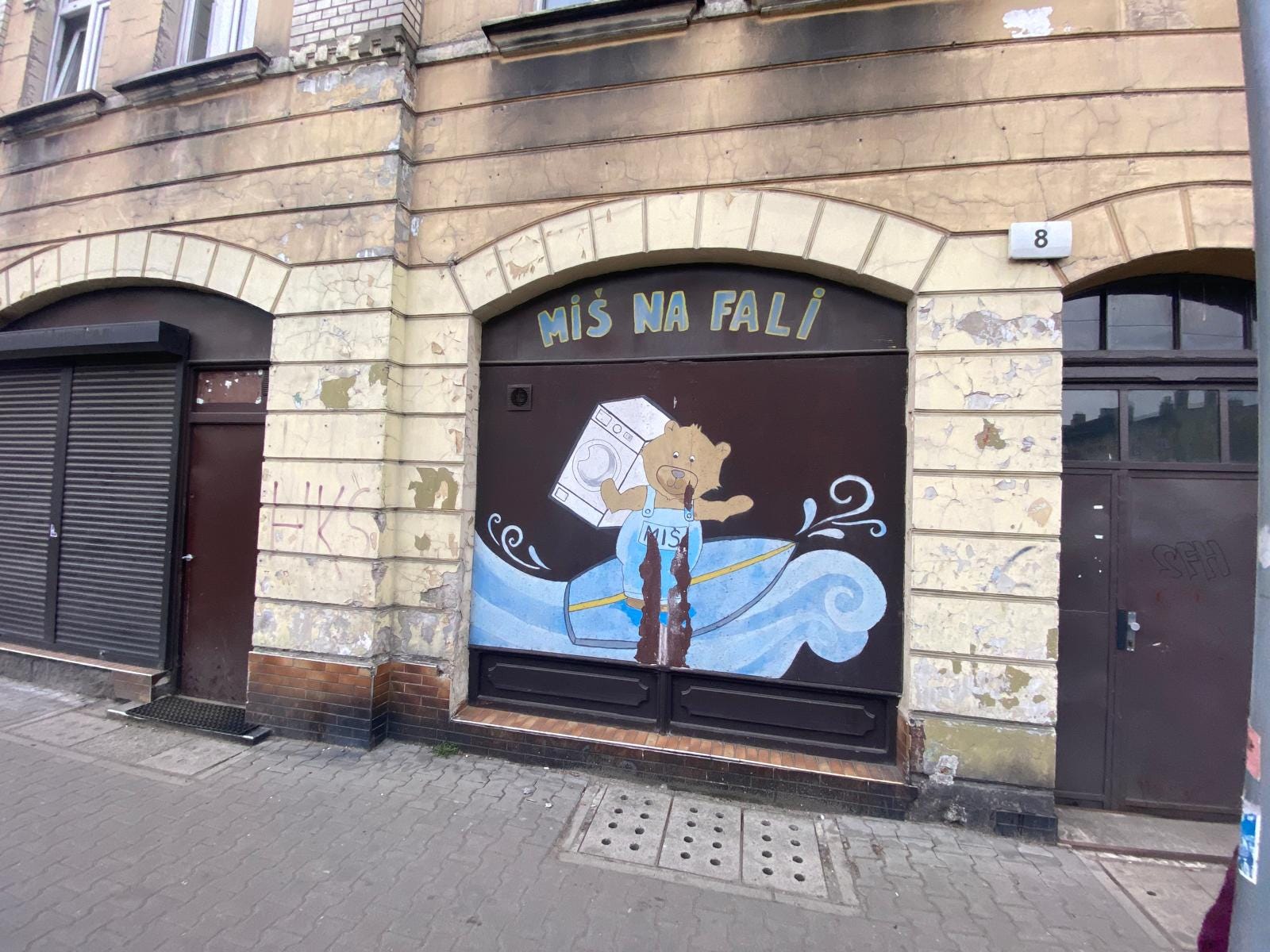
The second is “The Bear on the Wave”, a faded mural showing a teddy bear surfing with a fridge. The meaning is debated even by locals. It turns out to be an old advertisement for an electrical-appliance repair shop, called Miś (The Bear), which used to be in this very building. I was so intrigued by this artwork that I went as far as contacting the local Szopienice Facebook group. Soon, the author herself contacted me! Marta, a graphic designer, told me that years ago, as a teenage girl, she’d painted this for her cousin, the business owner. I personally find it unique. You should see it; things like this don’t last.
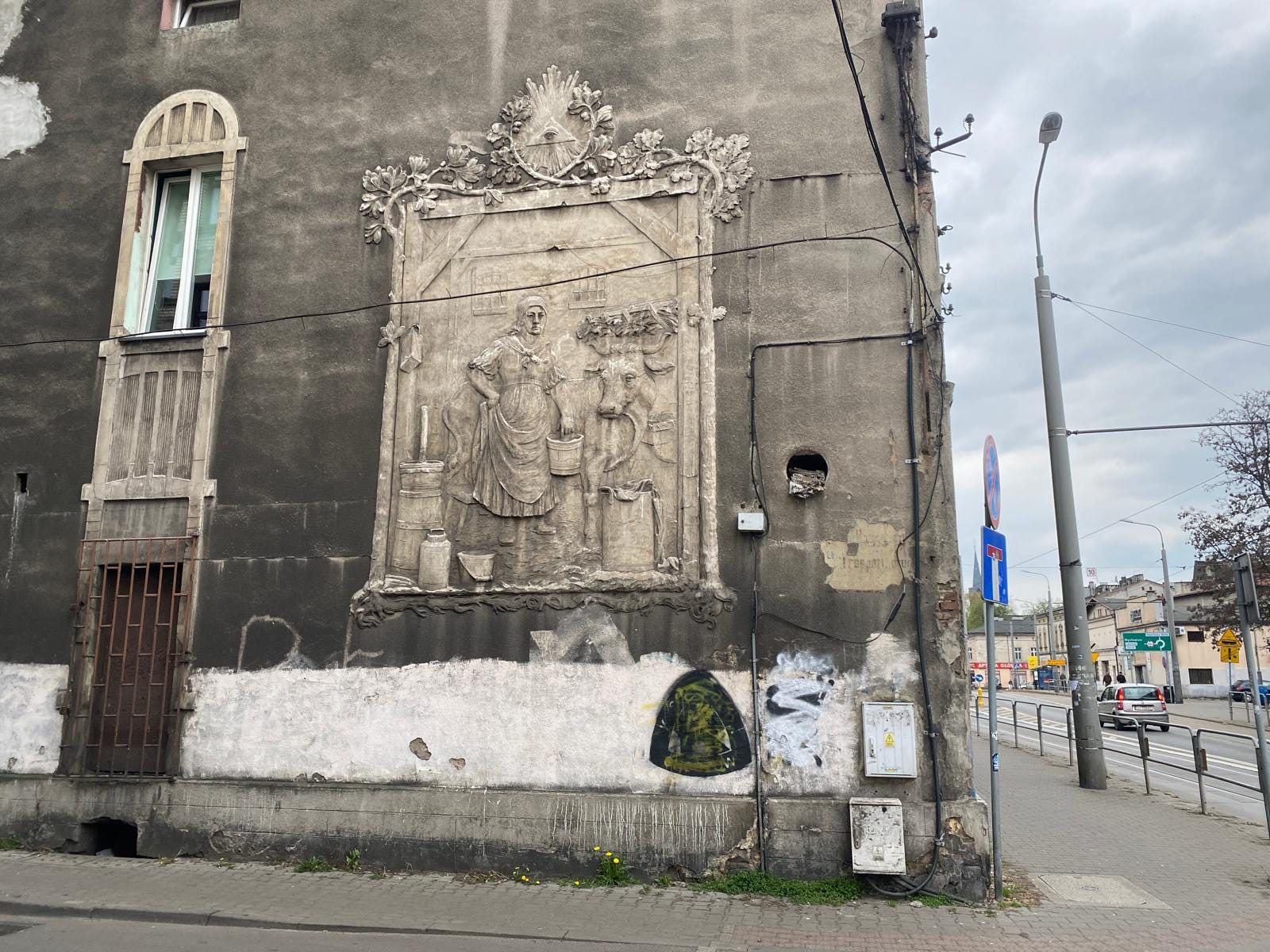
A few doors further: a portal to the past. A plaster bas-relief of a milkmaid with cows, the Eye of Providence above (yes, the one from the dollar bill), now forgotten and dilapidated on a tenement façade. It was commissioned, more than a hundred years ago, by the family who ran the cheese factory on this street.
It took me quite some research to establish this. I found the name of the founder, Elżbieta Kalinowska, but no one remembers why she commissioned it. What is the story behind the milkmaid?
In Śląsk, those things are hidden under a veil of mystery. It’s not like Kraków, where everything has been discovered, studied inside out, told and retold, published and packaged for quick consumption in tourism flyers.
Here, often the old local people know. Newcomers don’t know and often don’t care. You need some effort to understand what you look at.
The Triangle of Three Empires
Soon, we reach the ponds with the public beach at Morawa. Wait, how did this happen? The industrial landscape has completely disappeared, turning into nature. That’s by design: Katowice is deliberatey surrounded by a belt of green. Surprised? Most visitors are. Urban planning in Silesia is much better than in Kraków, with its chronic deficit of green areas. Let’s continue cycling. We now head to somewhere very special.
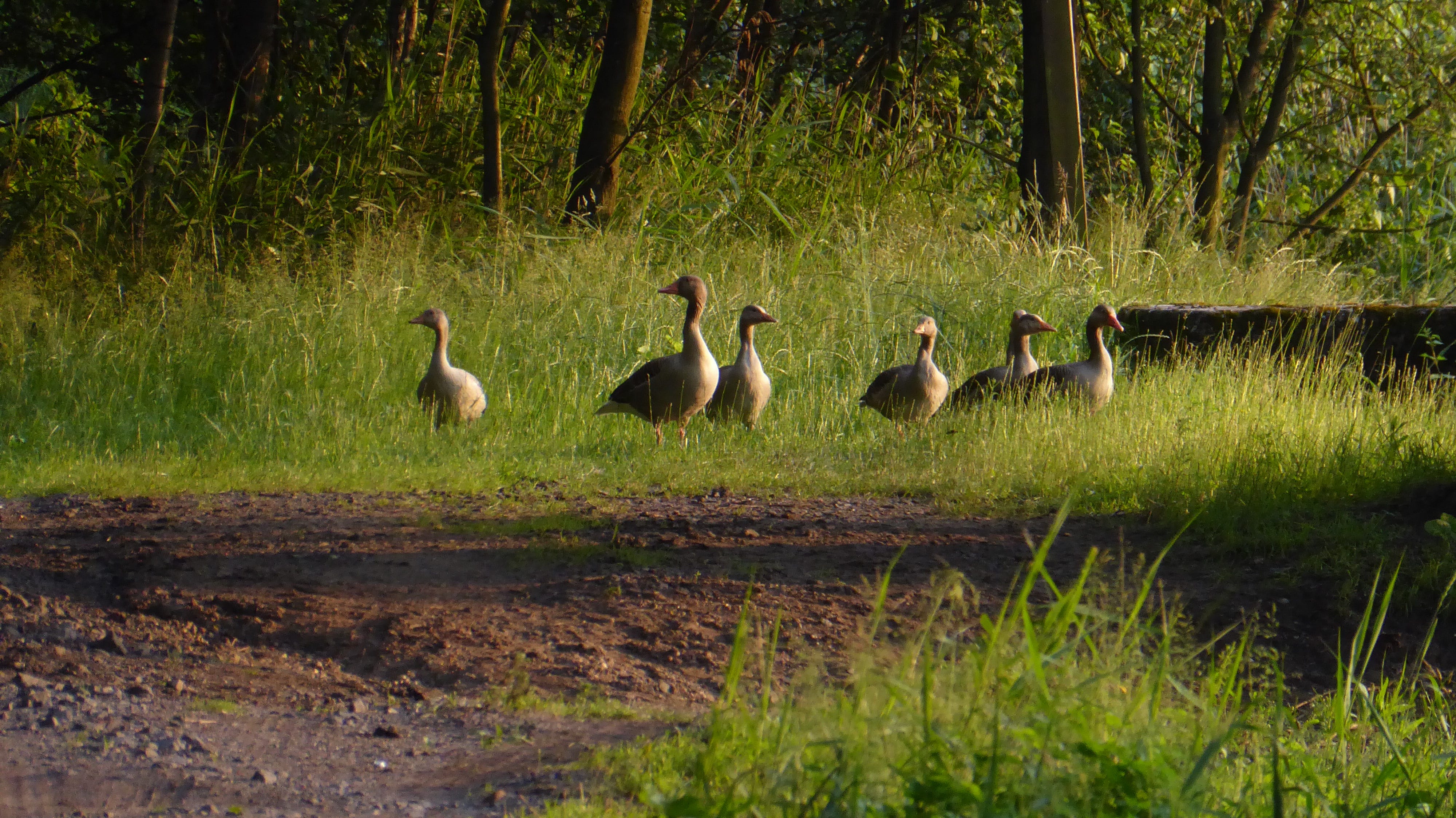
End your morning at the Triangle of Three Emperors. This is a solid piece of history. In 1795, the Kingdom of Poland was simultaneously attacked by all three of its neighbours: Russia, Prussia and Austria. Here, at the confluence of two rivers, is where they met.
You are standing in the river fork, on what used to be the Prussian side. The old railway bridge in front of you once connected Russia and Austria. Behind it, every now and then, a fast Intercity train rushes across the new bridge. The line links Kraków, Katowice and Warsaw. Until recently, each was subject to a different colonial empire.
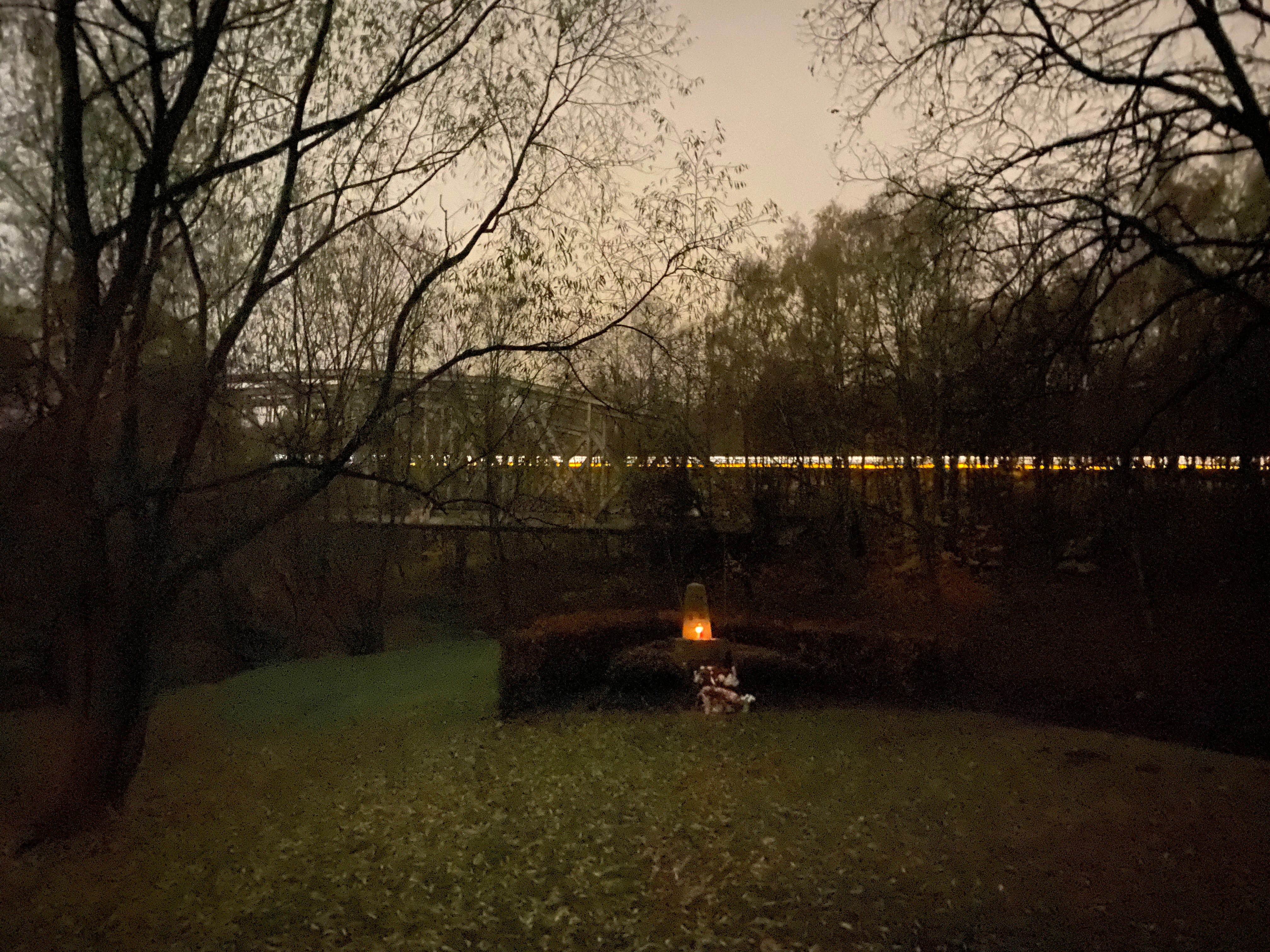
Before the First World War, this corner called “Drei Kaiser Ecke” was one of the most popular tourist attractions in Central Europe. Three to eight thousand visitors came every week. On the Prussian side rose a 20-metre Bismarck Tower with a panorama over three empires. Steamboats ran along the Przemsza river, taking the wealthier guests as far as Kraków. There was a promenade with restaurants, choirs, dance floors, orchestras, and a fountain where water poured from the mouth of a brass lion. Legend held that the three emperors had once met here and drunk from golden cups.
What added colour was the petty contraband culture. Differences in alcohol taxation, tobacco prices and currency made the area a paradise for smugglers. Tourists came partly for the view and partly to drink cheaper liquor abroad. Taverns sat on each of the three banks.
In 1913, Mysłowice alone had 110 restaurants. Today there are perhaps six.
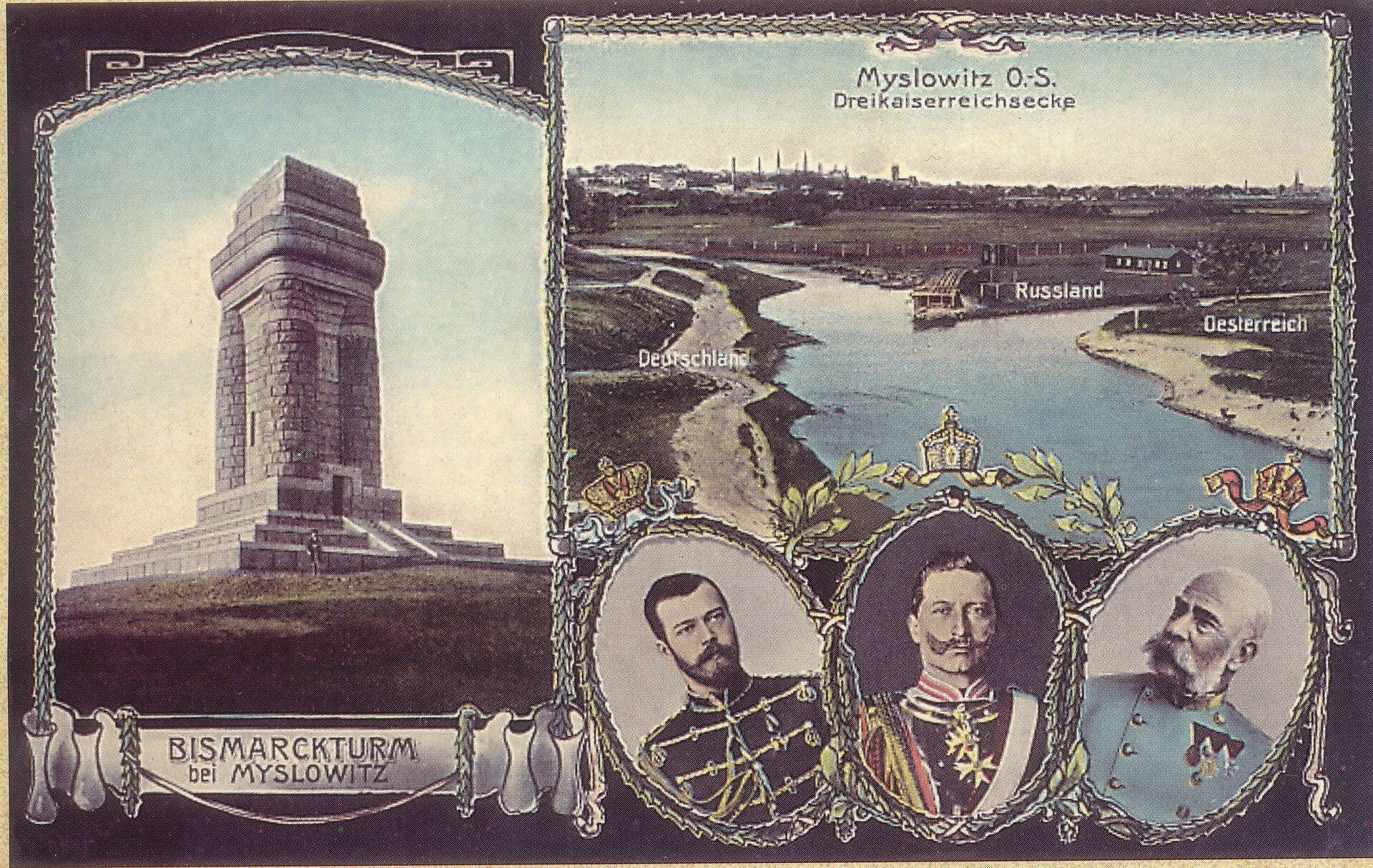
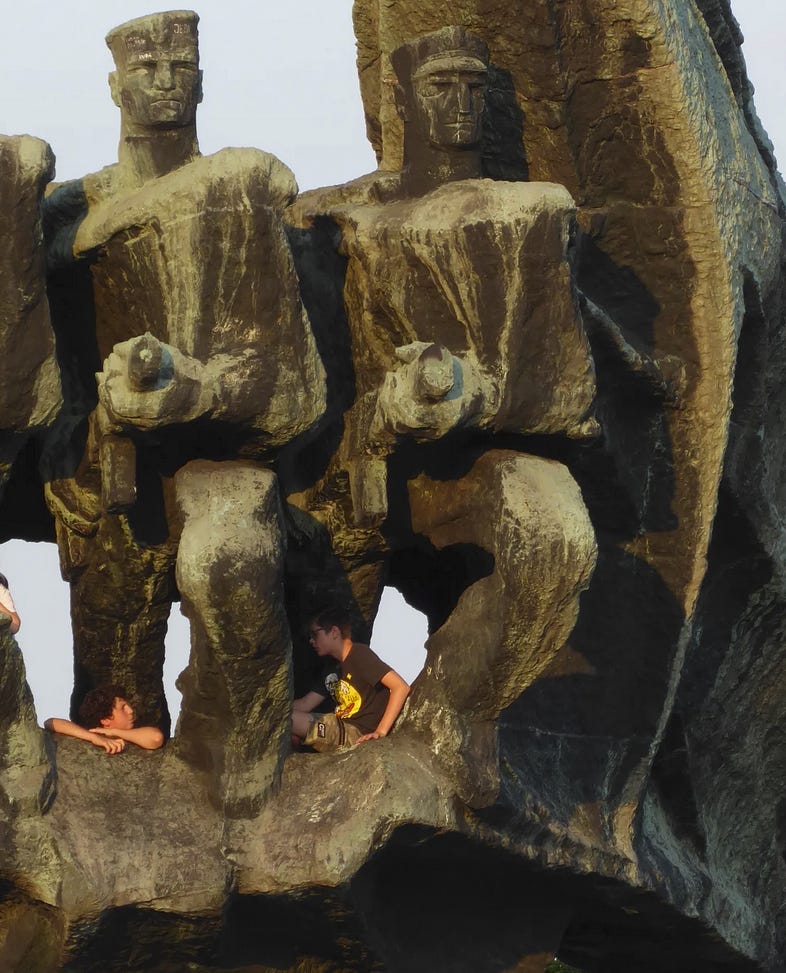
Nowadays, the place is forgotten, usually empty and very pleasant. It has a small monument. The inscription reads: Obelisk Pamięci o dawnym podziale Europy i jej zjednoczeniu (Obelisk in memory of the former division of Europe and its reunification). Made from a granite slab repurposed from a dismantled Soviet-era monument to the Red Army.
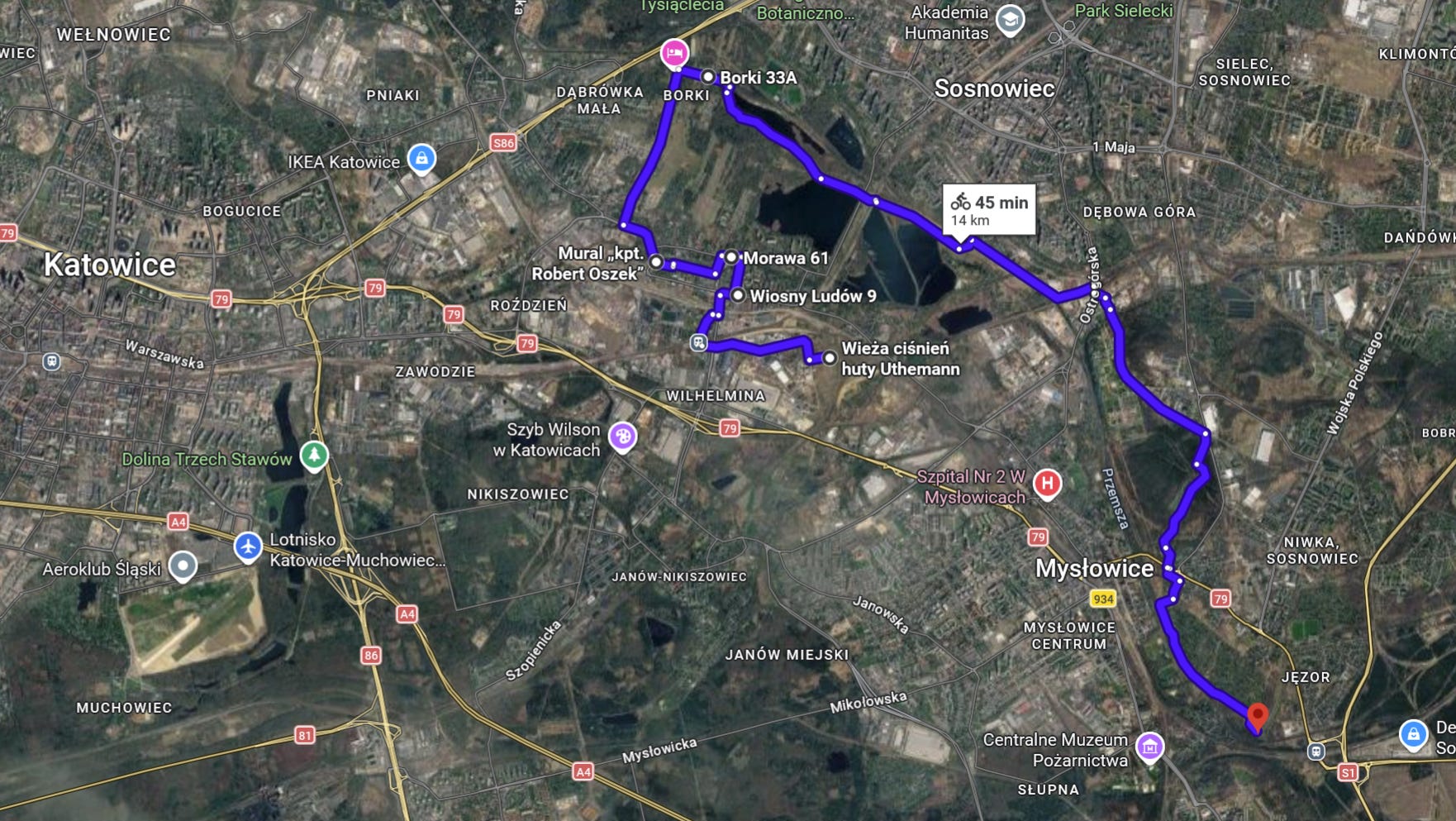
This completes the bicycle trip. Here’s the Google Maps link for the proposed route, below is the screenshot.
You’ve made it! You’ve broken out of the system, and done the hardcore traveler’s route without a single “official” tourist attraction, yet you’ve seen and experienced quite a lot.
The afternoon: Katowice
For the afternoon, pick one touristy thing, not three. My top picks:
Szyb Wilson art gallery, an old mine building. The “naive” art is local and unique.
Nikiszowiec, the Disneyland version of Szopienice. Restored, photogenic, stylish.
Muzeum Śląskie in Katowice, notably its history section. It opened my eyes.
Or skip the touristy stuff altogether. If you came with swimming trunks, you passed two ponds with public swimming on the route. End at Katowice town centre, with genuinely local restaurants. From there, take a train back to your favourite tourist trap.
Why Silesia and Kraków diverged?
By now you’ve seen enough to ask the obvious question. Why do Cracovians look down on this? Why do all Kraków tour agencies sell day trips to Wieliczka, Auschwitz, and Zakopane, yet not a single one offers Śląsk?
I’ll be harsh on them. It’s a mix of parochialism, poorly understood patriotism, and a backwater mentality.
In the 19th century, while Silesia built fortunes, Kraków was a marginalised provincial town under Austrian rule, plagued with the corruption and nepotism that, no secret, is still there. After independence (1918), Silesia continued to develop industry and infrastructure; Kraków proudly developed art and poetry, while half of the population remained illiterate and the other half walked barefoot. Today a Katowice dweller reaches seven neighbouring towns within 20 minutes by car. To cross Kraków in its permanent traffic jam, you need 45. This is one part of the story: the clash of mentality between the practically minded commoners of Katowice and Kraków’s intelligentsia.
There is also a quieter reason, one you won't hear. In the national narrative, Śląsk has been approached with some reserve: not Polish enough. Centuries under Prussian rule have left traces impossible to erase. The Silesian dialect borrows heavily from German. Many families have ties across the border; German number plates are common. All of this is a red flag to politicians in Warsaw, a city erased to the ground by the Wehrmacht only seventy years ago. Any talk of autonomy for Śląsk ends with a stark "no". This is part of why Poles vote for centralization… and why you’ve seen that grimace.
Kraków instead established itself as the symbol of Poland and Polishness: the former seat of kings, the artistic bohemia and the beloved town of the Polish Pope. No amount of traffic jams, nepotism and poor urban planning can change that. Its museums, galleries and concert halls are smaller, less innovative and less surprising than Silesia’s. Its main industry is the Airbnb: overcrowded in summer, empty in winter.
And yet you ended up here.
Enjoy the pierogi!
Post Scriptum
If all this intrigues you, check the films of Kazimierz Kutz, a filmmaker born in Szopienice. Listen to the lyrics of Myslowitz, a cult 1990s band from Mysłowice. Or come to my house. Now, here’s a treat for those who managed to read this far. My home is somewhere on your route. Write me a comment or a PM, and you’ll get an invite to stop by. We do welcome strangers, and we mean it. Meanwhile, read more Poland stories.
Awesome. I once met a Polish cyclist... in South Africa. He cycled all the way.
That's *real travel writing,* going where others don't. Some pretty nifty photos, too.
The Eye of Providence probably originates with the Masonic lodges, although it may go further back to one of the metaphysical traditions, Hermes Tristemegistus & Co.